What is the Industrial Internet of Things (IIoT)?

Industrial Internet of Things (IIoT) is defined as a set of devices and applications that allow large enterprises to create an end-to-end connection environment from the core to the edge. It also includes traditional physical infrastructure, such as containers and logistics trucks, to collect data, react to events and make more informed decisions with the help of smart devices.

The Industrial Internet of Things (IIoT) is an extension of the Internet of Things (IoT) and has many applications in the consumer field. IoT use cases include, for example, smart home devices such as Amazon Echo, which use Alexa voice recognition function to remotely turn off the lights.

In industrial operation, this technology has been widely used in business in the environment with complex infrastructure and large equipment. In contrast, the industrial Internet of Things can remotely manage the heating, ventilation and air conditioning (HVAC) system of the whole factory. This is just an industrial Internet of Things use case that simplifies and improves enterprise operation and management.

How does the Industrial Internet of Things work?

Industrial Internet of Things is a subclass of Internet of Things, and enterprises are redefining how to connect, monitor, analyze and take action on industrial data to reduce costs and promote growth.

The idea behind the industrial Internet of Things is to use the data generated by "dumb devices" in industrial facilities for many years. Intelligent machines on the assembly line can not only capture and analyze data faster, but also exchange important information faster, which helps to make business decisions faster and more accurately.

The integration of information technology (IT) and operation technology (OT) promotes the development of industrial Internet of Things. It is a network matrix connecting devices, which collects and analyzes data through sensor technology and integrates it directly into the platform as a service. Industrial Internet of Things will herald a new era of industrial use cases, and there are many opportunities for economic expansion.

Industrial Internet of Things collects a large number of field data from factory workshops, transmits them through connecting nodes, analyzes them on the server, and transforms the information into operational opinions on the cloud platform. This encourages enterprises to make better decisions for their specific markets and target audiences. In other words, the industrial Internet of Things is a system that connects edge devices such as actuators, sensors, controllers, connection switches, gateways and industrial personal computers (IPC) to the cloud.

What is the connection between Industry 4.0 and Industrial Internet of Things?

Industry 4.0 is the product of the fourth industrial revolution. The definition of the fourth industrial revolution is the integration of traditional automated manufacturing and industrial processes driven by intelligent technology and autonomous communication equipment.

The word "Industry 4.0", abbreviated as I4.0 or I4, appeared in 2011, which is an initiative of the German government to vigorously advocate the digitalization of industrial processes in the past 20 years.

As mentioned by the Boston Consulting Group, the industrial Internet of Things is the main pillar of Industry 4.0, in addition to additive manufacturing or 3D printing, augmented reality (AR), autonomous robots, big data analysis, cloud computing, network security, horizontal and vertical system integration and simulation. This is because the autonomous communication between machines and the decentralized digital environment can automatically solve the problems that needed manual intervention before.

Industry 4.0 covers the industrial Internet of Things, digitalization and sustainable development of enterprises in a wider scope. Industrial Internet of Things is the driving force behind Industry 4.0, without which there would be no Industry 4.0. In other words, the industrial Internet of Things is limited to data detection, data transmission, data calculation, data processing and intelligent applications in specific fields.

Architecture of Industrial Internet of Things

The typical industrial Internet of Things architecture describes the arrangement of digital systems, so that they can jointly provide the network and data connection between sensors, Internet of Things devices, data storage and other layers. Therefore, the industrial Internet of Things architecture must have the following points:

1. Internet of Things devices at the edge of the network

These are groupings of network objects located at the edge of the Internet of Things ecosystem. These locations are as close as possible to the location of the data source. These are usually wireless actuators and sensors in industrial environments. A processing unit or small computing device and a set of observation endpoints. Edge IOT devices may include traditional devices, cameras, speakers, sensors and other instruments and monitors in brown land environment.

What happens at the most remote edge of the network? Sensors get data from the surrounding environment and the items they monitor, and then convert the information into indicators and figures that can be analyzed by the Internet of Things platform, and turn them into operational insights. Actuators control the processes that occur in the observed environment. They change the physical environment in which data is generated.

2. Edge data management and initial processing

Without high-quality and massive data, complex analysis and artificial intelligence cannot give full play to their potential. Even at the sensor level, data processing can be performed.

In this respect, edge computing provides the fastest answer, because the data is preprocessed at the edge of the network and in the sensor itself. Here, numerical and aggregated data can be analyzed. Once the relevant insights are collected, you can move on to the next stage instead of sending all the collected information. This extra processing reduces the amount of data sent to the data center or cloud.

3. Cloud for advanced processing

The preprocessing ability of edge devices is limited. Although it has been as close to the edge as possible to limit the consumption of local computing power, users will need to use the cloud for deeper and thorough processing.

At this time, we must choose whether to give priority to the agility and immediacy of edge devices or to the advanced insights of cloud computing. Cloud-based solutions can perform a lot of processing. Here, you can aggregate data from different sources and provide insights that are not available at the edge.

In the context of industrial Internet of Things architecture, the cloud will have:

concentratorIn addition to telemetry and equipment control, it also provides a safe link with the field system. If necessary, hubs can provide remote connections to local systems across multiple locations. It maintains all communication elements, such as connection management, secure communication channels, and device authentication and authorization.

save: Used to store information before and after processing.

analyse: It is helpful for data processing and analysis.

User interface:It provides the visualization of transmitting the analysis results to the end users, usually through the Web browser interface, but also through e-mail, SMS and telephone reminders.

4. Internet Gateway

Here, sensor data are collected and converted into digital channels for further processing at the Internet gateway. After obtaining the aggregated and digitized data, the gateway transmits it through the Internet so that it can be further processed before uploading it to the cloud. The gateway is still a part of the edge data collection system. It is adjacent to actuators and sensors, and performs preliminary data processing at the edge.

Gateways can be deployed as hardware or software:

hardware: The hardware gateway is an autonomous device. It provides wired (analog and digital) and wireless interfaces for downstream sensor connection. Internet connection is also provided, whether locally or through a standard link to a router.

software: On a PC, you can install a software gateway instead of connecting a hardware gateway. The software runs in the background or foreground, and provides upstream and downstream communication links as hardware entry points, and the PC provides physical interfaces. The software-based gateway can access the visual sensor settings and sensor data presentation through the user interface.

5. Connection agreement

Transmission of data across industrial Internet of Things systems requires protocols. These protocols should be in line with industry standards, well-defined and secure. The protocol specification can include the physical characteristics of the connection and wiring, the procedure for establishing the communication channel and the data format sent through the channel.

Some common protocols used in industrial Internet of Things architecture include:

Advanced Message Queuing Protocol (AMQP):This is a connection-guided, two-way, multiplexed and compact data coding message transmission protocol. Unlike HTTP, AMQP is built for cloud connection for IIoT.

MQ Telemetry Transmission (MQTT):This is a compact client-server message transmission protocol. MQTT is beneficial to IIoT devices because of its short message frame size and minimum code space.

Restricted application protocol (CoAP):This is a data reporting protocol that can be deployed through the transport layer, including User Datagram Protocol (UDP). CoAP is a compressed version of HTTP developed for IIoT requirements.

6. Industrial Internet of Things platform

The industrial Internet of Things system can now coordinate, monitor and control the operation of the whole value chain. These platforms control the device data, and manage the analysis, data visualization and artificial intelligence (AI) tasks of edge devices. In some cases, they can also transmit sensors directly to the cloud and back.

Industrial Internet Reference Architecture (IIRA) can be used as a reference for developing complex systems in the field of industrial Internet of Things. Generally speaking, IIRA’s framework advocates enterprises to use systematic methods to design frameworks, including feedback and iteration. In addition, the report suggests customizing the industrial Internet of Things design for specific business sectors, such as energy, health care, transportation and government use.

Advantages of Industrial Internet of Things

1. Improve efficiency

The biggest advantage of industrial Internet of Things is that it can help enterprises realize automation, thus maximizing operational efficiency. In addition, physical devices can be connected to software solutions through sensors to continuously monitor performance. This enables enterprises to better understand the operational efficiency of specific equipment and the entire fleet. In addition, the industrial Internet of Things realizes data-driven decision-making and remote monitoring of all production processes.

2. Increase production

By increasing the equipment utilization rate, organizations with IOT manufacturing processes may improve their productivity. As mentioned earlier, network devices provide continuous data flow, which can provide in-depth understanding of the operation of the devices. This can improve the overall efficiency of the equipment and maximize the performance of the machine during the running time. In addition, the use of industrial Internet of Things equipment also improves the utilization rate of human capital. Smart devices can be used to perform trivial, repetitive and dangerous activities, thus freeing employees to engage in other more strategic production-related work.

3. Reduce mistakes

The use of industrial internet of things forces enterprises to automate production operations. Eliminating human factors from industrial operation can eliminate the inefficiency that leads to defective products exiting the assembly line. With the reduction of quality defects, the profitability of enterprises will be improved due to the improvement of customer satisfaction and brand awareness.

4. Forecast maintenance requirements

Predictive maintenance is a strategy to avoid asset failure by analyzing production data to find patterns and predict upcoming problems.

The sensor of industrial Internet of Things can be integrated into industrial equipment, which can send out state-based management notice. These sensors record the temperature, humidity and other environmental variables in the work area, as well as the influence of material composition and transportation factors on transportation. All these data are useful for predictive maintenance. Therefore, asset failures can be avoided, expenses can be reduced, and machine downtime can be minimized.

5, to ensure the safety of workers

Intelligent manufacturing can achieve higher security, and all industrial IOT sensors cooperate to monitor the safety of employees and workplaces. Comprehensive safety system can protect workplace, production line and personnel. Once an accident happens, the whole facility can be notified, activities can be stopped, and senior management can mediate to solve the problem. This incident may also produce useful information, which can be used to avoid similar incidents in the future.

6, save energy costs

Industrial operation is the main source of global power supply, which is not conducive to sustainable development and the overall bottom line. Using sensors and small devices to continuously monitor the system may find inefficiencies that lead to waste. This includes not only monitoring equipment, but also comprehensive services, such as adjusting the temperature, water use, humidity and lighting of equipment. In addition, with the development of Internet of Things technology, sensors consume less energy, which is undoubtedly a boon.

7. Improve on-site service and customer experience.

Industrial Internet of Things can help improve the provision of on-site services. It is determined by time, context and technical personnel’s participation in specific service operations. The industrial Internet of Things also allows real-time data visibility. This means that original equipment manufacturers (OEMs), end consumers and any other interested parties will understand the risks and difficulties that arise, so as to gain a positive experience.

Nowadays, the industrial Internet of Things is the main product of large enterprises, and it is also one of the key products provided by major cloud providers such as Microsoft and Amazon Web Services (AWS). Industrial Internet of Things extends the capabilities of advanced data analysis and cloud to industrial applications, such as equipment maintenance, factory operation, supply chain management and personnel safety. Data from the industrial Internet of Things platform can even help to simulate and test products in a digital environment, perfectly integrate digital systems with physical systems, and improve industrial achievements exponentially.

AI Future Progressive: Competition and cooperation between human beings and AI in the next 20 years

Perhaps it is not difficult to imagine that in the future, most of the hard and repetitive work will be done by machines, and human beings will have more freedom to do what they want.

Kai-Fu Lee and Chen Qiufan looked forward to the influence of artificial intelligence on all aspects of life 20 years later in AI Future Progressive.

First, the degree of intelligence of various industries in the future

Medicine: AI has insight into all the subtle problems of your body, arranges a healthy diet for you, and automatically helps you call the police in case of emergency.

Education: Every child has an AI to accompany him to grow up, understand all his study habits, give him advice, win various competitions, record his growth, and help him become a leader in that field.

Autopilot: Infrastructure and driving lanes operate separately. In addition to extreme situations that require the participation of human drivers, self-driving cars are people’s main travel tools. We don’t even have to buy a car, saving more family expenses and contributing to environmental protection.

Entertainment: We can meet idols in virtual games, make friends with idols, and sometimes we can’t even tell the difference between virtual and reality.

Energy: The renewable energy effectively combined with "solar energy+wind energy+battery technology" makes our planet cleaner and more environmentally friendly.

Second, the machine is difficult to replace and surpass human beings.

Even if AI develops for 20 years, it is difficult to surpass human beings in the following three aspects.

First: creativity, common sense and strategic thinking. "AI does not have the ability to create, conceive and plan strategically."

Second: emotion or empathy. AI has no real feelings, does not understand the happiness and pain of human beings, and it is even more difficult to enlighten people’s hearts.

Third: "Flexibility. AI and robotics can’t do some precise and complicated physical work, such as dexterous hand-eye cooperation. " AI can’t detect many potential threats and can’t accomplish many things that require human judgment.

For jobs that require high creativity and social skills, it is difficult for AI to replace humans.

In labor-oriented jobs, it is difficult for AI to replace strong social and flexible jobs such as nursing home, dog trainer, sports rehabilitation teacher and hair stylist, while high mechanical and weak social jobs such as security guards, dishwashers and warehouse pickers are easily replaced.

In intelligent jobs, it is difficult for entrepreneurs, career planners and other strong social and high-decision jobs to be replaced by machines, and optimized jobs such as telemarketing, loan officers and radiologists are easily replaced by machines.

Third, the meaning of life: how can people be human?

Perhaps, in the future, we will no longer pursue money as the most important goal, but take social contribution as a yardstick to measure the value of life.

Every revolution will bring about great changes in life, and so will the information revolution. The development of AI will indeed make many occupations disappear, but at the same time it will also give birth to more occupations.

AI does not exist as an enemy of human beings, but should be a useful tool for human beings to reshape themselves and realize their personal values.

In the face of a powerful AI, if we are lazy, only interested in pleasure, and leave all our lives to the control of machines, then the development of human civilization will also stagnate.

Grateful to AI for liberating us from repetitive labor, remember the author’s message to us in "AI Future Progressive": "If we cherish the unique qualities that human beings are born with, such as free will, love and being loved-these are exactly what AI can’t have. If we choose to believe that the harmonious symbiosis between human beings and AI will produce an effect of 1+1 far greater than 2, and make efforts for it, then the best combination of human beings and AI will bravely step forward together in the future.

I hope that with the help of AI, we can be more diligent and diligent, explore the eternal truth of life and get real happiness.

Dazu Laser: The company’s global intelligent manufacturing base has been completed and put into use, which has greatly solved the problem of insufficient production and operation space for some produc

On March 9, 2009, Dazu Laser answered investors’ concerns on the investor relations platform.

Investors:Hello, Secretary-General, are all the bases of the company producing at full capacity at present, and has the situation of tight production capacity improved? Thank you.

Han’s Laser Secretary:Dear investors, hello! The company’s global intelligent manufacturing base has been completed and put into use, which has greatly solved the problem of insufficient production and operation space for some production lines. The construction of the company’s East China regional headquarters base and the new energy intelligent equipment production base is proceeding in an orderly manner. Before the project is completed, the local government will provide temporary project land and workshop to meet the company’s production needs. Thank you.

Investors:Hello, Secretary-General. At present, photoresist is restricted by foreign countries. What layout does Han’s laser have in the field of photoresist at present? Thank you.

Han’s Laser Secretary:Dear investors, hello! The company’s business does not involve the above fields, thank you.

Investors:Do the company’s products have silica equipment such as quartz sand pots?

Han’s Laser Secretary:Dear investors, hello! The company has no related equipment and products for silicon processing, thank you.

Investors:Hello, Secretary Dong, does the company have the research and development of 6g equipment? At present, whether the equipment of Han nationality can realize artificial intelligence.

Han’s Laser Secretary:Dear investors, hello! The company is not involved in the research and development of 6g equipment. At present, the company focuses on laser and automation technology, and is guided by customer needs. While maintaining the stable development of the original business, it continues to explore more application industries and scenarios of laser technology. The company will pay close attention to the application of artificial intelligence in the field of industrial processing and actively seize relevant opportunities. Thank you.

The third quarterly report of Dazu Laser 2022 shows that the company’s main income is 10.562 billion yuan, down 11.47% year-on-year; The net profit of returning to the mother was 1.014 billion yuan, a year-on-year decrease of 32.45%; Deducting non-net profit was 818 million yuan, a year-on-year decrease of 35.45%; In the third quarter of 2022, the company’s main revenue in a single quarter was 3.625 billion yuan, down 18.43% year-on-year; The net profit returned to the mother in a single quarter was 382 million yuan, a year-on-year decrease of 37.58%; Non-net profit deducted in a single quarter was 211 million yuan, down 57.64% year-on-year; The debt ratio is 50.79%, the investment income is 144 million yuan, the financial expenses are-151 million yuan, and the gross profit margin is 36.51%.

In the last 90 days, the stock has been rated by 4 institutions and 4 buy ratings; The average institutional target price in the past 90 days was 38.1. In the past three months, the net outflow of financing was 42.6318 million, and the financing balance decreased; The net inflow of securities lending was 4,974,400, and the balance of securities lending increased. According to the financial report data in the past five years, the Securities Star valuation analysis tool shows that the moat of competitiveness in the Han laser industry is good, the profitability is good, and the revenue growth is poor. Finance is relatively healthy, and the financial indicators that should be paid attention to include: accounts receivable/profit rate. The stock has a good company index of 3.5 stars, a good price index of 2.5 stars and a comprehensive index of 3 stars. (The index is for reference only, and the index range is 0 ~ 5 stars, with a maximum of 5 stars)

The main business of Dazu Laser: R&D, production and sales of laser marking, laser cutting, laser welding equipment, PCB special equipment, robots, automation equipment and system solutions supporting the above business.

The above contents are compiled by Securities Star according to public information, and have nothing to do with the position of this website. Securities Star strives for but does not guarantee the accuracy, completeness, effectiveness and timeliness of all or part of this information (including but not limited to text, video, audio, data and charts). Please contact us if you have any questions. This article is for data collation, and does not constitute any investment advice for you. Investment is risky, so please make a careful decision.

[Zheng Xing Dong Mi Interactive]

This article does not constitute investment advice, the stock market is risky, and investment needs to be cautious.

Engineers built AI chat bots several years ago, and Google has been obstructing artificial intelligence efforts.

It is reported that a few years ago, a former Google engineer developed a conversational AI chat robot.

But for security reasons, Google executives blocked their efforts to release it to the public.

Google is now catching up with Microsoft’s artificial intelligence and plans to release its artificial intelligence chat bot this year.

Google is expected to release Bard, a highly anticipated AI chat robot, in the near future. But according to a recent report, a few years ago, two former Google engineers urged their former employers to release a similar chat robot to the public, and they met with resistance.

According to former colleagues, around 2018, Daniel de Freitas, a Google research engineer, began to work on artificial intelligence projects, with the goal of creating a dialogue and chat robot that imitates human speech. Noam Shazeer is a software engineer in Google’s artificial intelligence research department and later joined the project.

De Freitas and Chazel can build a chat robot, which they call Meena. They can discuss philosophy, talk about TV programs at will and make puns about horses and cows. They believe Meena can fundamentally change the way people search online.

However, Google executives said that the chat bot did not comply with its artificial intelligence safety and fairness standards, and they renamed it LaMDA, which will become the language model behind Budd. Executives have repeatedly tried to send robots to external researchers, add chat functions to Google Assistant, and release demonstrations to the public.

Although CEO Sandahl Picha personally asked them to stay and continue to develop chatbot, Defree Tass and Chazel were disappointed with the response of the executives and left Google at the end of 2021 to start their own company. Their company is now called Character.Ai, and since then it has released a chat robot, which can play characters such as elon musk or Mario of Nintendo.

Since 2012, Google has been obstructing its artificial intelligence efforts, and it is nothing new for Google to hesitate to release its artificial intelligence tools.

It is reported that in 2012, Google hired computer scientist ray kurzweil to study its language processing model. According to TechCrunch, about a year later, Google acquired DeepMind, a British artificial intelligence company, which aims to create artificial general intelligence.

However, due to moral concerns about large-scale monitoring, academics and technical experts refused to use the technology, and Google promised to limit the way it uses artificial intelligence. In 2018, Google terminated its project of using artificial intelligence technology for military weapons in response to employee opposition.

But Google’s artificial intelligence plan may finally have a dawn now, although the discussion about whether its chat bot can be launched responsibly continues. Bard, the company’s chat bot, will be launched after Microsoft releases its own chat bot through Bing, and Microsoft’s stock is rising.

Last month, Google’s Bard chat bot made a factual error in its first public demonstration, and Google employees quickly called the announcement "hasty" and "clumsy". John Hennessy, chairman of Alphabet, agrees that Google’s chat bots are "not really ready to launch products".

Wieghorst finally scored his 23rd goal at Old Trafford and shouted with excitement.

After suffering a "Double Red Club" fiasco in the Premier League, Manchester United pressed Bedis to regain its glory in the Europa League. The first goal of the stadium, although Manchester United only added 4-1 icing on the cake, but the Dutch national team players were still excited to tears. Coach Tenghage once again hailed him as an unsung hero of Manchester United.

Wieghorst joined Burnley on loan during the January transfer window. He only scored one goal in the Carling Cup away game against Nottingham Forest. According to Opta, he has collected 22 shots at Old Trafford. He didn’t score any goals. This game was his 23rd shot and he finally scored. He immediately rushed to the corner flag and knelt down to celebrate. He was so excited that he almost screamed. Manchester United fans criticized Wieghorst for touching the sign "This is Anfield" when he left Liverpool. This goal at Old Trafford made him feel relieved.

Manchester United coach Vladimir Tenghage said after the game: "As a striker, he was very close to scoring goals many times before. Wieghorst has been helping his teammates create space and opportunities, and now he finally gets the goal he deserves. "

Without taking the old road of C Ronaldo, there is no choice. Messi reduced his salary and renewed his contract. Paris joined hands with Mbappé to attack the Champions League.

Dali lost again! In the two rounds of the Champions League quarter-final, he was eliminated by Bayern with a total score of 0-3, which also means that Messi stopped in the top 16 of the Champions League in two seasons in Greater Paris. With the exit of the Champions League, the question of Messi’s stay is once again put on the agenda. Will Messi renew his contract with Greater Paris?

Sadly, if Messi doesn’t follow Cristiano Ronaldo to play in the Saudi League, he has no more choices. According to the current negotiations, Greater Paris is the only team in the five major leagues that has made a specific offer to Messi. If Messi still wants to play in the top leagues in Europe, it seems inevitable to reduce his salary and renew his contract.

Although Barcelona President laporta has publicly welcomed Messi back to Camp Nou many times, there is no way to support Messi’s salary with Barcelona’s current financial capacity. Laporta tried to take the opportunity to rub Messi’s traffic, and even "Bai Piao" is more likely.

In addition, Manchester City in the Premier League is also a possible next home for Messi, which fans are very concerned about. However, apart from Messi’s mentor Guardiola’s polite expression of his love for Messi, the management of Manchester City has not had substantive contact with Messi’s team, let alone an offer for Messi.

Obviously, although Messi is the contemporary king of the ball and has been awarded the World Player of the Year by FIFA, given that he is 36 years old and his salary is as high as 30 million euros, there are few top European league teams that can bear Messi’s high salary and give him the main position.

It is gratifying that Nasser, the president of Paris Grand, is sincere in retaining Messi, whether out of his love for Messi or his desire to continue to use his commercial value. However, in view of the requirements of UEFA’s financial balance, Greater Paris must save money and reduce players’ salaries, and this is the key difficulty for Messi to renew his contract.

To tell the truth, compared with honor, Messi doesn’t pay special attention to salary, but face can’t be ignored! If Mbappé, the core player in the team, also reduces his salary, Messi seems to have no reason to refuse this contract extension.

It is worth mentioning that the relationship between Mbappé and Messi has changed from embarrassment after the World Cup to reconciliation and even sweetness. And the management of Greater Paris is also aware of the team’s hip-pulling in the backcourt. Next season, Inter Milan defender Shke will join without a visa, Manchester United central defender Maguire is also in the plan of Greater Paris, and Messi’s Argentine compatriot paredes is likely to return to Greater Paris.

After a series of reorganization of the team, Messi will join hands with Mbappé to attack the Champions League for the third time. No matter what the outcome, Messi will not give up this rare opportunity when he has the chance to win the contract in Greater Paris.

How will the AI big model craze affect developers and enterprises?

With the continuous development of artificial intelligence technology, the upsurge of AI big model is on the rise. Large model refers to a deep learning model with billions or tens of billions of parameters, which can be used in various fields such as natural language processing, image processing and speech recognition. The rise of the AI ? ? big model will have a far-reaching impact on developers and enterprises. Below we will analyze it from the following aspects:

Building a Technological Innovation System and Consolidating the Foundation of Digital China Construction

Building a digital China is an important engine to promote Chinese modernization in the digital age and a powerful support to build a new competitive advantage of the country. The development of artificial intelligence can provide strong support for improving the construction of digital China. A number of members from Chinese People’s Political Consultative Conference put forward suggestions to incorporate digital citizens into the top-level design system of digital China, accelerate the efficient circulation and use of data elements, improve the standard system of artificial intelligence, and accelerate the construction of a pioneer city of artificial intelligence. While our state-owned enterprises and institutions actively promote informatization and digitalization, they also promote the training of relevant talents.

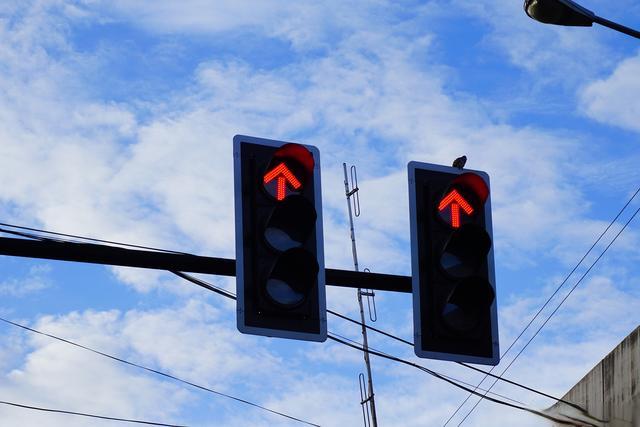
Exploring the future traffic: how does AI navigation predict that the red light will turn green and let you pass the signal light first?

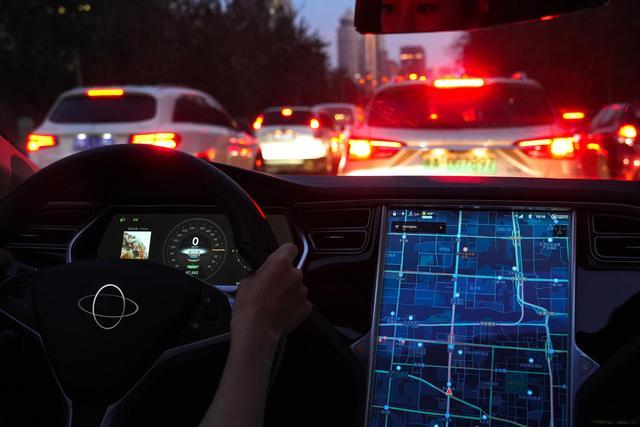
With the acceleration of urbanization and the popularity of automobiles, traffic congestion has become a problem in many cities. Because of the difference of traffic signal control mechanism, navigation software sometimes leads drivers to crowded sections, which slows down the travel speed and affects the road traffic flow. In recent years, more and more navigation software began to try to predict the change of traffic lights through intelligent technology, so that drivers can travel more efficiently. So, how does the navigation know that the red light is about to turn green? This involves black technology such as machine learning and Internet of Things technology, which will be introduced in detail below.

First, the traffic light control mechanism

Before introducing the change mechanism of navigation forecasting traffic lights, let’s first understand the principle of traffic light control. Signal light control mainly adopts timing control and induction control.

Timing control: the signal light changes according to the preset time, for example, the parking red light is on for 3 minutes and the green light is on for 1 minute. This method is mainly suitable for areas with small human flow, such as night or remote areas.

Induction control: the signal lamp responds to the traffic flow on the road through the induction equipment, and dynamically adjusts the time of light color change. For example, when it is detected that the traffic volume increases and there is accumulation at the same time, the signal lamp will adjust the color change time according to the situation to give priority to ensuring the smooth flow of traffic.

Second, how does navigation predict the change of signal lights?

Based on the different control mechanisms of traffic lights, navigation software can use different technologies to predict the changes of traffic lights.

1. Timing prediction

For the signal lamp with timing control, navigation can calculate the period and time of signal lamp change by recording historical data, and compare it with the current time, thus predicting the time of signal lamp change. This method is simple and reliable, and is suitable for areas with small human flow. However, because this method can’t consider external factors such as traffic flow changes on roads, the accuracy is low for urban areas with traffic congestion.

2. Sensor prediction

For traffic lights controlled by inductive devices, navigation software can obtain real-time traffic flow data through the Internet of Things technology, so as to predict the changes of traffic lights. This method needs to cooperate with the sensor equipment on the road, and establish a data model by collecting data such as traffic flow and speed, so as to accurately predict the changing time of traffic lights. For example, Google tried this method in its own map, and established a global traffic information database by collecting users’ location data and traffic condition data, thus providing real-time congestion information on a global scale.

3. Artificial intelligence prediction

In addition to sensor prediction, machine learning can also be applied to signal light change prediction. Navigation software can build a model to predict the change of traffic lights by collecting users’ position, speed and various data used for road features, such as historical traffic volume, rush hour travel time, weather, etc., and then using machine learning algorithms to analyze these data. Using artificial intelligence technology to predict traffic lights can predict the changing time of traffic lights more accurately, and at the same time, take road traffic conditions into consideration to enhance the stability and accuracy of prediction.

III. Summary of the article

With the continuous development of Internet of Things technology and artificial intelligence, the ability of navigation software to predict the change of traffic lights will become stronger and stronger. To sum up, navigation can predict the change of traffic lights by recording historical data, sensor prediction and artificial intelligence prediction. However, at present, the accuracy of navigation software to predict the change of traffic lights still needs to be improved, and more accurate data collection and more efficient algorithms are needed to strengthen the prediction model. The technology of predicting the change of traffic lights can better realize the intelligence of urban traffic and provide drivers with a more convenient and efficient travel experience.

Shanghai International Tourism Resort has also added new projects! Ji Le Tang Million Shudu Street opened

"The former family came to the resort and lived in the Disney Hotel. This time, I found a new spa street, and I tried this. Multi -sclerosis. Tang, who comes from Xishuangbanna, said" All Japanese style, very good Essence ""

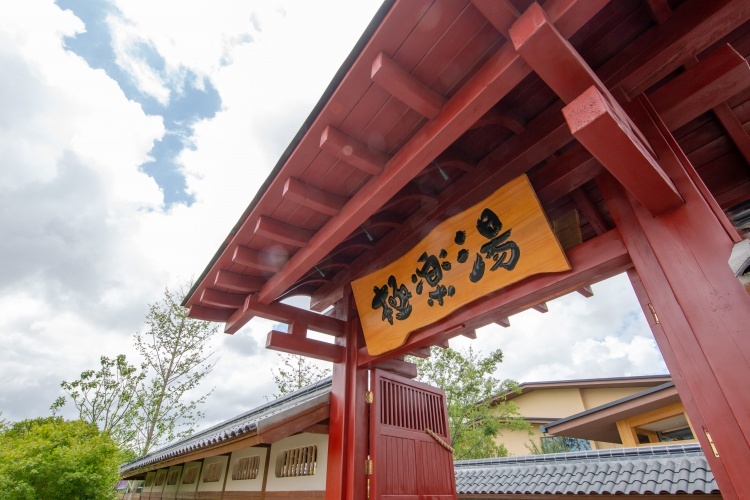
On July 23, it was officially opened on the blooming soup million Qifeng Street, and Shanghai International Tourism Resort. As the country’s first "hot spring resort town", it is very suitable for resort to be a unique Japanese style and add unique Japanese style. This also means that most citizen tourists have leisure choices in resort.

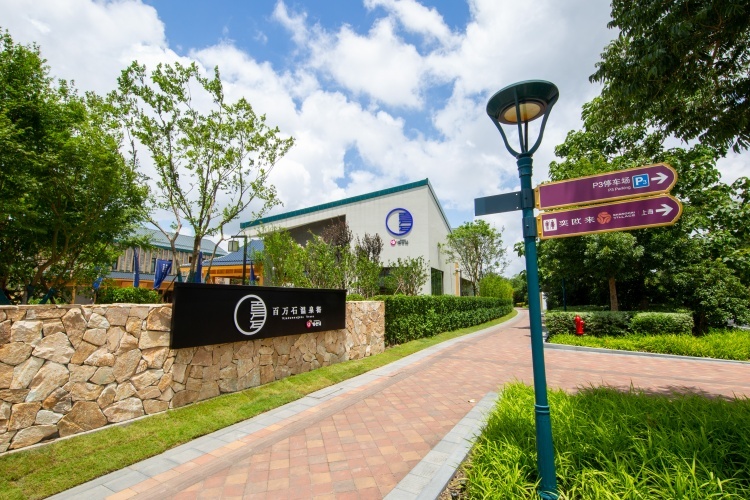
Jiletang Million Shudu Street is located in a bookstore shopping village near 99 Shendi East Road. It is located in Shanghai Lavender Park with a total floor of about 18,000 square meters. This is a multi -functional complex integrated leisure, entertainment, catering, shopping.

It is reported that Jile Million Wo Wo Hot Spring Street is a 10-storey-floors. The Japanese hot spring brand "Company Nam Co., Ltd." 10th store in China, it is also its first store "Million Stone" Essence

Unlike the "Urban Hot Spring" models of other BLISS Tangmen stores, Extreme Le Tang Million Peak Street includes Japanese hot spring venues, Japanese cuisine, pure Japanese collapsed rice rooms, Japanese garden landscapes and courtyards, and so on. Bring new foam and holiday experience to consumers.

According to reports, Tang’s water in each soup hall in the temple Tang million SHUM Hot Spring Street is from the "Silver Decoction" natural hot spring water, in Shaxi, Taicang. "Fluoro" hot springs are rich in "iron acid". Happy soup will also be based on different seasons. Give public tourists more experience in bubble soup. Also, 4 private soup rooms were designed. Each decoration style is different. Outdoor scenery, suitable for family, friends gathering.

The person in charge of the headquarters street engineering operation, "One Tie 20" is a holiday method for traditional Japanese hot spring tourism. Refers to one night, enjoy two meals. Therefore, unlike other happy soup projects, this is a "hot spring resort town", which is a "hot spring holiday town". There are a variety of rooms, more than 20 rooms, for tourists to stay here and enjoy the Japanese SPA resort.

Also, "Three Tea Butterfly House" in Kim Experience Store, "Hyja Island" in Japanese restaurants, Japanese brand pharmaceutical cosmetics shop "Loyal Qiliac Tang" and other companies have opened the door. Three tea butterfly huts, tourists can experience various clothes and experience Japanese traditional culture.

Beijing tourist Zhang Yang took away the happy soup million Shi Hot Spring Street. In the first time, my name was "Three Tea Butterfly House". "I wore Disney Paradise to watch the fireworks last night. It was very interesting. I haven’t experienced clothes before going to Japan. This time, I also gave my regret at that time." The leaders of the three tea butterflies told reporters that the Japanese tea ceremony will be launched next year, one Fragrant experience, and so on. Continuous consumer experience.

Fortunately, in Unicolands, they gathered in many cosmetics, special foods, and so on. Bring a one -stop shopping experience to consumers; all -day restaurant administrative kitchen, full Japanese restaurant. Visitors can enjoy pure Japan and concessions.

It is reported that the temple Tang million SHINK Spring Street began on July 15th. However, the hot spring street soup is only open to the accommodation guests. The private soup house is not open.

Hong Wei introduced that during the trial operation, the room was almost every day in the hot spring street. The concept of peace, "sincerity, no stain" standards of "we will use the safety, remember" standards, and various services have been continuously improved, bringing consumers to consumers A better experience. "

The relevant person in charge, Shendi Group, said that the THATEXTREMELY on the street, allowing the Shanghai International Tourism Resort to have a unique Japanese style. "I hope that citizens of the garden, hot spring holidays, such as home Express Hotel, have gained a new leisure and entertainment experience here. Subsequently, we will continue to launch more high -quality projects.

Editor Zhang Qi

Responsible editor Liu Xinwei

Picture source Xinyiqi

View Author: Pudong Observation