Xiaomi went out to sea, all by "bamboo forest"
Editor’s Note: This article comes from WeChat WeChat official account Value Planet(ID:ValuePlanet), author: Tang Fei, editor: Xuexi, reproduced with authorization by Entrepreneurship.
"It depends on millet in the early stage and millet in the later stage." This sentence is used by the outside world to summarize the development of Xiaomi’s ecological chain. It is said that the ecological chain enterprises in the early stage should rely on Xiaomi’s brand and channel advantages to open up the market, and when these enterprises grow up, they will start to feed back Xiaomi.
Listed companies, such as Huami, Yunmi, Roborock and No.9 Robot, are all developed by Xiaomi. On the one hand, they enriched Xiaomi’s SKU, on the other hand, they also produced many explosive products by relying on Xiaomi’s platform.
At present, after years of development, Xiaomi has formed a huge ecosystem. By the first half of 2021, Xiaomi had invested in more than 330 companies, and with the investment of Shunwei Capital and Xiaomi Changjiang Industrial Fund, the total number of enterprises invested by Xiaomi was nearly 900, with a total market value of one trillion yuan. Among them, 22 have already entered the capital market.
In Xiaomi Ecological Chain Battlefield Notes, Xiaomi officially called Xiaomi’s ecological chain play "bamboo forest effect". After successful verification in the domestic market, Xiaomi has now brought this set of "bamboo forest" play overseas. Can Xiaomi replicate it successfully?
The "evergreen foundation" of traditional enterprises is like a century-old pine tree. Although it has grown up after a long period of time, it will be uprooted once it encounters strong winds and waves. "Notes on Xiaomi Ecological Chain Battlefield" holds that, in contrast, although the life cycle of bamboo is short, it can be endless after becoming a bamboo forest.
When building an ecological chain, Xiaomi followed this thinking and turned a bamboo into a bamboo forest. Through the mode of investment and cooperation, Xiaomi has included a large number of intelligent hardware companies to enter the "Xiaomi Ecological Chain" and quickly occupied the head positions of many subdivided tracks by making explosions.
The so-called Xiaomi ecological chain enterprise refers to a company that has received Xiaomi investment, generally accounting for 20%-25% of the shares, and can still maintain independent operation. By the first half of 2021, Xiaomi had invested in more than 330 companies, and with the investment of Shunwei Capital, Xiaomi Changjiang Industrial Fund and other institutions, the total number of enterprises invested by Xiaomi was nearly 900.
Although Xiaomi is not holding shares, in the early growth of these "bamboos", Xiaomi has always assumed the role of "nanny".
In terms of supply chain, Xiaomi has strong bargaining power by virtue of its advantages in sales volume, which may help eco-chain companies reduce procurement costs in terms of general parts; In terms of products, Xiaomi will deeply participate in the early product definition and design links to ensure the overall harmony of the tonality of ecological chain products. Some intelligent hardware products can also access Xiaomi smart home ecology through Mijia APP; In terms of brand channels, the products of eco-chain enterprises can not only save a lot of brand marketing expenses with the help of Xiaomi’s brand advantage, but also enter all kinds of online and offline sales channels of Xiaomi.
According to Wang Ye, the founder of No.9 Robot, Xiaomi sent a product manager to help negotiate with the supplier for a lower price. Su Jun, the founder of Zhimi, was also impressed. Xiaomi product manager will help coordinate resources. For example, which company has good technology will organize these eco-chain enterprises with weak technology to study.
In addition to support in capital and supply chain, Xiaomi also helps enterprises in team structure.
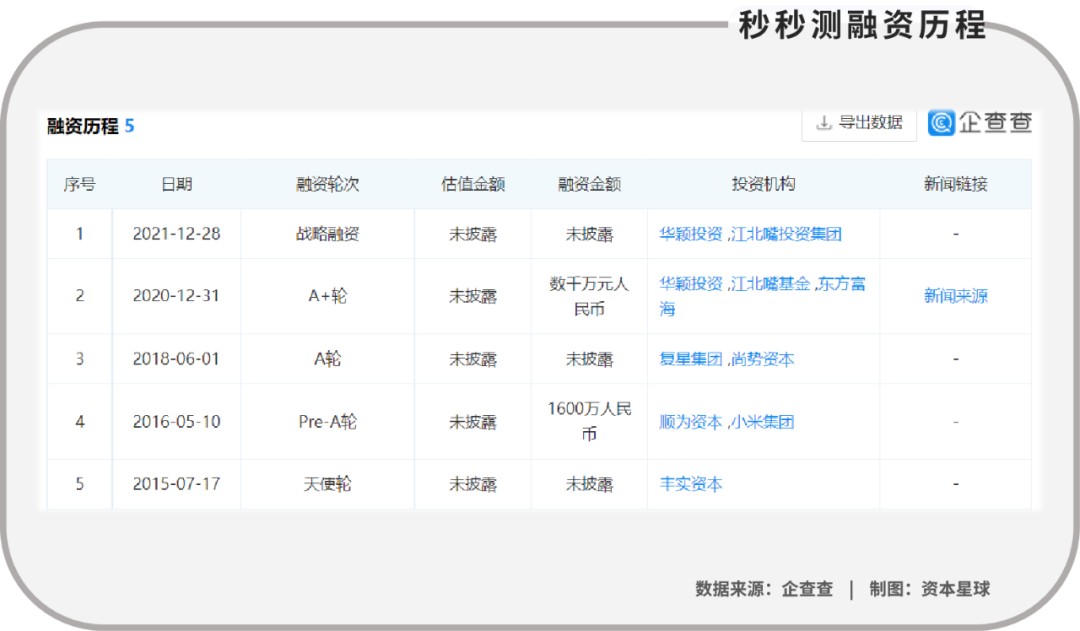
In 2016, Xiaomi Heshun spent 16 million yuan for capital to participate in the Pre-A round of financing, which was the earliest investor of the company. Seconds Test’s products involve medical instrument thermometers, thermometers and cold chain temperature monitoring equipment at the To C end. After confirming the investment, the head of Xiaomi Investment Department found Liang Yuyang, CEO of Seconds Test, stressing that Xiaomi is a strategic investment and will send a number of professionals to help Seconds Test polish its products.
Subsequently, Xiaomi sent many related personnel to connect with Seconds, involving product conceptual design, industrial design, structural design, software design, circuit design, interactive design, mold design, supply chain establishment, production quality control, product release, shipment, after-sales and other links. While participating in R&D and production, Xiaomi also assisted the team building of Seconds Test and built its own product team.
Accompanied by Xiaomi’s "nanny" style, many companies have risen rapidly, and many companies have actively embraced the capital market. Due to the revaluation brought by the listing of the invested company, Xiaomi has also generated a lot of investment income. In 2020, the sum of the two main types of investment income of Xiaomi Group (gains and losses from changes in fair value of investment and investment income from equity method) reached 27 billion yuan, which exceeded the net profit of 20.4 billion yuan in that year.
On the other hand, rich eco-chain products have also propped up Xiaomi’s offline sales channel "Xiaomi Home" to a certain extent.
Lei Jun, the founder of Xiaomi, once publicly stated that "if Xiaomi House is only a pure mobile phone shop, it can hardly survive." Because it usually takes more than a year for people to change their mobile phones, which means that they don’t often walk into mobile phone stores.
But because of the support of eco-chain enterprises, this problem has been solved. Xiaomi eco-chain enterprises can provide many hardware devices such as bracelets, balance cars, electric toothbrushes, refrigerators and color TVs, and even sell daily necessities such as bags, glasses and sports shoes, so that many people can enter the store once a week or two. These eco-chain products not only attract passengers, but also share some of the rent and labor costs of Xiaomi House.
In the autumn of 2016, Lei Jun proudly said at the China E-commerce Development Summit: "We started to open offline stores in February this year, with an average of more than 200 square meters for each millet house, and we can achieve an average of 70 million RMB for each single store. What is this concept? That is, the average efficiency reached 250,000 RMB, while the best average efficiency of retail stores in China was about 12,000 RMB, and we are 20 times this. "
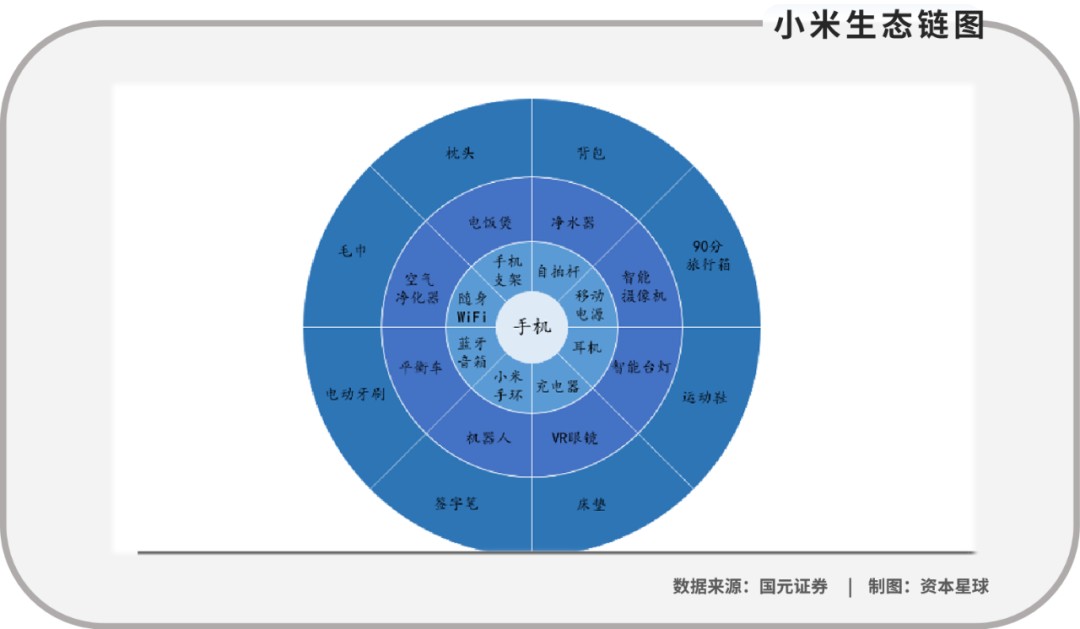
By 2019, the Xiaomi ecological chain has formed a closed loop with rich contents. However, the problem followed. In the crowded entrepreneurial field, even three or four companies in a track are facing "internal competition". At the same time, Xiaomi has invested in more and more track projects, but there are fewer and fewer explosives.
Xiaomi himself also sensed the crisis. According to 36Kr, from the end of 2019 to the beginning of 2020, Xiaomi reorganized its product categories, and finally defined three ecological chain directions: mobile phone peripheral products, whole house intelligence and cool play products. Soon, the SKU of Xiaomi ecological chain was cut from more than 1,500 to more than 600.
Before and after that, a wave of "going to Xiaomi" began to blow up in Xiaomi ecological chain enterprises.
The industry believes that this trend of "going to Xiaomi" is mainly related to Xiaomi’s "cost-effective" positioning. As we all know, Xiaomi has always followed the cost-effective strategy, so the gross profit margin of many eco-chain enterprises is low.
Take Roborock, which is mainly engaged in sweeping robots, as an example, the gross profit margin of its Mijia sweeping robot has been below 20%. With the progress of "millet removal", the overall gross profit margin of the company has increased from 19.21% in 2016 to 51.32% in 2020, and the net profit rate has also increased from -6.14% to 30.23%.
However, on the whole, the "bamboo forest" based on investment did form a strong "brotherhood alliance" in the early stage of Xiaomi’s development. This kind of wolf tactics helped Xiaomi through the most difficult time node of the mobile phone business. After tasting the sweetness, Xiaomi began to spread this method overseas, hoping to get a "second growth curve".
In 2014, Xiaomi, established four years ago, reached the top of the mobile phone market in China, ranking third in the world only by its shipments in China. At that time, investors asked Lei Jun a question: Can the Xiaomi model be replicated around the world?
Just before investors asked questions, Xiaomi had tried to sell red rice mobile phones on e-commerce websites in Indonesia, but the quantity was not large and the official income was not obvious.
However, after the overseas team of Xiaomi went deep into the Indonesian market, it was found that many local Xiaomi mobile phones were parallel imports at that time, and they entered the customs through abnormal means from Hong Kong. Local dealers estimated that Xiaomi mobile phones and parallel machines sold through local official channels almost accounted for half each. The clear market demand has given the Xiaomi team great confidence.
At the beginning of 2015, Lei Jun held a press conference in New Delhi with Xiaomi 4i, a model specially customized for India. By the way, with a song "Are You OK? "became a hit in bilibili, and was promoted to a well-known" powerful male singer "in China.
Source: 味味味
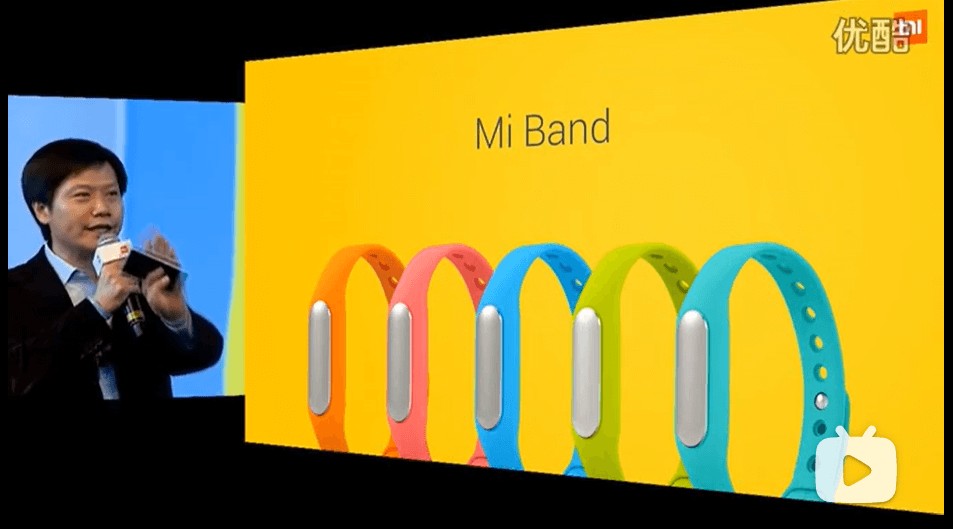
Follow "Are You OK? "The screen is also updated with the improved Mi Band, which is the first time that Xiaomi goes out to sea with eco-chain enterprise products. Only at this time, mi band was not for sale, but for free. The free strategy helped mi band to open the market in a very short time.
According to IDC data, by the end of 2019, the Indian bracelet market shipped 5.3 million pieces, a year-on-year increase of 52.6%, and Xiaomi ranked first in this category.
This targeted and differentiated product idea was later used by Xiaomi to other product lines, such as the smart TV set that was a great success when it was first launched in India; For the flat ground of European cities, electric scooters that are easy to walk through are introduced in Madrid, Paris and other places.
At present, except India, the overseas markets of Xiaomi eco-chain products are mainly in relatively mature consumer markets such as Western Europe, Eastern Europe, Russia, etc. Local consumers have a clear demand for intelligent upgrading of home life quality and corresponding integration schemes, while Xiaomi has unique advantages in product interconnection and price.
In addition to hardware, Xiaomi also started thinking about "software". Xiaomi International App Store is called GetApps, which has been launched in India, Indonesia and Russia. In order to better encourage developers to develop software products, GetApps launched the "Seagull Plan" in 2019 to support high-quality applications, and in 2022, the "Seagull Plan" was upgraded. Xiaomi said that it would invest 1 billion distribution to support 100 high-quality sea-going applications to increase the number of users.
At the Xiaomi Internet Global Eco-Partner Conference at the end of last year, Xiaomi announced the launch of the international theme "Head IP Co-creation Plan", and plans to return 100% of the first year’s revenue to IP copyright partners. It also provides professional team docking for IP copyright partners, and the whole platform has over 30% traffic exposure.
The "soft and hard" two-handed plan has made Xiaomi’s overseas income rise for many years. The third quarterly report in 2021 showed that Xiaomi’s overseas market revenue reached 40.9 billion yuan, contributing 52.4% of the company’s total revenue. In the view of Wang Xiang, president of Xiaomi Group, "internationalization has given Xiaomi the depth of the market and given Xiaomi more room for development."
This is true, Xiaomi mobile phone has been ranked as the "top spot" in the sales list in many countries and regions, but it is also an indisputable fact that the growth rate of the global mobile phone market is declining. In this track with a clear ceiling, Xiaomi has to make plans in advance.
Fortunately, the products of eco-chain enterprises have given Xiaomi enough support and assumed the heavy responsibility of exploring overseas incremental markets. In December last year, Chen Bo, deputy general manager of Xiaomi Group’s ecological chain, shared a set of data. The annual growth rate of Mijia sweeping robot in overseas markets exceeded 100%, the overseas sales of Xiaomi air purifier steadily increased to the same level as that in China, and the total overseas sales of scooters were several times higher than that in the domestic market.
The experience of creating all kinds of explosions in China is being copied overseas by Xiaomi in batches.
However, while going out to sea brings market depth, competitors from different regions, relevant laws, consumption habits and Internet ecology also bring great challenges to Xiaomi’s management and product promotion.
The most obvious challenge comes from competitors in the field of mobile phones. In Xiaomi’s "1+4+X" IoT category strategy, "1" is mobile phone, "4" is TV, smart speaker, router and notebook, and "X" is all kinds of IoT products provided by eco-chain enterprises and cooperative enterprises. Apple, the IT giant, also takes mobile phones as the core, and has laid out many fields including TV, audio-visual equipment and personal computers. Visible to the naked eye, the iPhone compares Xiaomi mobile phone, HomePod compares Xiaomi speaker, MacBook compares Xiaomi notebook, and HomeKit compares Mijia. In these one-to-one fights, Xiaomi’s products are often hard to say excellent.
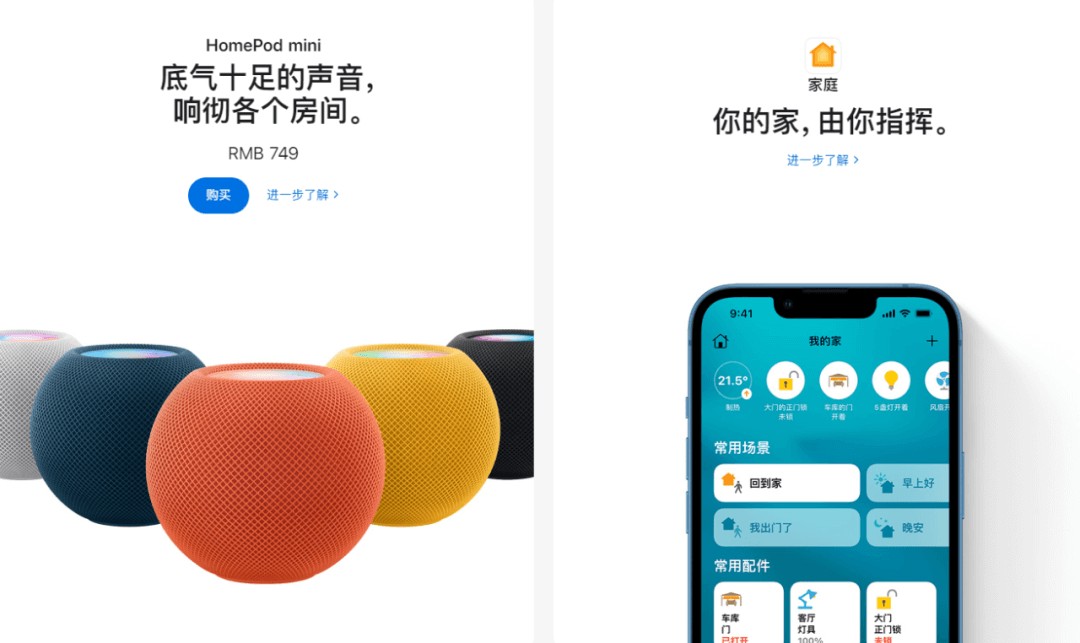
HomePod mini, source: Apple official website
In view of the huge market scale and sustained strong growth momentum of the IoT industry, other mobile phone manufacturers with Internet of Things portals have also launched their own IoT strategies, such as Samsung’s "Samsung Smart Home", Huawei’s "1+8+N" strategy, the IoT open ecological alliance established by vivo through Jovi IOT, and OPPO’s "Building a Three-Circle Model" and so on.
Under high pressure, Xiaomi took the lead in making adjustments. In mid-2020, Lei Jun explicitly upgraded the original "mobile phone+AIoT" strategy to "mobile phone ×AIoT" strategy in a letter to Xiaomi, and determined this strategy as the development strategy of Xiaomi in the next 10 years.
The difference of a symbol, as the pioneer of Xiaomi AIoT, the responsibility of Xiaomi ecological chain enterprises has undergone a huge change.
In the new "×" method, Xiaomi still takes smart phones as the core, and continues to make efforts to form a hardware ecosystem with AIoT. With a variety of hardware devices and a massive user base, it realizes further data precipitation and ecological chain development. In turn, it will feed back the virtuous circle of smart phones and AIoT services, so as to take the lead in the future Internet of Everything era.
In the past few years, the "bamboo forest effect" of Xiaomi has been successfully replicated overseas, which has also set off a new growth climax of Xiaomi. However, in the long run, the international situation, the impact of the epidemic and even the subtle fluctuations in the exchange rate may affect Xiaomi’s performance. After all, Lei Jun has long said that Xiaomi’s hardware profit rate will not be higher than 5%.
Through investment and cooperation, Xiaomi has cultivated his own "bamboo forest".
According to Liu De, co-founder of Xiaomi, eco-chain enterprises have enjoyed Xiaomi’s four major dividends, namely brand dividend, user dividend, channel dividend and overseas dividend, so they can quickly grow into a company with a revenue of more than one billion yuan in two or three years.
But with more and more bamboo, there are fewer and fewer "blank fields" in the market. For example, in Xiaomi Youpin Mall, there are five different suppliers in the category of "sweeping/mopping robots", including Sugawa Robot, Chasing Technology, Roborock, Yunmi Technology and Silver Star Intelligence.
How to balance the competitive relationship between them and avoid internal friction and involution may be an important job for Xiaomi in the future. After all, there are countless examples of brothers turning against each other for profit. Moreover, if this matter is not handled well, "going to Xiaomi" may become a normal state, and Xiaomi’s painstaking efforts in previous years will also be disrupted.
Xiaomi and eco-chain enterprises have succeeded in going to sea because they have given full play to their advantages in products, marketing and services and adapted to local conditions; And can make appropriate adjustments in combination with the policies or consumption characteristics of the target country, and even customize the production of goods.
However, since you choose to go to sea, you must learn to face the wind and waves. The sea is always changing rapidly, and it may only be in a flash from the bright sun to the storm.
This article is published by Entrepreneurial State authorized by the columnist, and the copyright belongs to the original author. The article is the author’s personal opinion and does not represent the position of the entrepreneurial state. Please contact the original author for reprinting. If you have any questions, please contact editor@cyzone.cn.