World Weekly broke through 100 million users in three years, but it was banned by the US government! TikTok’s American Adventure in Ice and Fire

  Recently, a series of experiences of TikTok’s overseas Tiktok in the United States have attracted attention. As a short video sharing application for young audiences, in just three years, the number of TikTok users in the United States exceeded 100 million, and in the first quarter of this year, it became the most downloaded mobile application in the world. However, TikTok, which is so loved and sought after by the American people, has recently been threatened by the US government to ban it. Such an American adventure of ice and fire is worth exploring.

  On August 6th, local time, Trump signed the executive order of the President, giving it to Tik Tok Overseas Edition — TikTok set a 45-day time limit for "closing the door" in the United States. After 45 days, American individuals or entities will be prohibited from trading with TikTok, WeChat and their parent companies in China. However, what the so-called "transaction" actually means is not stated in the administrative order.

  Washington post reporter:It may mean that Americans can’t work for TikTok, or that Apple Store and Google Store can’t provide downloads for TikTok. We don’t know what this means yet.

  Recently, Trump has repeatedly claimed that all mobile applications developed by China Company pose a threat to the national security of the United States.

  On July 29th, TikTok CEO Meyer responded that TikTok was registered in the United States, and the top management of the company was all held by Americans. All the data of American users were stored in the database located in Virginia, USA, and only backed up in Singapore. TikTok has never provided and will not provide user information to the government of China.

  He also said that in order to prove his innocence, he is willing to show the core algorithm of TikTok data collection to the US Foreign Investment Committee, which is responsible for the supervision of foreign-funded enterprises.

  Pappas, General Manager of TikTok USA:Our mobile application is the safest, and we know how to do the right thing ….. TikTok’s 1,500 employees are working hard for it every day, and we will create 10,000 jobs for the United States in the next three years.

  In August 2017, TikTok entered the American market, and then Tik Tok’s parent company "ByteDance" acquired the American short video sharing website Musical.ly for $1 billion. The following year, it launched a new version together with Musical.ly, which is now the overseas version of Tik Tok — TikTok, its customer base is mainly young people.

  In just three years, TikTok has quickly become popular in the United States, with the annual growth rate of users as high as 376%. In Japan, Brazil, Russia and other countries, TikTok also topped the local App Store and Google Play download rankings.

  Zach King, born in 1990, is one of TikTok’s most famous bloggers in online celebrity, with more than 45 million people following him. He used the video editing function on TikTok to make his work look like magic.

  TikTok blogger Zach King:What we see is a new style of humor, which is different from painting on Vine or the long video on YouTube. It is an expression-packed culture. People create emoticons according to their own preferences. What I like about them is that if you watch these short videos carefully, you will find the deep humor contained in them, which is a trend.

  TikTok’s user base is mainly millennials like Zach King, and younger generation Z teenagers.

  Millennials were born from 1981 to 1996. Generation Z, also known as network generation, refers to younger teenagers born between 1995 and 2009.

  Tik Tok users:We must vote in November so that we can drive Trump away.

  Tik Tok users:I want to vote for Biden.

  Like all the popular applications in the world, there is also political content on TikTok platform.

  According to the statistics of Pew Research Center, compared with the last US election in 2016, the average age of voters in this year’s US election is lower, especially among white voters, and the proportion of millennials and Z generations who love to play TikTok has increased significantly.

  In June of this year, Trump has been "integrated" by TikTok users.

  On June 16th, a user launched an initiative on TikTok, calling on people not to attend the Trump campaign rally in Tursa, Oklahoma four days later.

  TikTok users:I suggest all those people who want to see 19,000 seats empty, grab tickets now and then don’t show up. What do you think of this idea?

  The initiative immediately received more than 2 million likes and a lot of forwarding, and tens of thousands of TikTok users showed videos on social media that they had grabbed tickets for the rally but did not intend to go.

  TikTok users:Oh, my God, I got tickets to the Trump rally. What a surprise, but I’m not going.

  In the end, the attendance rate of the Trump campaign rally was less than 33%. In the face of a large number of vacant blue seats in the venue, Trump was furious.

  A month later, Trump announced the ban on TikTok.

  TikTok users in the United States:I don’t think it’s a coincidence that after the campaign rally in Tulsa was screwed up, Trump suddenly banned TikTok.

  On many occasions, Trump also unabashedly expressed his dislike of TikTok.

  US President Trump:When my friends learned that I was going to ban TikTok, they called one after another. Their children all love to play TikTok, but my friends don’t. Because of TikTok, they can’t even see the child.

  In addition to Trump’s complaints about TikTok, TikTok, which is popular among American users, also makes the social media industry leader — — Facebook is quite uneasy.

  According to statistics, in the first quarter of 2020, the number of monthly active users of Tik Tok has surpassed Twitter, Instagram and Snapchat to catch up with Facebook.

  In May this year, after the black man Floyd was crushed to death by a white policeman, protests against racial discrimination broke out in hundreds of American cities. On TikTok, a forum called "Black Life is Life" attracted 18.1 billion visitors.

  "Al Jazeera" anchor:An entertaining social software has become increasingly influential in politics.

  In the United States, when it comes to the most politically influential social media platform, Facebook is the only one.

  Facebook is not only the main platform for Trump to publish political advertisements, but also the extraordinary personal relationship between Trump and Facebook CEO Zuckerberg is no secret.

  US President Trump:I’m awesome on Facebook.

  US President Trump:(January 2020), I ranked first on Facebook … I wouldn’t be too surprised if Zuckerberg wants to run for president one day. He (Zuckerberg) has this ambition.

  Since the end of 2015, Facebook has repeatedly lowered the bottom line of political advertisements for Trump. In Washington post’s view, Facebook did not deal with Trump’s hate political advertisements, which led to the abuse of "social media" by politicians.

  As we all know, Facebook’s more serious "governance" behavior is that in 2018, as many as 87 million Facebook user information was obtained by the consulting company "Cambridge Analysis" and used maliciously.

  Al Jazeera:In 2018, Cambridge Data Analysis Company stole tens of millions of American user information from Facebook, and these data were used to launch psychological warfare against voters in swing States, cleverly inducing these voters to vote for Trump in 2016.

  Facebook CEO Zuckerberg:In 2018, Facebook did not do enough responsibility, which was a big mistake.

  At present, as the leader of social media, Facebook has 2.7 billion monthly active users, reaching about one-third of the global audience. Zuckerberg also acquired Instagram and WhatsApp, and then acquired Oculus, a VR technology company.

  In the April 2020 global social media download ranking, four of the top six applications were owned by Facebook. Its monopoly position is self-evident.

  Facebook co-founder Hughes:In May 2019, many companies were unable to fight back in the face of Facebook, and they could not get a place to live. Monopoly makes innovation disappear. The way for Facebook to win is to buy it before its competitors become stronger or copy the innovations of competitors. Some startups have gained considerable investment and attention. However, since 2011, no large social platform has survived.

  Washington State Councillor Jayapal:How many competitors did Facebook copy?

  Facebook CEO Zuckerberg:Congresswoman, I can’t give the number of companies.

  Washington State Councillor Jayapal:Less than five?

  Facebook CEO Zuckerberg:I don’t know, Congresswoman.

  Washington State Councillor Jayapal:Less than 50? In my opinion, Facebook is a typical monopoly power. Your company collects and realizes our data, and then uses these data to monitor competitors, copy, acquire and strangle competitors.

  TikTok is Facebook’s opponent who tries to copy and strangle, because Facebook has never been able to play with short video applications.

  In November 2018, Facebook launched a short video application — — Lasso failed. This year, its INSTAGRAM launched another application — — Reels。 Whether it’s software pages, video editing and special effects, Reels is like a fake version of Tik Tok.

  TikTok CEO Mayer bluntly said in official website that Facebook is a COPY dog that constantly copies its competitors.

  On July 29th, Tik Tok CEO Meyer accused Facebook of trying to drive TikTok out of the market in an unfair way under the guise of patriotism.

  On August 5, on the day when Trump officially announced the ban on TikTok, Facebook "coincidentally" announced that its short video sharing application Reels was officially launched.

  When the snipe and the clam fight, the fisherman gains.

  According to Business Insider, at present, the biggest potential buyer of Tik Tok is likely to be the technology giant Microsoft. Microsoft is not only strong, but also is not facing the antitrust investigation of the US Congress like the Big Four, such as Facebook, Google, Amazon and Apple.

  According to reports, the final purchase price of Microsoft may be only $10 billion to $30 billion, while TikTok’s market valuation currently exceeds $75 billion. For Microsoft, this is obviously a super bargain.

  THE VERGE, an American technology media, pointed out that Microsoft has always been not good at operating social applications that need to face consumers directly. From the withered chat software MSN to SKYPE and LINKEDIN, the performance is mediocre, and TikTok acquired by Microsoft is likely to turn from prosperity to decline and lose its competitiveness.

  Therefore, Washington post thinks that all this may be exactly what Trump wants: letting Microsoft screw up TikTok will not only help Zuckerberg and his Facebook company in the White House, but also weaken the ability of young voters to use TikTok platform to gather strength and deal with Trump.

  Regarding the TikTok incident, Adam Segal/Council on Foreign Relations, director of the US Council on Foreign Relations, commented: "I don’t think the data of 15-year-old children dancing has much to do with national security. Banning TikTok without conclusive evidence shows the Trump administration’s inferior response to the fact that China has risen in the field of science and technology."

  In Washington post’s view, the Trump administration’s protection of domestic enterprises such as Facebook and Google under the banner of "national security" is tantamount to opening a Pandora’s box, which may cause endless troubles.

The ending of "Perfect Stranger" slams the emotional pain, causing hot discussion among netizens.

1905 movie network news The topic masterpiece "Perfect Stranger" landed in the national cinema on May 25th. Since the film was released, it has received rave reviews on major ticketing platforms and movie websites, among which V Tao’s recommendation rate is 93%, Taobao Film’s rating is 8.5, and Cat’s Eye rating is 8.6, ranking first in the same period. The box office has also been rising under the blessing of good reputation, with the opening weekend exceeding 16 million, setting a record for Italian films in China. Directed by Paolo Genovese, the film reveals the crisis of trust of contemporary people through a large-scale emotional trial between three couples and a good friend after the secret exposure of their mobile phones. I believe that with the continuous fermentation of good word of mouth, this "May Must See" warning emotional blockbuster will continue to exert its strength and gain recognition from more viewers.

See also the masterpiece of small language counterattack to play a new height of psychological impact.

In the past two years, the audience’s choice tends to be diversified, and they are no longer blindly pursuing audio-visual impact, which gives the masterpieces of small languages in India, Spain and Thailand the opportunity to counterattack frequently. The Italian film "Perfect Stranger", which is now being shown, has successfully taken over, which also shows that the audience’s hard power can be captured without IP and special effects. Every mobile phone in the film is an untimely bomb. Once it rings, there will be an ulterior secret exposure, which will lead to a bloodless fight, so that many viewers exclaimed, "This is not a mobile phone game, but a serial killing game" and "The best movie I have seen this year is not just as simple as the Italian version". The suspense of layer-by-layer promotion and the "killing" of step-by-step escalation have brought psychological impact to a new height, which has made the audience hooked up and praised "wonderful! The scene is simple, but the drama conflict is more exciting than one wave. "It can be said that the heart is on the string."

Sharp dialogue, dismantling the relationship between men and women, emotional pain, and so on.

The film is a bottomless confession that few people dare to play in real life, which greatly satisfies people’s curiosity, and at the same time, it also hits the pain of the relationship between men and women. The three couples in the film each have their own "itch", which corresponds to the three marital states in reality, and also makes some viewers feel strongly substituted, and they are extremely afraid to think carefully. "The whole process is high-energy, and the jokes are arranged just right, but if you think it is a comedy, then you are wrong, and it is the best thriller of the year." Thriller is not only the plot, but also the sharp dialogue, which has become a big plus. "The script is great, and a lot of wonderful lines are caught." Some viewers said, "Men are PCs and women are Macs. I fell into deep thinking after spitting out this slot." There is also "the mobile phone is like the black box of our life. If couples look at each other’s mobile phones, how many couples will end up in a dead end", which not only lays the groundwork for the plot, but also subtly urges the audience to self-examine. Some people admit that they are scared to quickly add a password to their mobile phones, while others claim that they are "thinking it over, I still think this game is necessary".

God’s ending leads netizens to discuss the details. It is worth brushing.

The story happened during an eclipse, and the ending was a stroke of genius, throwing a metaphor of "the dark side of the moon, that is, the dark side of people", which quickly triggered a hot discussion among netizens after it was released. Many viewers said that the eclipse stalk slipped to fly. "One second, it was hysterical and turned against each other. The next second, everything was reversed, all secrets were still secrets, and things that should not be revealed were still undercurrent." Some people think that although the ending has a strong surreal meaning, the theme conveyed is extremely realistic. "I give full marks for God’s ending, just to show you that if you don’t play the game, everything will be as good as before, which will set off the cruelty of reality after playing the game." There are more viewers discussing whether the ending is a parallel world or whether the characters pretend nothing happened. In fact, the male owner Rocco’s blue and white shirt switching and his wife Eva’s earrings have all given hints.

In addition, there are many wonderful details in the film. For example, Rocco said at the beginning that he refused to play the game, "I am worried about what secrets you are hiding, and I don’t want to know if you are cheating." Many viewers said that it needs two brushes to ponder carefully. When seven characters are the murderer, the victim and the judge at the same time, the audience, like detectives and juries, fully appreciate the unique viewing experience of exploring the truth and empathy, especially married and unmarried audiences, which can find resonance and enlightenment.

[Going to the grassroots in the New Year] Their determination makes life warm.

  Beginning of spring. At this time, Wuhan is still quiet and dignified, but life goes on and the city is running.

  Sanitation worker, courier brother, "special car" driver and epidemic prevention volunteer … … When most people are forced to stay at home, they are always on the street and on the road … … They guarantee the normal operation of the city, and they are the guardians of Wuhan.

  "Only by properly handling the garbage can we really create a healthy environment for everyone."

  Xiong Pengde (sanitation worker) wants to say to his family most: "We must be on the top, for no reason, we just want to eliminate the epidemic as soon as possible."

  At 3:30 in the morning, the city is still sleeping soundly. Xiong Pengde got out of bed on time. After a simple wash, Xiong Pengde picked up the cleaning tools and walked to Zhenxing Second Road. This is his most familiar "site", and I can’t count how many times I have to go back and forth on this road every day.

  At 4:00, it was still dark, and Xiong Pengde’s work began. "I just swept over and over again, and when the cleaning work was over, I looked up and it was already bright."

  This is only part of it. At 7:00, his other cleaning job started again, and he was still familiar with the street. He did it until 6:00 pm. "I can’t do anything else, but I have absolutely no problem cleaning and cleaning, and the garbage must be clean." Speaking of his own job, the 55-year-old man who came to work in Wuhan from Xiaogan eight years ago changed his previous shyness and plain face with a touch of unquestionable confidence.

  "My wife is also a sanitation worker. Now, what we want most is to do a good job in street sanitation and bring a good environment to everyone. I always tell my wife that hygiene is so important that we have to be on top. Why not, I just want to eliminate the epidemic quickly. " Speaking a less authentic Mandarin, Xiong Pengde’s tone is firm.

  At 1:00 pm, on the second road of Zhenxing, the reporter walked and chatted with Xiong Pengde, and met another sanitation worker — — Huang youjun The director of Changqing Street Environmental Sanitation Management Office in Jianghan District has been working continuously for six hours. After adjusting the mask, he told reporters that now, sanitation workers are not only very tired, but also very dangerous. "The garbage is full of germs. Now is a special period, and everyone will avoid it. If hospitals are the main battlefields of the epidemic, then garbage bins and discarded articles are our main battlefields. Only by properly handling the garbage can we truly create a healthy environment for everyone. "

  In a special period, there is no retreat. Since the beginning of the epidemic, Huang Youjun has never returned home. "My wife also works in the community. Neither of us dare to go home. We can only stay in a hotel and leave our children alone at home."

  "Worried?" The reporter asked.

  "Said don’t worry is false. But everything we are doing now is to tide over the difficulties as soon as possible. At that time, our family can have a hot reunion dinner. " While speaking, the sun shone on Huang Youjun’s face, which was particularly bright.

  "No matter how long it takes, we young people swear to advance and retreat with Wuhan."

  Hua Yuchen (an epidemic prevention volunteer) wants to say to his family most: "Protecting yourself is also protecting you."

  At 12:00, he took off his mask, held a box lunch, and casually sat down in a place where there were few people. After 90, volunteer Hua Yuchen just sent the medical staff to Zhongnan Hospital, and went to the Beihu toll station 20 kilometers away to quickly grab two lunches and get ready for work. She smiled and said that she had done two volunteer "part-time jobs".

  "hello! Take your temperature. " Wearing a red volunteer vest, she stood at the intersection with a thermometer and became a member of the volunteer team for epidemic prevention and control. These days, she has been very busy. During the work break, she talked to the reporter about herself: "I am a music teacher at Ganghua Primary School and have been paying attention to the dynamics of the epidemic. On January 23, I saw in my circle of friends that the Qingshan League Committee was recruiting driving volunteers, and I immediately signed up to provide pick-up service for medical staff."

  These days, she picked up more than a dozen medical staff and drove back and forth in Qingshan, Wuchang, Hankou and other districts. This is also the first time that Hua Yuchen has been in close contact with medical workers. "To my surprise, many doctors and nurses are younger than me, including ICU nurses and doctors in intensive care units." She said.

  What impressed her deeply was that she picked up a head nurse. Hua Yuchen saw her step back three times before getting on the bus, saying words of comfort to her husband, and did not forget to take care of the old people and children at home. Along the way, she constantly coordinated the scheduling of department personnel on the phone, and her voice was hoarse.

  "In Wuhan, there are the most ordinary people and the most amazing people." Hua Yuchen said that for volunteers, there is a principle of work that is to help, but not to add chaos, and to go wherever there is a need.

  On January 25th, the number of drivers’ volunteers increased. When she heard about the recruitment of volunteers for epidemic prevention and control, she took the initiative to join in and came to Erqi Bridge in Wuhan to become a member of the inspection duty, and cooperated with the traffic police to check the temperature of people passing by.

  At this time, the vehicle is slow to pass the inspection, and most drivers are very cooperative. Every time Hua Yuchen measures someone, she will smile and say "the temperature is normal", and many impatient drivers will change their attitudes and nod their thanks to her. "There are still many drivers who will take the initiative to say ‘ You have worked hard ’ Some even throw export hoods and alcohol sprays from the window, telling us to take care, and the scenes reflect the human touch of Wuhan. "

  As usual, on February 3, the first thing Hua Yuchen did when she returned home was to disinfect and isolate herself in the room. "Up to now, my parents still don’t know that I go out to be a volunteer every day. I told them to be on duty at work." She went on to say, "I don’t tell them because I’m afraid they’re worried. I will also strictly disinfect and protect myself and protect them."

  In Wuhan, many young volunteers have devoted themselves to the front line, which is their confidence in the city. Hua Yuchen is no exception. At the scene of delivering materials, she also met a student’s parents, who never rested and provided logistical support for the supporting medical team. At that time, I was carrying materials with the other party. I heard that another student’s mother was in this hospital ward. Her nose was sour and her eyes were moist instantly: "No matter parents or teachers, we should set an example for our children."

  Some children sent her WeChat through their parents’ WeChat, telling her to pay attention to safety. She said: "We are not sensational, we will go directly if necessary. No matter how long it takes, we young people swear to advance and retreat with Wuhan."

  "We can run and feel particularly meaningful."

  Yuan Shuang (courier brother) wants to say to his family most: "After the cold winter, the warmth will eventually arrive."

  At 14:21, the 62nd express order of Wuhan courier Yuan Shuang is about to be completed. When the reporter saw him, he wore a mask and trotted all the way, and the outside of the mask was bulging. "You put the courier at the door." The customer said in the house through the security door that this is the normal state of sending express delivery these days, and many customers don’t want to receive it face to face. Just as Yuan Shuang turned to leave, I didn’t expect the door to open. "Wait a minute, this is for you. You have worked hard these days, so pay attention to protection." Yuan Shuang took it and saw that it was two masks. "What a surprise! Our customers care about us." He smiled.

  Wuhan, this city, we meet each other less often, but we can’t live without the kindness and temperature of human nature. In the past few days, he was also pleasantly surprised when he was busy. After every single package was delivered, customers always thanked him. They often handed out medical masks from the crack of the door, brought disinfectant, medical gloves and milk, and some even gave a small bag full of snacks and confession notes … … During this time, these have become very common.

  Ordinary people like Yuan Shuang serve the normal operation of the whole city. The post-90 s young man is an authentic Wuhan man. As the stationmaster of the express delivery site, he chose to stay behind and started a series of runs.

  At dawn in the morning, he glanced at his mobile phone, and at 6 o’clock, he was ready to get up and go out. At 6: 50, he arrived at the company, holding an electronic thermometer. The first thing to do was to take the temperature of his colleagues. At 7 o’clock, they started unloading. At 8 o’clock, they began to deliver goods.

  "Today’s goods, there are many express mails with yellow marks, indicating that this is an urgent item, so we will deliver it first." Yuan Shuang said that driving on an empty street, he and his brothers in the station picked up the parcel delivery of half the Tmall supermarket in Hanyang District, Wuhan, which was very fulfilling.

  It’s almost one o’clock in the afternoon before he has time to have a rest. "I know you didn’t eat." Colleagues sent him a rice covered with shredded pork with green pepper. This concern was not thanked each other, but was more a sign of eyes. He squatted on the conveyor belt and chatted with reporters while eating. In less than ten minutes, he hastily finished his meal and turned to the warehouse to see the goods to be delivered in the afternoon. He was also full of daily necessities purchased by citizens online, and delivered every expectation in time.

  Ask him why he likes to deliver goods at a trot? He said with a smile, as a native of Wuhan, he is also a courier. In times of crisis, he can do something for his city in his post. "We can run and feel particularly meaningful."

  The afternoon sun is shining brightly. After delivering the goods, he told reporters: "I want my parents to see that after the cold winter, the warmth will eventually arrive. Come on, Wuhan!"

  "I want to be a good volunteer driver these days."

  Zhang Yichi, the driver of the "special car", wants to say to his family most: "These days, I especially look forward to being able to ‘ Laid off ’ 。”

  At 9: 00 pm, the "special car" arrived as scheduled. As soon as the car stopped and rolled down the window, the reporter saw Zhang Yichi wearing a mask, with the unique boldness of Wuhan people, waving his hand: "Get on the bus, these days are busy!" Talking about his work these days, he said, "Yesterday, a friend of China Construction Third Bureau contacted me and said that two colleagues had reported to the construction site in Thunder God Mountain hospital. I picked up one at 4 pm, another at 8 pm, and picked up two medical staff halfway, just in time. "

  At the age of 32, he is not a full-time driver, but a member of the Youth Federation of Wuchang District, Wuhan, working in a private enterprise. "I want to be a good volunteer driver these days." Zhang Yichi said.

  On January 23, public transportation in Wuhan stopped. He heard that many doctors and nurses can’t go home after work. At this time, some enthusiastic volunteers quickly started QQ group and WeChat group, and a large number of brave Wuhan citizens went out of their homes to form a volunteer team. On this day, some people roughly counted four or five thousand people, and Zhang Yichi was one of them.

  The reporter opened Zhang Yichi’s diary, with simple words but full of warmth — —

  January 25, the first day of the first month: I got up at 5: 50 this morning, and I picked up five people in total. It’s rare in this group, and I saw an old brother pick up more than a dozen orders.

  January 26th, the second day of the first month: Today, all four orders are long-distance trans-regional, each order is 20 to 40 kilometers, so tired. Hubei Maternal and Child Hospital to Jinyintan Hospital, Hankou Station to Zhongnan Hospital … … I went out at 12: 30 noon and came back at 8: 00 pm, mainly because I couldn’t find a place to eat outside. I didn’t come back until I was hungry, and I didn’t go out until I was full tomorrow.

  It’s still winter in Wuhan, but Zhang Yichi said that the small space in his car is full of warmth between people. A doctor in a car stuffed him with a pack of masks to remind him to pay attention to self-protection; A nurse sent a bottle of alcohol and showed him how to use spray in the car. Another nurse, seeing that his alcohol was running low, heard that the alcohol in the small supermarket had been replenished, bought several bottles and threw them in the car, insisting on no money.

  On January 29th, on the fifth day of the first month, after getting up in the morning, Zhang Yichi found that the number of WeChat groups was obviously less. He thought this was a good sign and the capacity was eased. On this day, he found a new job, and the Youth Federation in the district recruited volunteers. A large number of overseas aid materials arrived in Wuhan and needed translators. "My English level is under no pressure, and my wife is also a French teacher, and her Japanese level is N1." He said with a smile, with some pride in his tone.

  At noon on February 4, he went home to sleep, stayed at home for a while, and saw new news in the WeChat group. He said, "No matter, I’ll pull for a while, and now the demand is decreasing, otherwise I won’t be able to grab the order in the future."

  Picking up his mobile phone, driver’s license and mask, he threw them at the copilot, and he drove out again. Zhang Yichi said: "When the order is gradually restored, I should ‘ Laid off ’ Yes. "

  "However, I am particularly looking forward to ‘ Laid off ’ 。” He added that this is what he has often said to his family recently.

  (Guangming Daily, Wuhan, February 4 th, our reporter Jin Haotian, Zhang Zheng, Lu Lu)

From "Pirate" to "Defender" —— On the Internal Logic of American Safeguarding Hegemony by Protecting Intellectual Property Rights

  Xinhua News Agency, Beijing, July 24th (International Observation) From "Pirates" to "Defenders" — — At the end, the inherent logic of the United States to safeguard hegemony under the pretext of protecting intellectual property rights

  Xinhua News Agency reporter Su Liang

  Encourage discovery and invention, protect innovation, and promote the application of science and technology — — This is the proper meaning of protecting intellectual property rights; Maximize economic and social benefits, improve the quality of human life, and promote global common development — — This is the ultimate goal of protecting intellectual property rights.

  However, as a country with the first-Mover advantage in technology, the United States has long instrumentalized and politicized the protection of intellectual property rights, and often suppressed other countries with measures such as long-arm jurisdiction and high tariffs, in order to seek its own self-interest, consolidate its hegemony, and deter the development and progress of other countries, especially emerging countries.

  From "cutting corners" in the early days to "bullying" now, the United States has changed from a "pirate" to a so-called "guardian", monopolizing in the name of protection, with the fundamental purpose of maximizing self-interest. Many experts pointed out that the intellectual property policy of the United States pursues pragmatism, protectionism and hegemonism, which goes against the original intention of the international intellectual property protection system.

  Building the number one industrial power with "stolen property rights"

  Intellectual property protection in the United States has a disgraceful past. The United States, which is now always pointing fingers at other countries, was once a hotbed of global intellectual property theft. Peter Andreas, a professor at the Watson Institute of International and Public Affairs at Brown University in the United States, said that the United States only became a "defender" of intellectual property protection after becoming a leading industrial power.

  Samuel slater, who enjoys the reputation of "the father of the American industrial revolution", was once an apprentice of a British textile mill. He brought the advanced hydraulic spinning machine technology to the United States in violation of British law and was denounced as a "traitor" by his hometown people. Boston businessman Francis cabot Lowell stole power loom technology from a British factory and successfully "copied" it in the United States.

  In the early days of the founding of the People’s Republic of China, American political elites not only refused to steal advanced European technology, but also openly advocated and supported it. Washington, the founding president of the United States, lavished praise on Thomas Digges, an American commercial spy who had been imprisoned in Britain for many times, saying that he was "not only friendly, but also full of enthusiasm". Washington also recommended British businessman Howell to set up a factory in Virginia, USA, specifically urging the governor not to disclose Howell’s name to avoid "getting into trouble" for the latter in Britain.

  Hamilton, the first US Treasury Secretary, claimed in the far-reaching Report on Manufacturing that the export ban of advanced technology in European countries was "selfish" and "exclusive", and also said that people who brought "technical improvements and secrets with extraordinary value" to the United States should be encouraged.

  Doreen Ben-Atal, a professor of history at Fordham University in the United States, lamented that the American industrial revolution was "born of stolen property rights".

  Although the United States enacted a copyright law and set up a patent office a long time ago, it lacked the will and means to supervise the authenticity of the application, and only relied on individuals to "swear" and did not protect the rights of foreigners. Pat Choate, an American political economist, believes that the United States at that time was a "super refuge" for global industrial pirates to evade legal accountability.

  The United States was once a big country of book piracy, and even libraries and bookstores were full of pirated books. Dickens, a great master of English literature in the 19th century, was once a victim of piracy in the United States. He and other well-known British writers jointly petitioned the United States Congress, hoping to stop piracy, but they did not get a serious response, and finally they had to give up.

  In 1886, the Berne Convention for the Protection of Literary and Artistic Works was concluded to safeguard international copyright. Although the United States participated as an observer in the international conference that adopted the convention text, it was not good for the United States to participate in the convention because of the underdeveloped publishing industry in the United States, so the United States did not sign the convention. It was not until 1989, more than one hundred years later, that the United States finally joined the convention.

  Promoting the maximization of American interests with "American standards"

  One of the important tools for the United States to consolidate its economic first-Mover advantage and global hegemony is to push the "American standard" for intellectual property protection. The United States began to incorporate intellectual property protection into its hegemonic tool in the 1980s. At that time, Japan’s technology and economy developed rapidly and maintained a trade surplus with the United States for a long time, which made the United States feel a sense of crisis about its global competitiveness.

  In 1985, the US President’s Commission on Industrial Competitiveness emphasized in a report that in order to give full play to the advantages of the United States, intellectual property protection should be a priority on the policy agenda. Not only expand the scope of intellectual property protection in the United States, but also promote America’s trading partners — — Especially in newly industrialized countries — — Obey American rules.

  That is to say, the essence of intellectual property protection in the United States is to maintain its dominant position in international trade. Therefore, the United States has included the so-called "protection of intellectual property rights" with "market access", "manipulation of exchange rate", "anti-dumping" and "countervailing" in the "toolbox" to safeguard its global hegemony. On the basis of Article 301 of the United States Trade Act of 1974, the Comprehensive Trade and Competition Act of 1988 established "Special Section 301" specifically for intellectual property issues. This provision stipulates that the US Trade Representative has the right to evaluate whether other countries fully protect US intellectual property rights and take retaliatory measures.

  Experts say that the United States ostensibly aims to protect the legitimate interests of intellectual property owners, but because it has the power to define "legitimate interests", it is actually safeguarding its global economic hegemony by forcing other countries to abide by American laws and implement long-arm jurisdiction.

  As soon as the relevant policies were introduced, the United States "started" Brazil, the largest economy in Latin America. In order to support the infringement allegations of American pharmaceutical interest groups, the United States imposed tariffs on some Brazilian products exported to the United States in the late 1980s, and prevented Brazil from appealing under the framework of GATT, forcing Brazil to amend its domestic laws to safeguard the interests of American enterprises.

  In the Japan-US trade negotiations, Japan also had to make a commitment to protect the intellectual property rights of American enterprises. Some analysts pointed out that being forced to adopt the "American standard" is one of the important reasons for the decline of Japan’s economy.

  The United States not only forces its trading partners to apply "American standards", but also tries to promote "American standards" for the protection of intellectual property rights in international mechanisms. The United States, together with developed countries, included the issue of intellectual property rights in the Uruguay Round of GATT negotiations and promoted the conclusion of the Agreement on Trade-related Aspects of Intellectual Property Rights (TRIPS). TRIPS adopts a "one-size-fits-all" model for intellectual property protection standards of countries with different levels of development, and its achievement is regarded as the internationalization of "Special Section 301" in the United States.

  The United States promotes intellectual property protection in the international arena, not simply to maintain innovation or promote progress, but more to impose "American standards" on countries with different levels of development, transfer the benefits due to developing countries to developed countries, and promote the maximization of American interests.

  Building technical barriers to deter the development of emerging countries

  In today’s world, multi-polarization and globalization are developing in depth, and emerging markets and developing countries are rising in groups, which has become a universal aspiration to promote the development of the global intellectual property governance system in a more just and reasonable direction. In this context, the United States attempts to plan a "higher standard" and more exclusive intellectual property system to consolidate its monopoly position and deter the development of emerging and developing countries.

  Ben Atal is the author of Trade Secrets: Knowledge Theft and the Origin of American Industrial Power. In his book, he pointed out that the logic of protecting intellectual property rights in the United States and other countries is hegemonism. In the past few decades, developed countries such as the United States have transferred industries with high pollution and high labor costs to developing countries, and their economic focus has focused on high-tech industries and services, so they have paid more attention to maintaining "knowledge capital."

  The United States is not satisfied with the benefits brought by TRIPS, and even criticizes the provisions for ensuring underdeveloped countries to obtain medical technology and medicines as "loopholes in intellectual property protection" and seeks to establish a more stringent multilateral intellectual property mechanism.

  After long-term closed-door negotiations, western countries led by the United States reached an agreement on the Anti-Counterfeiting Trade Agreement in 2011. The agreement improves the standards of intellectual property protection under TRIPS in many aspects, and once it comes into effect in the future, it will seriously infringe on the interests of developing countries under the transmission of international trade mechanism. In addition, the US-led "US-Mexico-Canada Agreement" (the US-Mexico-Canada Agreement) has also made a big fuss about intellectual property rights.

  Taking long-arm jurisdiction and high tariffs are the unilateral measures used by the United States in the field of intellectual property. The Protection of Intellectual Property Rights in the United States Act of 2022, promulgated in January this year, once again expanded the scope and means of intellectual property protection and strengthened the optional sanctions.

  In the field of intellectual property protection, the United States has set up obstacles for developing countries, the essence of which is to "lock" developing countries at the bottom of the global industrial chain and value chain. John barton, a late professor at Stanford University Law School in the United States, told the media before his death that putting an end to the imitation strategy of developing countries through intellectual property rules "will completely narrow their choice to realize economic take-off".

  Under the guidance of this policy, American enterprises have long been accustomed to the "circle-knowing movement". Abuse of rules in various countries, extraordinary large number of patent applications, and even trademark applications for common words, have extended the definition of basic patents to conceptual principles and operating methods, resulting in unnecessary expansion of the concept of intellectual property rights and more complicated intellectual property disputes.

  From "pirates" to so-called "guardians", the internal logic of the United States has never changed. Stealing textile technology is to seek commercial interests and develop the domestic economy; The use of intellectual property rules to restrict the use of advanced technology by emerging countries and developing countries is also to serve the interests of the United States, maintain the first-Mover advantage and maintain global hegemony. The relevant practices of the United States distort the original intention of protecting intellectual property rights, which is not only not conducive to promoting innovation and progress, but also creates obstacles to global innovation and development. Hegemonism in the name of protecting intellectual property rights fully exposes the hypocritical nature of American "guardians."

"Four Famous Hunters 2" Liu Yan became the devil wears Prada and Jiang Yiyan became sisters.

 
    The 3D new magical martial arts giant directed by will be released nationwide on December 6th, and it will be the only 3D martial arts blockbuster in costume at the end of the year. ,,,,,,,,, and other super-strong original people gathered again to play the devil wears Prada, which is the first time that Ada tried costume action. The villain in martial arts films is often the most amazing, and this time Ada’s style in the film is bold and changeable, with unpredictable super powers, which is called "the devil wears Prada", echoing Wu Xiubo’s "Shuren" and called the villain duo.

 
Rebuilding the domineering "Devil" Ada claimed to be "stunning to scare"
    "Four Famous Hunts 2" is the third work of Ada and Chen Jiashang, and also the first action play of Ada. In the film, Ada plays the enchanting and treacherous devil in the underground palace. In martial arts movies, the big BOSS is often as concerned as the protagonist, and the classic image comes forth in large numbers. This time, the villain image of Ada is also quite amazing, and the shape is made up ofDi Renjie’s God is the Dragon KingDong Fangbubai was created by Bruce Yu, and both Dong Fangbubai and Wu Zetian were the inspiration of Bruce Yu. The most prominent feature of Ada’s version of the devil wears Prada is that she is full of ghosts. "She is a little weird and magical, which will impress people. I like this style," Ada said.
 
    Hairstyles and clothes have the most bright spots. Hairstyles are weird, angular and magical, while clothes are full of fashion sense, which will undoubtedly show Ada’s good figure. "Makeup is a fashionable feeling, with a large area of blue eye shadow, pale face, no color on lips, only half of eyebrows, and a weird hairstyle," Ada said. For this bold look, Ada said, "It may be amazing, it may be scary and very demon. I don’t think men will appreciate my beauty, but girls will prefer this cool feeling."
 
Magic Martial Arts staged "Seventy-two Changes" and Wu Xiubo became a villain.
 
    Creating a new school of martial arts with super powers, "Four Famous Hunters 2" is a combination of magic and 3D elements to create a new 3D magical martial arts. In addition to the magical super powers of the four famous hunters, the villains are even more hidden. Ada plays the role of Smoke with two superpowers: smoke and change. "Smoke’s kung fu is hidden in her name. First, smoke, she is a woman who can release poisonous smoke. Then smoke shows that she is unpredictable, because she can change into anyone. These are her two skills," Ada said. In the smog, Ada is constantly changing, with varied shapes, which is highly integrated with movement and vision, and is very ornamental.
 
    The villain "God of Wealth" portrayed by Wu Xiubo in The Four Famous Arrests is amazing. In The Four Famous Arrests 2, Wu Xiubo returns again with the style of "being a tree-man" and Ada’s magical "devil wears Prada". Together, they become the villain, and the villain’s strength is greatly upgraded. The four famous arrests are bound to face a more severe test. A contest between good and evil is imminent, and the cooperation between villains is also expected.
 
    On December 6th, the 3D new magical martial arts masterpiece "Four Famous Hunters 2" will be released nationwide, to see what kind of conspiracy war Ada and Wu Xiubo will bring us.

Unscramble Report to the 20th CPC National Congress | Scientifically Draw the Blueprint for the Development of China in the Future.

  CCTV News:At the opening meeting of the 20th National Congress of the Communist Party of China, General Secretary of the Supreme Leader made a report entitled "Hold High the Great Banner of Socialism with Chinese Characteristics and Strive in Unity to Build a Modern Socialist Country in All Respects" on behalf of the 19th Central Committee. The report made by the Supreme Leader General Secretary thoroughly analyzed the international and domestic situation, comprehensively reviewed and summarized the work in the past five years and the great changes in the new era and decade, and scientifically drew a blueprint for the future development of China.

  Jiang Jinquan, Director of the Policy Research Office of the CPC Central Committee:The report profoundly expounded a series of major theoretical and practical issues related to the development of the cause of the party and the state, put forward a series of important ideas, important viewpoints, major strategies and major measures, formulated major policies and made comprehensive arrangements for the development of the cause of the party and the state in the next five years or even longer.

  Qu Qingshan, Dean of the Central Committee of the Communist Party of China Party History and Literature Research Institute:This report is a glorious document of Marxism, a political declaration that contemporary the Communist Party of China (CPC) people hold high the great banner of Socialism with Chinese characteristics, and an action program that the Party leads the people of all ethnic groups in building a socialist modern country in an all-round way and promoting the great rejuvenation of the Chinese nation in an all-round way.

  The first part of the report first briefly summarizes the work of the Party in the past five years since the 19th National Congress, and points out that the five years since the 19th National Congress are extremely unusual and extraordinary.

  Wang Jianxin, Minister of Propaganda Department of the State Supervision Commission of the Central Commission for Discipline Inspection:I understand the words "extremely unusual and extraordinary". First of all, I emphasize the hard course we have gone through in the past five years. The five years since the 19th National Congress of the Communist Party of China are at the historical intersection of the goal of "two hundred years", and they have also encountered the superposition and collision of the world’s century-old changes and the century-old epidemic. The situation faced by the party and the country is complex, the struggle is severe, and the arduous task of reform, development and stability is rare in the world and history.

  Over the past five years, our party has United and led the people to overcome many long-standing unsolved problems, accomplished many long-term major events, and promoted the great achievements of the party and the state.

  Wang Jianxin, Minister of Propaganda Department of the State Supervision Commission of the Central Commission for Discipline Inspection:The five years since the 19th National Congress of the Communist Party of China are an important part of the decade of the new era and five years of great significance in the process of the great rejuvenation of the Chinese nation. In the past five years, the cause of the party and the state has made great achievements that have attracted worldwide attention, which can be understood and grasped from four aspects: first, the CPC Central Committee has made a series of major strategic arrangements that have a bearing on the overall situation; Second, the party and the state have made a series of major events that have a long-term impact; Third, the party led the people to successfully deal with a series of unprecedented major risk challenges; Fourth, we solemnly celebrated the centenary of the founding of the Party and the seventieth anniversary of the founding of New China, and made the third historical resolution, so as to remember our initial mission more firmly and consciously and create a better future.

"It’s not enough to explore the vast China with a lifetime" (the tutor talked to me about China)

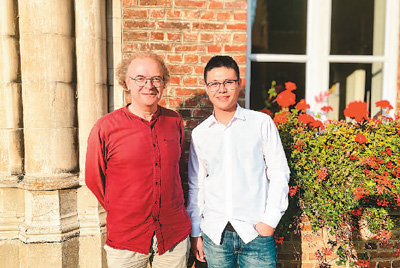
  Luo Yuansheng (right) took a group photo with his tutor.

  The author’s tutor took a photo during his inspection in China. The pictures in this article are all provided by the author.

  Luo Yuansheng is studying in Belgium. His tutor, Thomas Goldman, is an architectural historian. He has visited China many times, visited a lot of China buildings and is very interested in China culture.

  Not long ago, Goldman Sachs told Luo Yuansheng about his fate with China, and let’s listen to their discussion on China’s urban development, architecture and culture.

  My tutor is a "China hand"

  Two years ago, I was lucky enough to get the support of the National Scholarship Committee, and went to Leuven University in Belgium to carry out the doctoral research on the cultural exchange between Chinese and Western architecture, under the guidance of Professor Thomas Coomans, an architectural historian. Tutor, an elegant Chinese name, was given to him many years ago by a sinologist at the University of Leuven in Belgium and a professor at Southeast University.

  Before that, I had the privilege of listening to a lecture by Mr. Goldman Sachs on the exchange of Chinese and western architecture in Tongji University. At that time, I was deeply impressed by his profound knowledge and enthusiasm for China culture. I believe I can learn a lot from studying with him.

  Later, when I was studying in chalmers university of technology, Sweden, I came across a large number of China architectural image files recorded by modern westerners, but they were not fully studied. I realized that this is expected to be a valuable cross-cultural research topic, so I planned to write a brief doctoral research plan and ask Mr. Goldman Sachs for advice. The teacher attached great importance to my research plan, so we had further contact. After studying with him for a doctorate, he carefully guided me to continue the research.

  In the two years since I entered the doctoral program, Mr. Goldman not only gave me a lot of support in my research and life, but also often showed a strong interest in China culture. I gradually realized that Mr. Goldman was a real "China hand": he trained more than a dozen doctors from China, visited China for many times, and still teaches part-time in Peking University. In addition, he visited a large number of ancient buildings in China and established a profound friendship with scholars in the field of archaeology, culture and architecture in China. He has published a large number of works on architectural exchanges between China and the West at home and abroad, and made important contributions to cultural exchanges and mutual learning between China and the West.

  Just in May this year, Mr. Goldman once again set foot on a trip to China. Shortly after my return to Belgium, my teacher met me and chatted about his fate with China and his understanding of cross-cultural studies.

  Teacher Goldman excitedly listed to me the places he had visited in China: Beijing, Shanghai, Tianjin, Heilongjiang, Inner Mongolia, Shandong … … He couldn’t help but sigh with emotion: "It is not enough to explore the vast China in a lifetime."

  He likes Beijing very much, and recalls: "Many years ago, I lived in an alley near the Forbidden City, and there were several shoe repair stalls beside the alley. My neighbors gave me this ‘ Foreigner ’ Very friendly. " This year, Mr. Goldman revisited his old place. He said with emotion: "The area around the Forbidden City is more urbanized than before, but the street stalls are still well preserved."

  He marveled at the rapid development of Shanghai. He said: "Twelve years ago, Sheshan area was still a large area of farmland, and now there are rows of high-rise buildings." Mr. Goldman loves the night in Shanghai: the lights are on, and Chinese and western buildings with different styles stand on both sides of the Bund, which are eye-catching under the reflection of colored lights. He said, "It’s a beautiful scene of prosperity full of vitality."

  In China this year, Mr. Goldman reunited with his friends from China after a long separation, and was invited to share his recent research in many colleges and universities. He is good at communicating with friends in China. He believes that language is a communication tool, and obscure words should be used as little as possible in academic communication. As a scholar of architectural history, he is good at communicating with friends in China by drawing: "I always take a sketch book with me when I go to China. I have drawn countless buildings in China. In rural China, drawing can eliminate the communication barriers brought by dialects. " He mentioned that when villagers saw his sketches, they would always guide him to interesting places and invite him to have tea with them. This is because the villagers feel the strong interest of Mr. Goldman Sachs in them.

  In addition, he also recalled the experience of publishing books with professors in Peking University many years ago. He said: "At that time, I knew nothing about Chinese publishing, but our books needed bilingual typesetting, so the workload was very heavy. Mutual trust, respect and learning contributed to this pleasant cooperation, and also prompted me to decide to continue to bring more foreign students to Peking University for exchanges. "

  Cross-cultural communication in the eyes of instructors

  Mr. Goldman grew up in a cross-cultural family. His father worked in Congo, his brother lived in Indonesia, his son-in-law came from Brazil, and his granddaughter had multiple nationalities. He is full of curiosity about new things. He loves China cuisine, and thinks that many neglected ingredients in Europe have been used to the extreme by Chinese, making all kinds of delicious food. He also said: "In China, dining is a social activity full of ritual. Chinese pays attention to ritual when drinking tea, and the tea set is exquisite and systematic."

  Mr. Goldman’s interest in the communication between Chinese and Western architecture began when he discovered a group of buildings almost the same as those in the west in the northern countryside of China. He is eager to understand the origin. After in-depth study, he found: "The two are not exactly the same, especially in terms of building materials, uses and orientations."

  He believes that this is influenced by the local environment and lifestyle of residents, and has nothing to do with architectural style. He said: "The craftsmen in China incorporated some western elements in the construction and created uniqueness according to specific needs, which reflected the great wisdom of the craftsmen in China. Therefore, to do a good job of mutual learning between Chinese and Western civilizations, we must first study the ancient civilization of China, including the geographical environment, history and culture of China. "

  Mr. Goldman has more than ten years of cross-cultural teaching experience. During his time with China students, he found: "China students are good at thinking and like to ask me questions during recess, which is often a well-thought-out question."

  In the class of Mr. Goldman Sachs, I found that when he introduced China architecture, he not only relied on slides, but also showed the bricks he had painstakingly brought back from China.

  He explained: "In this way, we can not only intuitively understand the differences between Chinese and western brick-making techniques, but also understand that not all bricks are red, and many bricks are cyan or gray." I immediately asked Miss Gao why she wanted to introduce so many traditional buildings in China to western students. He replied: "I want students to understand that the concept of protection based on western masonry is not applicable in all cases, and forcibly applying it to wooden buildings in East Asia will cause many problems." He further concluded: "The same is true for cross-cultural communication. We need to embrace diverse values and learn tolerance and understanding."

  (The author is a doctoral student in the Department of Architecture, University of Leuven, Belgium)

Look down at the phone and let your neck bear 50 pounds? More than that.

  Not long ago, the news that "playing with your head down for a long time is equivalent to carrying 50 Jin on your neck" appeared on the hot search list of Weibo. As the function of smart phone becomes more and more powerful, people’s dependence on it is gradually deepening. At the same time, the improper use of mobile phones has brought troubles to our health. The website "Active Life" in the United States recently sorted out and summarized the "disaster" caused by long-term improper use of smart phones.

  Mobile phone elbow

  The scientific name is "cubital tunnel syndrome". When the ulnar nerve in the cubital tunnel is inflamed or stimulated, cubital tunnel syndrome will occur. This kind of pain is like being hit on the ulnar end, commonly known as numbness. Keeping the elbow bent at a 90-degree angle for a long time can cause elbow pain. When talking for a long time, people will hold their mobile phones to their ears and their elbows will naturally bend. This will put pressure on the nerves, which will reduce blood flow and lead to inflammation. Cell phone elbows can cause numbness and tingling.

  Therefore, we can try to change the way of holding the mobile phone when making a phone call and avoid holding the mobile phone with the elbow bent at right angles. If conditions permit, turn on the hands-free function, so you don’t need to talk with your mobile phone.

  Little finger injury

  When you answer the phone, poor little finger has to work hard. It bears most of the weight of the smart phone, sometimes as long as an hour, causing unspeakable pain.

  However, this injury is not permanent. Take a break from time to time while using your smartphone to relieve the pain of your little finger. Do hand stretching exercises at regular intervals to stimulate blood flow and relax fingers.

  Bad posture

  Users of smart phones often use it to check emails and read information in WeChat friends circle. Looking down at the phone repeatedly will cause hunchback, leading to posture problems. Bowing your waist or bending your neck will make your muscles tense.

  Try these good ways to correct posture: sit upright, put your mobile phone at eye level, don’t arch your back and relax when you answer the phone.

  Wrist pain

  Repeated hand movements can cause carpal tunnel syndrome. Carpal tunnel is a small passage near bones and ligaments. When the median nerve is compressed, you will feel tingling and numbness in your thumb and other fingers, and weakness in your hands and arms. Constantly sliding the screen and typing can hurt your wrists and hands.

  Wrist pain is a common complaint of smartphone users. Repeated actions related to excessive use of smart phones may also cause wrist disability.

  Thumb pain

  Although the touch screen makes communication easy, it adds a lot of work to the thumb. The tendon of the thumb will be inflamed by repeated beating. When bending the thumb, inflammation can cause thumb pain and click.

  The solution is to let the thumb rest from time to time and finish its work with other fingers. If the pain persists, see an orthopedic surgeon. Thumb splint (a kind of hand plaster for protecting and fixing thumb) can provide support for thumb to relieve pain.

  eyestrain

  Excessive use of smart phones will make your eyes tired, which will lead to other problems.

  Blinking times decrease. People need to blink to keep their eyes moist. Blinking is a natural way to prevent eye contact with dust and sunlight. Users of smart phones stare at the phone almost without blinking, which reduces the time for eyes to recover, leading to dry eye syndrome.

  Squinting when users read small fonts on mobile phones, it is easy to squint. This will put pressure on the eyeball and blur the vision.

  Dazzling glare from the smart phone screen will cause eye fatigue.

  In order to avoid the above situation, blink frequently to keep the eyeball moist, stick an anti-glare film on the screen, lower the brightness of the mobile phone, enlarge the display font size, keep the screen clean (wiping off fingerprints and dust can improve the definition) and put the mobile phone 40~45 cm away from the face.

  Spread germs

  Users will take their mobile phones to various places, such as shops, gyms and bathrooms, where the germs will be transferred to their smartphones. Bacteria colonized on mobile phones can spread various diseases, and some rather terrible bacteria thrive on mobile phones, such as:

  Escherichia coli If you have ever brought your mobile phone to the bathroom, you are likely to be infected with Escherichia coli. This bacterium lives in the intestine and is transferred to the feces. Escherichia coli can cause diarrhea, food poisoning and other gastrointestinal problems.

  Streptococcus This is another common bacterium that lives on smart phones. It can not only cause strep throat in children, but also cause scarlet fever, necrotizing fasciitis and toxic shock syndrome.

  Influenza virus influenza virus can survive on smartphones for up to 24 hours. Therefore, you should wipe your mobile phone with alcohol cotton balls every day.

  Staphylococca, a common bacterium, also lives on smart phones, and some of them are dangerous, which can cause skin infections and even life-threatening in severe cases. Staphylococcus can also cause pneumonia and blood infection.

How can we squeeze the price of drugs by an average price reduction of 53% after purchasing with quantity?

  Reading tips

  A few days ago, the second batch of centralized drug procurement organized by the state successively landed in various places. The average price reduction of drugs reached 53%, with the highest drop reaching 93%, and patients benefited significantly. How much drug price water can be squeezed out by the upcoming third batch of quantity procurement, and all walks of life are full of expectations.

  Ms. Zhang from Shenyang, Liaoning Province is a diabetic who has been taking acarbose tablets for a long time. Recently, when she prescribed medicine in the hospital, she found that this imported original drug dropped from 61.29 yuan per box to 5.42 yuan. According to the consumption of 3 boxes per month, "the cost of medicine in the past month is enough for one year now."

  The reduction of drug prices benefited from the landing of the second batch of centralized drug procurement organized by the state in various places. In this centralized procurement, 32 varieties were successfully purchased, with an average price reduction of 53% and the highest drop of 93%.

  Recently, it has been reported that the third batch of purchasing with quantity is about to start, and how much more water can be squeezed by drug prices, which is full of expectations.

  Drugs that I couldn’t afford are now affordable.

  Centralized drug purchase is like "group purchase", which means purchasing with quantity and exchanging price with quantity, and negotiating with drug manufacturers to achieve the purpose of reducing drug prices and reducing the burden of patients’ drug costs.

  From the end of 2018, the first batch of 11 cities piloted the purchase of 25 varieties, and by September 2019, the scope of the pilot was expanded to the whole country, and then by the beginning of 2020, the second batch of 32 kinds of drugs were purchased with quantity. China’s procurement with quantity continued to expand and the frequency became more and more dense.

  "The most direct effect is to reduce the burden on patients." According to the relevant person in charge of the joint procurement, among the selected drugs, chronic diseases and major diseases such as hypertension, viral hepatitis and malignant tumor have a heavy burden of long-term medication. By purchasing drugs with quantity, the price of drugs has been significantly reduced, and the drugs that were originally unaffordable are now affordable, which is the most direct benefit for the people.

  The reporter noted that compared with the first batch of pilot centralized drugs, the second batch of drugs selected recently has a wider range of treatment fields, including many family-standing drugs and drugs for chronic diseases, as well as non-medical insurance varieties such as amrital tablets and tadalafil tablets. In the eyes of the industry, this means that the trend of national joint mining has shifted from medical insurance control to patient needs.

  Previously, patients were more willing to go to the hospital to buy drugs because the price of selected drugs in the hospital was greatly reduced, which reduced the passenger flow and sales of pharmacies. But for patients, it saves time and effort to buy drugs in pharmacies, and it is not only personal trouble but also takes up certain medical resources to prescribe drugs in hospitals.

  In this regard, the second batch of procurement with quantity will no longer select some areas to carry out pilot projects. Private hospitals and retail pharmacies designated by medical insurance can voluntarily participate in provincial procurement alliances, submit procurement requirements and implement procurement with quantity. At present, Shandong, Zhejiang, Shanghai and other places have issued documents to collect medical insurance drugs from pharmacies and bring them into the procurement channels of the medical insurance system.

  Squeeze out the price moisture in the circulation of drugs

  In the second batch of centralized procurement, the average price reduction of 32 drugs reached 53%, with the highest drop reaching 93%. Why can the price of drugs drop so much?

  "A considerable number of drug prices have been artificially high for a long time. The price level of some generic drugs is more than twice the international price, and the cost of circulation links accounts for the main part of the price. This is the main space for centralized procurement and price reduction." The relevant person in charge of joint procurement revealed.

  Drug prices have squeezed out so much water at once, and some people worry that the pace is too big and the market may not buy it. However, judging from the implementation of procurement in pilot cities, the implementation of quantity procurement exceeded expectations.

  At Chaoyang Hospital in Beijing, Liu Lihong, director of pharmacy department, told reporters: "It took us about eight or nine months to complete the purchase volume for one year." By the end of December last year, the average procurement progress of 25 selected drugs in the pilot areas was 183%, and the results of expanded procurement began in December last year, and patients all over the country used high-quality and cheap selected drugs.

  "I hope to increase policy propaganda." Liu Lihong believes that it is necessary to let more patients know the benefits of the quantity purchase policy, and the decline in drug prices and the replacement of generic drugs will not affect the quality and efficacy of drugs, so that more patients will benefit.

  Next, the quantity procurement will be normalized. "Not only countries, but also local governments. Not only in the pharmaceutical field, but also in the field of high-value consumables and low-value consumables. " According to Ding Yilei, deputy director of the Department of Medicine Price and Bidding and Purchasing of the National Medical Insurance Bureau, purchasing with quantity will gradually become the dominant mode of centralized purchasing of medicines in the future.

  Delineate the system "red line" for pharmaceutical companies

  The industry has reached a consensus that centralized procurement based on the consistent evaluation of quality and efficacy will promote enterprises to return to cost and quality competition. Some experts said that purchasing with quantity will greatly reduce the public relations behavior of enterprises, and the competition between enterprises will turn into open and transparent product quality and cost competition, and the gray operation under the water will turn into fair competition under the sun, which will help the pharmaceutical industry to change from marketing-driven to innovation-driven

  "Centralized procurement with quantity directly hits the soft underbelly of false high drug prices, achieving multiple effects such as reducing drug prices, improving drug quality and promoting industrial upgrading." Hu Jinglin, director of the National Medical Insurance Bureau, said that, more importantly, centralized procurement with quantity has created conditions for standardizing medical behavior and promoting the reform of public medical institutions while reducing burdens and increasing efficiency for medical insurance.

  Practice has proved that the "small incision" of centralized procurement with quantity can promote the "great reform" of the medical and health system. Hu Jinglin pointed out that the reform of the medical and health system has entered the deep water area, and it is necessary to establish a recruitment policy system of "purchasing with quantity as the principle and purchasing without quantity as the exception" and continue to promote centralized purchasing with quantity.

  At present, the range of drugs purchased with quantity is relatively limited, and the inflated drug prices and commercial bribery still exist. However, the supervision has begun to plan a "red line" for drugs through the procurement platform with quantity.

  Not long ago, the National Medical Insurance Bureau solicited opinions on the establishment of a credit evaluation system for drug prices and recruitment, and proposed that pharmaceutical enterprises should promise not to break their promises when they participate in centralized drug procurement and online platform. In the event of unfair competition such as pharmaceutical commercial bribery and manipulation of market prices, it will be included in the list of untrustworthy catalogues, and pharmaceutical enterprises will be suspended from drug online and bidding.

  This has caused a lot of concern in the pharmaceutical industry. Because of its severe punishment, many people in the industry believe that the "red line" of this system is conducive to curbing the "gold" sales of drugs. (Reporter Dan-qing Li)

Xiaomi went out to sea, all by "bamboo forest"

Editor’s Note: This article comes from WeChat WeChat official account Value Planet(ID:ValuePlanet), author: Tang Fei, editor: Xuexi, reproduced with authorization by Entrepreneurship.

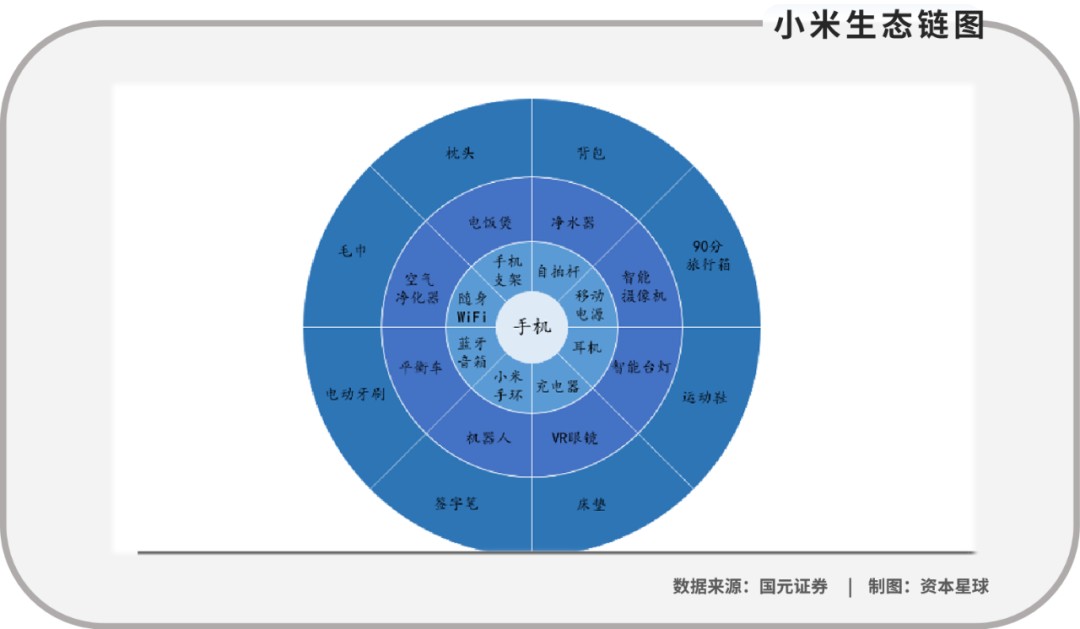
"It depends on millet in the early stage and millet in the later stage." This sentence is used by the outside world to summarize the development of Xiaomi’s ecological chain. It is said that the ecological chain enterprises in the early stage should rely on Xiaomi’s brand and channel advantages to open up the market, and when these enterprises grow up, they will start to feed back Xiaomi.

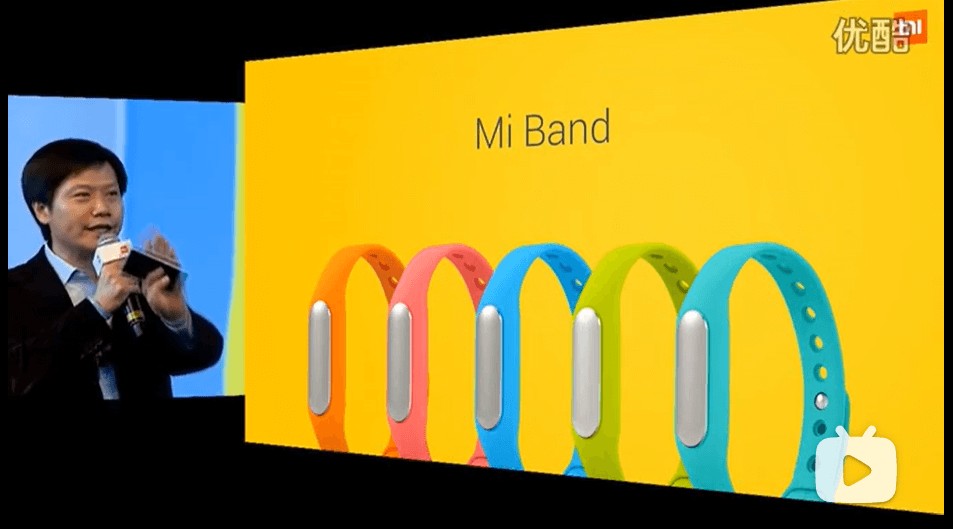
Listed companies, such as Huami, Yunmi, Roborock and No.9 Robot, are all developed by Xiaomi. On the one hand, they enriched Xiaomi’s SKU, on the other hand, they also produced many explosive products by relying on Xiaomi’s platform.

At present, after years of development, Xiaomi has formed a huge ecosystem. By the first half of 2021, Xiaomi had invested in more than 330 companies, and with the investment of Shunwei Capital and Xiaomi Changjiang Industrial Fund, the total number of enterprises invested by Xiaomi was nearly 900, with a total market value of one trillion yuan. Among them, 22 have already entered the capital market.

In Xiaomi Ecological Chain Battlefield Notes, Xiaomi officially called Xiaomi’s ecological chain play "bamboo forest effect". After successful verification in the domestic market, Xiaomi has now brought this set of "bamboo forest" play overseas. Can Xiaomi replicate it successfully?

The "evergreen foundation" of traditional enterprises is like a century-old pine tree. Although it has grown up after a long period of time, it will be uprooted once it encounters strong winds and waves. "Notes on Xiaomi Ecological Chain Battlefield" holds that, in contrast, although the life cycle of bamboo is short, it can be endless after becoming a bamboo forest.

When building an ecological chain, Xiaomi followed this thinking and turned a bamboo into a bamboo forest. Through the mode of investment and cooperation, Xiaomi has included a large number of intelligent hardware companies to enter the "Xiaomi Ecological Chain" and quickly occupied the head positions of many subdivided tracks by making explosions.

The so-called Xiaomi ecological chain enterprise refers to a company that has received Xiaomi investment, generally accounting for 20%-25% of the shares, and can still maintain independent operation. By the first half of 2021, Xiaomi had invested in more than 330 companies, and with the investment of Shunwei Capital, Xiaomi Changjiang Industrial Fund and other institutions, the total number of enterprises invested by Xiaomi was nearly 900.

Although Xiaomi is not holding shares, in the early growth of these "bamboos", Xiaomi has always assumed the role of "nanny".

In terms of supply chain, Xiaomi has strong bargaining power by virtue of its advantages in sales volume, which may help eco-chain companies reduce procurement costs in terms of general parts; In terms of products, Xiaomi will deeply participate in the early product definition and design links to ensure the overall harmony of the tonality of ecological chain products. Some intelligent hardware products can also access Xiaomi smart home ecology through Mijia APP; In terms of brand channels, the products of eco-chain enterprises can not only save a lot of brand marketing expenses with the help of Xiaomi’s brand advantage, but also enter all kinds of online and offline sales channels of Xiaomi.

According to Wang Ye, the founder of No.9 Robot, Xiaomi sent a product manager to help negotiate with the supplier for a lower price. Su Jun, the founder of Zhimi, was also impressed. Xiaomi product manager will help coordinate resources. For example, which company has good technology will organize these eco-chain enterprises with weak technology to study.

In addition to support in capital and supply chain, Xiaomi also helps enterprises in team structure.

In 2016, Xiaomi Heshun spent 16 million yuan for capital to participate in the Pre-A round of financing, which was the earliest investor of the company. Seconds Test’s products involve medical instrument thermometers, thermometers and cold chain temperature monitoring equipment at the To C end. After confirming the investment, the head of Xiaomi Investment Department found Liang Yuyang, CEO of Seconds Test, stressing that Xiaomi is a strategic investment and will send a number of professionals to help Seconds Test polish its products.

Subsequently, Xiaomi sent many related personnel to connect with Seconds, involving product conceptual design, industrial design, structural design, software design, circuit design, interactive design, mold design, supply chain establishment, production quality control, product release, shipment, after-sales and other links. While participating in R&D and production, Xiaomi also assisted the team building of Seconds Test and built its own product team.

Accompanied by Xiaomi’s "nanny" style, many companies have risen rapidly, and many companies have actively embraced the capital market. Due to the revaluation brought by the listing of the invested company, Xiaomi has also generated a lot of investment income. In 2020, the sum of the two main types of investment income of Xiaomi Group (gains and losses from changes in fair value of investment and investment income from equity method) reached 27 billion yuan, which exceeded the net profit of 20.4 billion yuan in that year.

On the other hand, rich eco-chain products have also propped up Xiaomi’s offline sales channel "Xiaomi Home" to a certain extent.

Lei Jun, the founder of Xiaomi, once publicly stated that "if Xiaomi House is only a pure mobile phone shop, it can hardly survive." Because it usually takes more than a year for people to change their mobile phones, which means that they don’t often walk into mobile phone stores.

But because of the support of eco-chain enterprises, this problem has been solved. Xiaomi eco-chain enterprises can provide many hardware devices such as bracelets, balance cars, electric toothbrushes, refrigerators and color TVs, and even sell daily necessities such as bags, glasses and sports shoes, so that many people can enter the store once a week or two. These eco-chain products not only attract passengers, but also share some of the rent and labor costs of Xiaomi House.

In the autumn of 2016, Lei Jun proudly said at the China E-commerce Development Summit: "We started to open offline stores in February this year, with an average of more than 200 square meters for each millet house, and we can achieve an average of 70 million RMB for each single store. What is this concept? That is, the average efficiency reached 250,000 RMB, while the best average efficiency of retail stores in China was about 12,000 RMB, and we are 20 times this. "

By 2019, the Xiaomi ecological chain has formed a closed loop with rich contents. However, the problem followed. In the crowded entrepreneurial field, even three or four companies in a track are facing "internal competition". At the same time, Xiaomi has invested in more and more track projects, but there are fewer and fewer explosives.

Xiaomi himself also sensed the crisis. According to 36Kr, from the end of 2019 to the beginning of 2020, Xiaomi reorganized its product categories, and finally defined three ecological chain directions: mobile phone peripheral products, whole house intelligence and cool play products. Soon, the SKU of Xiaomi ecological chain was cut from more than 1,500 to more than 600.

Before and after that, a wave of "going to Xiaomi" began to blow up in Xiaomi ecological chain enterprises.

The industry believes that this trend of "going to Xiaomi" is mainly related to Xiaomi’s "cost-effective" positioning. As we all know, Xiaomi has always followed the cost-effective strategy, so the gross profit margin of many eco-chain enterprises is low.

Take Roborock, which is mainly engaged in sweeping robots, as an example, the gross profit margin of its Mijia sweeping robot has been below 20%. With the progress of "millet removal", the overall gross profit margin of the company has increased from 19.21% in 2016 to 51.32% in 2020, and the net profit rate has also increased from -6.14% to 30.23%.

However, on the whole, the "bamboo forest" based on investment did form a strong "brotherhood alliance" in the early stage of Xiaomi’s development. This kind of wolf tactics helped Xiaomi through the most difficult time node of the mobile phone business. After tasting the sweetness, Xiaomi began to spread this method overseas, hoping to get a "second growth curve".

In 2014, Xiaomi, established four years ago, reached the top of the mobile phone market in China, ranking third in the world only by its shipments in China. At that time, investors asked Lei Jun a question: Can the Xiaomi model be replicated around the world?

Just before investors asked questions, Xiaomi had tried to sell red rice mobile phones on e-commerce websites in Indonesia, but the quantity was not large and the official income was not obvious.

However, after the overseas team of Xiaomi went deep into the Indonesian market, it was found that many local Xiaomi mobile phones were parallel imports at that time, and they entered the customs through abnormal means from Hong Kong. Local dealers estimated that Xiaomi mobile phones and parallel machines sold through local official channels almost accounted for half each. The clear market demand has given the Xiaomi team great confidence.

At the beginning of 2015, Lei Jun held a press conference in New Delhi with Xiaomi 4i, a model specially customized for India. By the way, with a song "Are You OK? "became a hit in bilibili, and was promoted to a well-known" powerful male singer "in China.

Source: 味味味

Follow "Are You OK? "The screen is also updated with the improved Mi Band, which is the first time that Xiaomi goes out to sea with eco-chain enterprise products. Only at this time, mi band was not for sale, but for free. The free strategy helped mi band to open the market in a very short time.

According to IDC data, by the end of 2019, the Indian bracelet market shipped 5.3 million pieces, a year-on-year increase of 52.6%, and Xiaomi ranked first in this category.

This targeted and differentiated product idea was later used by Xiaomi to other product lines, such as the smart TV set that was a great success when it was first launched in India; For the flat ground of European cities, electric scooters that are easy to walk through are introduced in Madrid, Paris and other places.

At present, except India, the overseas markets of Xiaomi eco-chain products are mainly in relatively mature consumer markets such as Western Europe, Eastern Europe, Russia, etc. Local consumers have a clear demand for intelligent upgrading of home life quality and corresponding integration schemes, while Xiaomi has unique advantages in product interconnection and price.

In addition to hardware, Xiaomi also started thinking about "software". Xiaomi International App Store is called GetApps, which has been launched in India, Indonesia and Russia. In order to better encourage developers to develop software products, GetApps launched the "Seagull Plan" in 2019 to support high-quality applications, and in 2022, the "Seagull Plan" was upgraded. Xiaomi said that it would invest 1 billion distribution to support 100 high-quality sea-going applications to increase the number of users.

At the Xiaomi Internet Global Eco-Partner Conference at the end of last year, Xiaomi announced the launch of the international theme "Head IP Co-creation Plan", and plans to return 100% of the first year’s revenue to IP copyright partners. It also provides professional team docking for IP copyright partners, and the whole platform has over 30% traffic exposure.

The "soft and hard" two-handed plan has made Xiaomi’s overseas income rise for many years. The third quarterly report in 2021 showed that Xiaomi’s overseas market revenue reached 40.9 billion yuan, contributing 52.4% of the company’s total revenue. In the view of Wang Xiang, president of Xiaomi Group, "internationalization has given Xiaomi the depth of the market and given Xiaomi more room for development."

This is true, Xiaomi mobile phone has been ranked as the "top spot" in the sales list in many countries and regions, but it is also an indisputable fact that the growth rate of the global mobile phone market is declining. In this track with a clear ceiling, Xiaomi has to make plans in advance.

Fortunately, the products of eco-chain enterprises have given Xiaomi enough support and assumed the heavy responsibility of exploring overseas incremental markets. In December last year, Chen Bo, deputy general manager of Xiaomi Group’s ecological chain, shared a set of data. The annual growth rate of Mijia sweeping robot in overseas markets exceeded 100%, the overseas sales of Xiaomi air purifier steadily increased to the same level as that in China, and the total overseas sales of scooters were several times higher than that in the domestic market.

The experience of creating all kinds of explosions in China is being copied overseas by Xiaomi in batches.

However, while going out to sea brings market depth, competitors from different regions, relevant laws, consumption habits and Internet ecology also bring great challenges to Xiaomi’s management and product promotion.

The most obvious challenge comes from competitors in the field of mobile phones. In Xiaomi’s "1+4+X" IoT category strategy, "1" is mobile phone, "4" is TV, smart speaker, router and notebook, and "X" is all kinds of IoT products provided by eco-chain enterprises and cooperative enterprises. Apple, the IT giant, also takes mobile phones as the core, and has laid out many fields including TV, audio-visual equipment and personal computers. Visible to the naked eye, the iPhone compares Xiaomi mobile phone, HomePod compares Xiaomi speaker, MacBook compares Xiaomi notebook, and HomeKit compares Mijia. In these one-to-one fights, Xiaomi’s products are often hard to say excellent.

HomePod mini, source: Apple official website

In view of the huge market scale and sustained strong growth momentum of the IoT industry, other mobile phone manufacturers with Internet of Things portals have also launched their own IoT strategies, such as Samsung’s "Samsung Smart Home", Huawei’s "1+8+N" strategy, the IoT open ecological alliance established by vivo through Jovi IOT, and OPPO’s "Building a Three-Circle Model" and so on.

Under high pressure, Xiaomi took the lead in making adjustments. In mid-2020, Lei Jun explicitly upgraded the original "mobile phone+AIoT" strategy to "mobile phone ×AIoT" strategy in a letter to Xiaomi, and determined this strategy as the development strategy of Xiaomi in the next 10 years.

The difference of a symbol, as the pioneer of Xiaomi AIoT, the responsibility of Xiaomi ecological chain enterprises has undergone a huge change.

In the new "×" method, Xiaomi still takes smart phones as the core, and continues to make efforts to form a hardware ecosystem with AIoT. With a variety of hardware devices and a massive user base, it realizes further data precipitation and ecological chain development. In turn, it will feed back the virtuous circle of smart phones and AIoT services, so as to take the lead in the future Internet of Everything era.

In the past few years, the "bamboo forest effect" of Xiaomi has been successfully replicated overseas, which has also set off a new growth climax of Xiaomi. However, in the long run, the international situation, the impact of the epidemic and even the subtle fluctuations in the exchange rate may affect Xiaomi’s performance. After all, Lei Jun has long said that Xiaomi’s hardware profit rate will not be higher than 5%.

Through investment and cooperation, Xiaomi has cultivated his own "bamboo forest".

According to Liu De, co-founder of Xiaomi, eco-chain enterprises have enjoyed Xiaomi’s four major dividends, namely brand dividend, user dividend, channel dividend and overseas dividend, so they can quickly grow into a company with a revenue of more than one billion yuan in two or three years.

But with more and more bamboo, there are fewer and fewer "blank fields" in the market. For example, in Xiaomi Youpin Mall, there are five different suppliers in the category of "sweeping/mopping robots", including Sugawa Robot, Chasing Technology, Roborock, Yunmi Technology and Silver Star Intelligence.

How to balance the competitive relationship between them and avoid internal friction and involution may be an important job for Xiaomi in the future. After all, there are countless examples of brothers turning against each other for profit. Moreover, if this matter is not handled well, "going to Xiaomi" may become a normal state, and Xiaomi’s painstaking efforts in previous years will also be disrupted.

Xiaomi and eco-chain enterprises have succeeded in going to sea because they have given full play to their advantages in products, marketing and services and adapted to local conditions; And can make appropriate adjustments in combination with the policies or consumption characteristics of the target country, and even customize the production of goods.

However, since you choose to go to sea, you must learn to face the wind and waves. The sea is always changing rapidly, and it may only be in a flash from the bright sun to the storm.

This article is published by Entrepreneurial State authorized by the columnist, and the copyright belongs to the original author. The article is the author’s personal opinion and does not represent the position of the entrepreneurial state. Please contact the original author for reprinting. If you have any questions, please contact editor@cyzone.cn.