World Peace Forum | Japan completely chooses the United States? Expert: It is too early to draw a conclusion.

  Japanese Prime Minister Suga Yoshihide has been in office for nearly a year, and the Japan-US alliance has been further strengthened. Japan’s diplomacy in the post-Abe era is facing a new situation, and Sino-Japanese relations are also undergoing tests.

  "Has Sino-Japanese relations reached a crossroads?" At the 9th World Peace Forum, which opened on July 3rd, Shi Xiong, Minister Extraordinary and Plenipotentiary of the Japanese Embassy in China, said in response to The Paper’s question: "There is a saying that Sino-Japanese relations may be heading in the direction of deterioration, but we have not emphasized the relations with the United States and despised the relations with neighboring countries including China and South Korea."

  However, from the "2+2" meeting of US and Japanese foreign ministers’ defense chiefs to the summit talks, and the recent repeated remarks about Taiwan by senior Japanese officials, Japan has strengthened its alliance with the United States while challenging China’s core interests on many issues.

  "Suga Yoshihide is not necessarily a hardliner to China, but he can’t effectively restrain hardliners and conservatives, and may even use these people to cater to some voters intentionally or unintentionally." During the meeting, Yang Bojiang, director of the Institute of Japanese Studies of Chinese Academy of Social Sciences, told The Paper whether Japan would completely abandon its foreign policy of maintaining a roughly balanced relationship between China and the United States in the future. Although it is impossible to make a decision, if it completely leans towards the United States, it will be "dead end" in East Asia.

  Japan’s "split body and mind"?

  "Polls show that the Japanese people have a bad impression of China, but a considerable number of Japanese, especially young people, believe that Sino-Japanese relations are very important to both countries and the Asia-Pacific region." Shi Xiong, the Extraordinary and Plenipotentiary Minister of the Japanese Embassy in China, pointed out the negative side of Japanese public opinion on China at the World Peace Forum without hesitation.

  In an interview with The Paper last December, the Japanese ambassador to China, Chui Xiufu, also talked about the contrast of mutual affection between Chinese and Japanese people. In view of the reasons and ways to reverse the situation, Chui Xiufu said, "I hope China can study it well. Of course, we are willing to think with China. "

  Yang Bojiang bluntly said in the panel discussion of "Sino-Japanese relations: jointly promoting prosperity and peace in the Asia-Pacific region" at this World Peace Forum that Japan generally has bad relations with neighboring countries and needs self-reflection. As soon as this statement came out, the laughter and discussion in the audience were repeated. Shimizu Shihong also showed an awkward smile, but he still pointed out that the biggest reason for Japan’s poor public opinion on China is the differences between the two countries on the Diaoyu Islands issue, and Japanese media reports also played a role in fueling the situation.

  When answering The Paper’s question "How to improve the folk feelings of the two countries", Shi Xiong said that China and Japan are facing some difficult problems together, such as the COVID-19 epidemic, climate change and the aging of young children. If the two countries work together to solve the problem, they can get to know each other better in practical actions, and at the same time strengthen communication between governments.

  It is self-evident that Chinese and Japanese folk feelings fluctuate with the changes of bilateral relations. Has the current Sino-Japanese relationship reached a turning point? When The Paper threw this question at Chinese experts, they thought it was too early to draw a conclusion.

  "Frankly speaking, there are still some variables, among which the United States is the biggest variable." Hu Jiping, vice president of China Institute of Contemporary International Relations, said that there are still uncertainties in the Biden administration’s China policy and its demands on Japan. After all, Sino-US relations are an important factor affecting Sino-Japanese relations. Another variable is the Japanese government’s strategic judgment and choice.

  Yang Bojiang described Japan as actually in a state of "split body and mind". "The spirit is very hard and the body is very real." Japan stands in the same camp as the United States in security and is embedded in the strategic track of the United States, but in economic terms, Japan’s "decoupling" from China will lose the resources and opportunities to maintain prosperity and development.

  Sino-Japanese relations have long been in a situation of "cold politics and hot economy". Even during the epidemic period of more than a year, the economic and trade exchanges between the two countries still performed well. According to the latest trade statistics released by Japan’s Ministry of Finance, in May this year, Japan’s imports and exports to China both hit new highs in the same month since 1979. The White Paper on China’s Economy and Japanese Enterprises (2021 Edition) recently released by the Japan Chamber of Commerce in China also pointed out that 63.5% of Japanese-funded enterprises in China still made profits under the epidemic situation.

  It can be seen that Sino-Japanese relations are composed of multiple levels, with differences in politics and security and cooperation in economy and development.

  Japan’s remarks on China are "real and false"

  Suga Yoshihide, who started from the bottom of politics, has been questioned that diplomacy is its weak link since he took office, and Japanese media have also commented that "Kan diplomacy" lacks personal characteristics.

  In fact, Suga Yoshihide took the post of Prime Minister under the banner of inheriting Abe’s line. In less than a year, the report card of "Kan Diplomacy" is not lacking. He not only became the first foreign head of state to meet face to face since Biden took office in the United States, but also led Japan to actively participate in regional cooperation and signed the Regional Comprehensive Economic Partnership Agreement (RCEP) with China, ASEAN and other countries.

  It is worth mentioning that Japan is still actively promoting "vaccine diplomacy" despite the slow vaccination in China. On June 2, Japan co-hosted the online "COVAX Vaccine Summit" with GAVI, with more than 40 countries participating. At the meeting, Suga Yoshihide promised to provide the organization with an additional 88 billion yen (about 5.129 billion yuan), and at the same time said that he would consider transferring some locally produced AstraZeneca vaccines to developing countries.

  Obviously, Japan is making efforts to create an international strategic environment, but the trend of improving relations with its neighbors is relatively rare. The warming pace of Sino-Japanese relations accelerated after the G20 summit in 2019, but soon the clouds appeared again.

  "Although emphasize on China policy ‘ Stable Japan-China relations are very important ’ However, there are not many positive measures, but there are many negative trends. " Yang Bojiang pointed out that this is a new feature of Suga Yoshihide’s foreign policy on the premise of inheriting Abe. Kan government re-tightens the chain of Japan-US alliance, and follows the strategy of the United States participating in the game of great powers, which includes multilateral checks and balances against China. The objective reason for this policy trend is that the COVID-19 epidemic has accelerated the process of great changes in some aspects, Japan’s strength and development advantages have been further weakened, and Japan’s foreign strategic mentality has become more sensitive and fragile.

  In addition to multilateral checks and balances, there are also voices exaggerating the so-called "China threat" in Japan. Recently, Defense Minister Nobuo Kishida and Deputy Defense Minister Taixiu Zhongshan have also made false remarks about Taiwan. China’s Foreign Ministry spokesperson Wang Wenbin criticized this at a press conference on June 29th, saying that some Japanese politicians ignored the fact of peaceful development in China and made excuses for "Japan, which had committed the crime of militaristic aggression" to loosen its military ties.

  Japanese senior officials’ remarks about China’s internal affairs aroused great public concern, and Yang Bojiang thought that the background of these remarks was "real and false". "Reality" means that Japan’s economic security is highly dependent on sea lanes. Under the background of insufficient strategic mutual trust between China and Japan, Japan is "all plants and soldiers". The "emptiness" lies in Japanese politicians, such as Tarō Kōno and Nobuo Kishi, who say such "hard words" to cater to the domestic atmosphere, and can score points as a political operation.

  Of course, there are different voices within the Japanese government. Nikai Toshihiro, the secretary-general of the Liberal Democratic Party, is second only to the president in the party and is committed to friendly exchanges and cooperation between China and Suga Yoshihide. "We need to talk to Chinese, and Nikai Toshihiro is our backbone." In an article published in The Economist in May this year, the British newspaper recorded the words of former Japanese diplomat and Suga Yoshihide’s special adviser, Miyaka Bangyan. However, there are only a handful of politicians like the second order in the LDP.

  Hu Jiping told The Paper that Suga Yoshihide did not represent him alone, and many Japanese politicians, including Abe, had similar views on China. Even if the prime minister changes hands, the Liberal Democratic Party will still be in power, and China policy will not change much. But overall, the future Sino-Japanese relations are not so reassuring.

  "At present, the complicated factors in Sino-Japanese relations have increased, but the mainstream of Sino-Japanese friendly cooperation and the essence of mutual benefit and win-win have not changed." China’s ambassador to Japan, Kong Xuanyou, published a signed article in the July issue of the-China Cultural Exchange Association, writing that the two sides should take the opportunity of welcoming the 50th anniversary of the normalization of diplomatic relations next year to revisit their initial intentions, lay a solid foundation, eliminate interference and jointly open up a bright future for bilateral relations.

You certainly don’t know! There are so many kinds of traffic cards in Shanghai! These users can open virtual cards.

In recent years, there are more and more types of traffic cards. So, what are the differences between these transportation cards? Please see the authoritative introduction of Shanghai Public Transport Card Co., Ltd. below ~

01 According to the carrier used.

According to the carrier used, there are the most common physical transportation cards and convenient virtual transportation cards in Shanghai. Virtual transportation card is a transportation card based on nfc function loaded by electronic equipment to realize credit card application. Therefore, compared with the physical transportation card, the virtual transportation card is easier to carry and avoids the trouble of "forgetting to bring the transportation card when going out". Here we need to know: What is nfc?

The nfc application of card swiping is the abbreviation of "near field communication", which refers to "short-range wireless communication technology". At present, it can also be divided into common "mobile phone traffic cards" in our virtual traffic cards.

And through watches, bracelets, etc.

"wearable device traffic card"

Mobile phone model capable of opening virtual card

Apple phone:

Iphone se, iphone 6s, iphone 6s plus, iphone 7, iphone 7 plus, iphone 8, iphone 8 plus, iphone x, iphone xr, iphone xs max, iphone xs, iphone se (2nd generation), iphone 11, iphone 11 pro, iphone 11 pro max.

Huawei mobile phone:

Huawei p40 series, p30 series, p20 series, p10 series, mate30 series, mate 20 series, mate 10 series, mate 9 series, mate xs, mate x, mate rs, nova 6, nova 6(5g), nova 5 pro, Nova2s; Glory v30, glory v30pro, glory v20, glory v10, glory v9, glory v8 netcom, glory 20 pro, glory 20/ glory 10/ glory 9/ glory 8 (all excluding youth edition), glory magic 2 and glory note 10.

Xiaomi mobile phone:

Xiaomi 10 series, redmi k30 series, Xiaomi 9 pro 5g, Xiaomi cc9 pro, Xiaomi cc 9, Xiaomi cc 9 Mito Custom Edition, redmi k20, redmi k20 pro, Xiaomi 9, Xiaomi 9 se, Xiaomi mix 3, Xiaomi 8 Transparent Exploration Edition, Xiaomi 8 Screen Fingerprint Edition, Xiaomi 8, Xiaomi mix 2s, Xiaomi mix 2, Xiaomi note 3 and Xiaomi 6.

Oppo mobile phone:

Oppo r17 pro, oppo reno standard edition, oppo reno 10 zoom edition, oppo reno youth edition, oppo a7n, oppo reno2, oppo k5, oppo ace, oppo ace2, oppo reno2oz, oppo a11n, oppo reno3 vitality edition, oppo reno3, oppo find x2, oppo find x2 pro, oppo reno3 pro.

Realme phone:

realmex2、realmex2 pro、realmex50 5g、realmex50 pro 5g。

Oneplus phone:

oneplus 7t、oneplus 7t pro。

Vivo phone:

nex 3、nex 3s、x27 pro、x30、x30 pro、iqoo、iqoo pro、iqoo 3、iqoo neo3。

Wearable device capable of opening virtual card

apple watch:

apple watch series 1、apple watch series 2、apple watch series 3、apple watch series 4、apple watch series 5。

Huami:

Amazfit gtr Smart Watch, amazfit gts Smart Watch, amazfit Smart Watch 2, amazfit Smart Watch 2 ecg Edition, amazfit Meter Watch Youth Edition is, amazfit Smart Sports Watch 3, amazfit Smart Watch; Amazfit meter bracelet 2.

Xiaomi:

Xiaomi Watch, Xiaomi Watch color, Mi Tu Children’s Learning Watch 4, Mi Tu Children’s Learning Watch 4 Pro; Mi band 3 nfc version, mi band 4 nfc version, mi band 5 nfc version.

02 by card type

According to the types of cards, they can be divided into ordinary cards and commemorative cards.

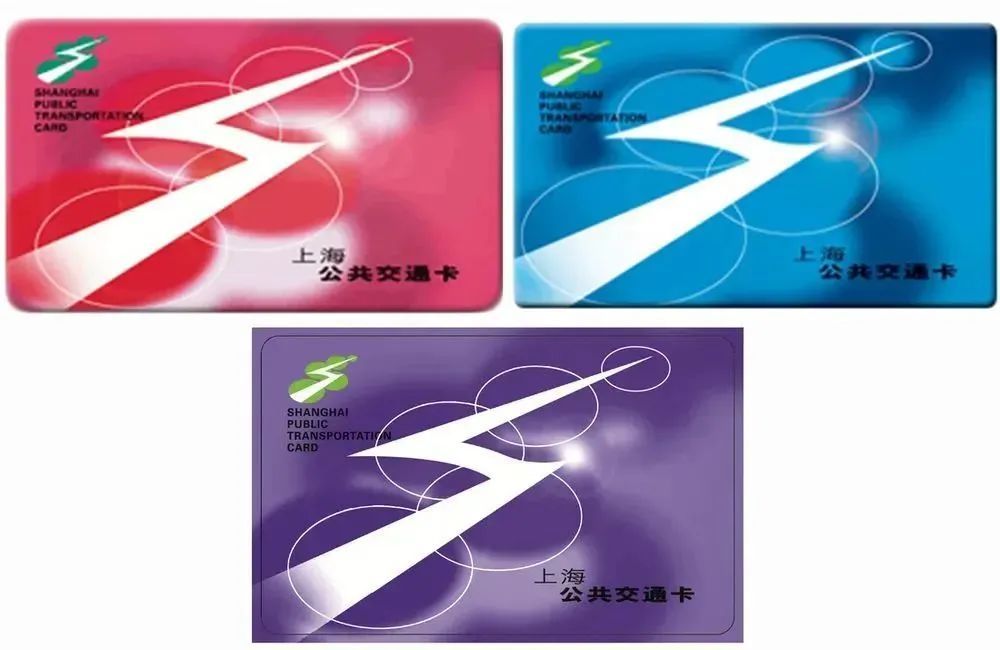
Generally speaking, these are common cards.

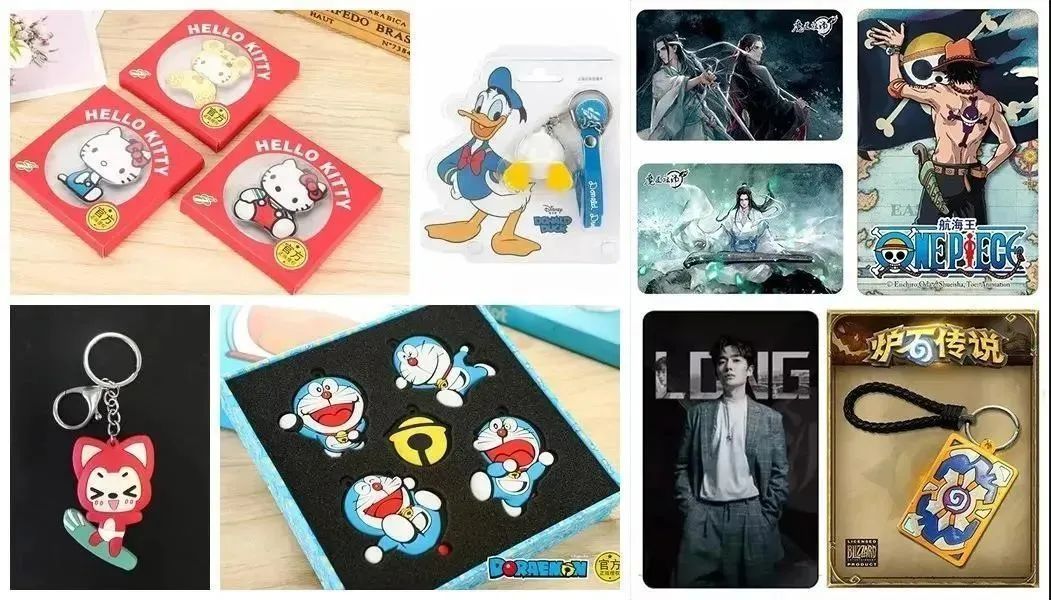
And all kinds of cards like the ones below are commemorative cards.

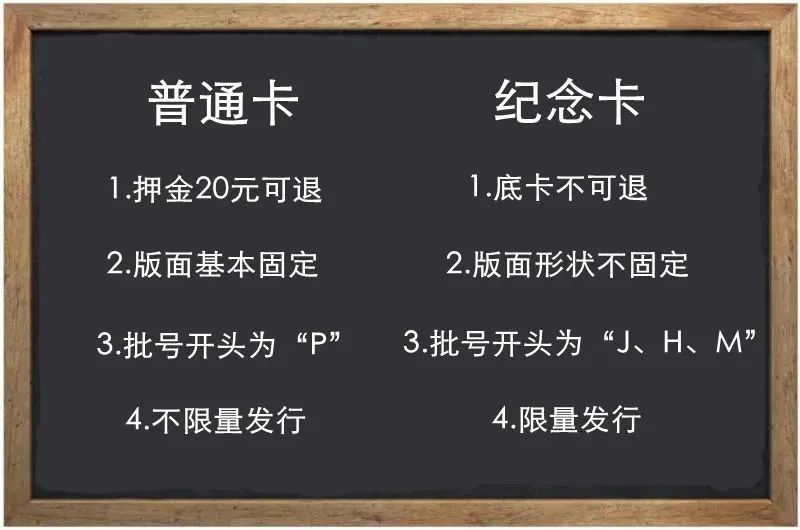
Of course, in fact, the main differences are as follows:

Simply put, the ordinary card is a deposit card, and the deposit of its 20 yuan base card can be refunded when the card is returned.

The commemorative card is a buyout card, which is non-refundable, limited and sold out.

03 according to the scope of use

Judging from the scope of use of traffic cards, there are currently two standards in Shanghai: the residential construction version and the cross-linked version. Issued by the Ministry of Housing and Urban-Rural Development and the Ministry of Communications respectively, the cross-linked version of the credit card has a wider range of use.

Ministry of housing and urban-rural development standard

Refers to the card issued according to the "city union" standard of the Ministry of Housing and Urban-Rural Development, and it is also the most common transportation card in Shanghai (such as purple card). The standard was launched and officially opened in 2012, and it is interconnected with some surrounding cities in the Yangtze River Delta.

Ministry of communications standard

Refers to the card issued in accordance with the "traffic card" interconnection standard launched by the Ministry of Communications in 2014. Up to now, more than 270 cities across the country have issued "traffic cards" that meet the standards, and the coverage of cities is still increasing. The most obvious sign of the "traffic card" that meets the standards of the Ministry of Communications is that there is a "traffic union" logo on the card surface, so this card is also commonly known as the "traffic union card", which is what we call the "cross-linked version".

Shanghai Communications Card (Crosslinked Edition) Ordinary Card Noodles (Coming Soon)

Friendly Reminder

In terms of preferential treatment, the preferential treatment enjoyed by Shanghai Transportation Card (cross-linked version) when it is used in Shanghai is the same as that enjoyed by Shanghai Transportation Card (housing construction version). However, when it is used in other places, the specific preferential method and quota must be decided by the local people’s government, and it cannot be generalized.

In terms of card service, although Shanghai Communications Card (cross-linked version) can be consumed in other places, it is only used for recharging, returning cards, repairing bad cards, transferring funds and other related businesses in the issuing place (Shanghai).

Source: Shanghai Public Transport Card Company Limited

Shangguan number author: Shanghai Communications

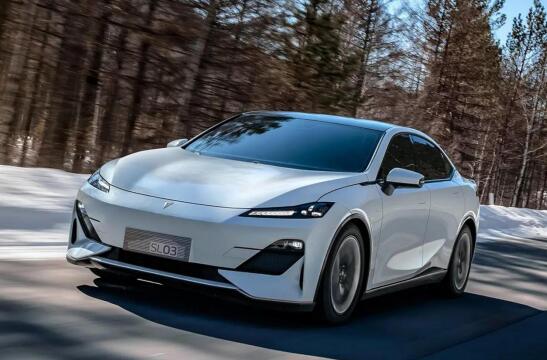
The same as the annual explosion, Changan Deep Blue SL03 and BYD Seal, which is more popular?

  The same is the heavyweight new energy vehicle of the year, the same is the 200,000-class joint venture B-class car disruptor, and they are all listed in July 2022. Many similarities make Changan Deep Blue SL03 and BYD Seal a hit in the eyes of consumers, but it is difficult to choose. So, which of the two is more popular with consumers? Let’s compare and analyze what are the differences between them.

  In terms of price

  Strictly speaking, Changan Deep Blue SL03 and BYD Seal are not completely direct competition, because Changan Deep Blue SL03 covers the 171,900 – 221,900 price range, while BYD Seal covers the 212,800 – 289,800 price range, the two are obviously competing with the joint venture B-class market. However, in terms of range, Changan Deep Blue SL03’s 515KM and 705KM pure electric versions will compete with BYD Seal’s 550KM and 700KM, but Changan Deep Blue SL03’s pricing is obviously more affordable and therefore more popular.

  Appearance

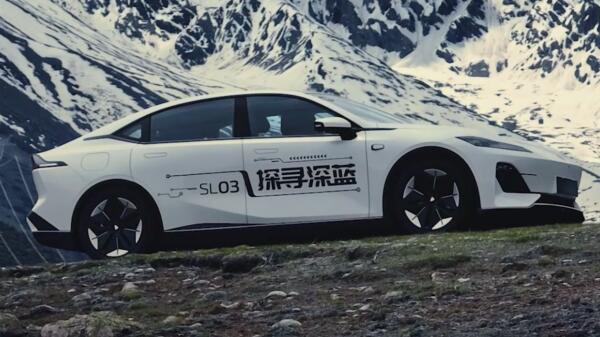
  The car market dominated by male consumers, especially young male consumers, obviously prefer the tough mecha style of Changan Deep Blue SL03, with a low body posture + sharp lines + frameless door + hatchback tailgate. It is difficult to see that this is only a new energy vehicle of about 200,000 yuan after covering the logo. The appearance of BYD Seal is also very good, especially the design concept of "Ocean Aesthetics". The rounded and cute shape outlined by the curve is indeed easy to make people feel heartbroken, but compared with the future technology sense of Changan Deep Blue SL03, it still loses a little momentum.

  Interior

  In terms of interior, although the price of Changan dark blue SL03 is very affordable, it does not reduce the level of interior decoration, on the contrary, it expresses Changan’s sufficient sincerity. Simplicity is the biggest feature of Changan dark blue SL03 interior. It abandons the traditional stop rod, cancels a lot of physical buttons, and hides the trend of air conditioning… The overall gives a clean and minimalist beauty. The interior of BYD Seal maintains the design concept of "marine aesthetics" of the appearance. Different from the straight line decoration of Changan dark blue SL03, it is better at curvilinear outline, giving people a sense of atmospheric elegance as a whole.

  configuration

  The configuration of BYD Seal is very rich, but it is still a little embarrassing for the Changan Deep Blue SL03 at the same price, which is mainly due to the difference in pricing between the two. The top configuration of Changan Deep Blue SL03 is naturally more attractive than the entry-level BYD Seal at the same price. Take the Changan Deep Blue SL03 705KM pure electric version and the BYD Seal 550KM standard battery life rear drive version as an example. The former comes standard with a more intelligent AR-HUD head-up display system, 3D holographic face login, car system gesture control, fatigue driving prompts and other configurations; in addition, it can also be equipped with automatic lane change, automatic parking, tracking reversing and other configurations, while BYD Seal does not have these intelligent configurations. It is worth mentioning that the Changan Deep Blue SL03 is also equipped with a 14.6-inch sunflower screen, which can be intelligently turned left and right with the driver, providing better aesthetics and functionality.

  Battery life

  The Changan Deep Blue SL03 uses the Sanyuanli battery of Ningde Times and China Innovation Aviation, and the BYD Seal is equipped with a self-developed lithium iron phosphate blade battery, so there is no need to worry about safety. However, in addition to the pure electric version, the Changan Deep Blue SL03 also has an oil and electric extended range version, with a comprehensive cruising range of up to 1200 kilometers, and a comprehensive fuel consumption of only 0.75L for 100 kilometers. This is undoubtedly a better choice for consumers with high requirements for battery life. As for the pure electric version, the Changan Deep Blue SL03 at the same price can reach a cruising range of 705 kilometers, while the BYD Seal can only buy the 550KM standard cruising rear-drive version of the elite type and the distinguished type. Although the BYD Seal also has a 700-kilometer long cruising version, the price is much higher than 40,000, and the cost performance is not high. It is worth mentioning that the top version of the BYD Seal can last up to 650 kilometers and has a four-wheel drive system with a zero-hundred acceleration of 3.8 seconds, but the price is relatively high, and there are many new energy vehicles that can be replaced at the same price.

  In general, Changan Deep Blue SL03 and BYD Seal are both must-see explosions of the year, and both are very popular with consumers. If you have to say that the difference between the two is mainly in terms of price and configuration. As for appearance, control, battery life, etc., there is no absolute difference. So, the budget is about 200,000 to buy new energy vehicles. Do you choose Changan Deep Blue SL03 or BYD Seal?

A children’s theme complex will be built on the south side of Hongshan Zoo.

On August 13th, Nanjing Municipal Bureau of Planning and Resources announced the adjustment of planning and design scheme of plot NO.2016G103 in Xuanwu District before approval. This new Xuanwu commercial body, backed by Hongshan Forest Zoo, will have new adjustments in roof contour and traffic organization.
Project location map.
The reporter learned that the project is located in the original Shenyang Village plot on the north side of Hongshan South Road. In 2017, it was introduced into the commercial body through bidding and planned to build a magic forest. This plot belongs to Hongshan New Town in the north of Xuanwu Railway, backed by Hongshan Forest Zoo, and looks across the road from Nanjing Station and Long-distance Passenger Station. The reporter recently saw at the scene that the commercial body has started construction in the long green enclosure.
The area of this adjustment.
According to the plan, the plot is divided into two parts, AB, of which the planned land for plot A on the east side is commercial land, with a land area of about 23,283 square meters and a height of no more than 15m. The nature of the planned land for plot B is park green space, and only underground space is used to build the parking garage for plot A, with 313 planned parking spaces.
According to this announcement, due to scheme optimization, it is planned to optimize the original plane layout. That is, adjust the local roof contour, optimize the traffic organization and vertical design, adjust the parking space layout of ground motor vehicles and non-motor vehicles, and the location of bus drop-off points.
Within the enclosure, the project has started construction.
After adjustment, 22 parking spaces for small motor vehicles on plot A were adjusted to 3 parking spaces for loading and unloading vehicles (freight cars). Two parking spaces for small motor vehicles and five parking spaces for buses are set on the west and south sides respectively. In the interval, there are also 227 non-motor vehicle parking spaces for the public.
The adjusted design renderings.
Block B is close to Hongshan South Road and a bus drop-off point is set up. And adjust the entrance and exit of non-motor vehicles entering the basement to facilitate citizens to ride bicycles in the future. Through the optimization of underground space, the underground construction area of plot A is about 6321 square meters, which has increased and its main functions remain unchanged. The underground construction area of plot B is about 11,751 square meters, which has been reduced, and its main functions remain unchanged.
The commercial body will implant children’s theme content. (renderings)
In the planning, the reporter also noticed that in the future, Hongshan Forest Zoo also plans to build the south gate to integrate with the park green space of plot B. The children’s theme complex in plot A also echoes the zoo. According to the plan on the construction board, the project will be basically completed by the end of the year.
Nanbaorong Media Reporter He Gang Figure/Text
Rendering: Publicity map of the Municipal Planning and Resources Bureau
Reporting/feedback

CAAC solicited opinions on "Provisions on the Administration of Air Transport Services for Passengers with Special Needs"

In order to strengthen the management of air transport services for passengers with special needs, protect the air travel rights of passengers with special needs, and standardize the service guarantee process, the Civil Aviation Administration, on the basis of summarizing the working experience of passengers with special needs in recent years, drafted the Provisions on the Administration of Air Transport Services for Passengers with Special Needs (Draft for Comment), the full text of which is as follows:

Provisions on the Administration of Air Transport Services for Passengers with Special Needs (Draft for Comment)

Chapter I General Provisions

Article 1 [Legislative Purpose] In order to protect the air travel rights of passengers with special needs and standardize the service guarantee process, these Provisions are formulated in accordance with People’s Republic of China (PRC) Civil Aviation Law, People’s Republic of China (PRC) Disabled Persons Protection Law, People’s Republic of China (PRC) Barrier-free Environment Construction Law, People’s Republic of China (PRC) Elderly Rights Protection Law and other laws and administrative regulations.

Article 2 [Scope of Application] These Provisions shall apply to carriers, airport management agencies, ground service agents, aviation sales agents, aviation sales network platform operators and aviation information enterprises established in accordance with the laws of People’s Republic of China (PRC) to engage in air transport services for passengers with special needs.

These Provisions shall apply to foreign carriers, carriers from Hong Kong, Macao and Taiwan who engage in the activities specified in the preceding paragraph and whose flights originate or stop in People’s Republic of China (PRC) (excluding Hong Kong, Macao and Taiwan, the same below).

Article 3 [Supervisory Duties] The Civil Aviation Administration of China (hereinafter referred to as CAAC) is responsible for the unified supervision and management of air transport services for passengers with special needs.

China Regional Civil Aviation Administration (hereinafter referred to as the Regional Civil Aviation Administration) is responsible for the supervision and administration of air transport services for passengers with special needs within its jurisdiction.

Article 4 Passengers with special needs have the same rights of freedom of movement and freedom of choice as ordinary passengers, and it is forbidden to discriminate against passengers with special needs during air transportation.

Article 5 [Service Commitment] Encourage and support carriers and airport management agencies to formulate service commitments for passengers with special needs that are higher than these provisions.

Chapter II General Provisions

Article 6 In order to ensure the safety of civil aviation operation and the personal safety of passengers, the carrier may formulate specific standards for the carriage of passengers with special needs according to the aircraft type, human resources and support capacity, but it shall not violate the relevant requirements of national laws, regulations, rules and administrative normative documents.

The transport standards for passengers with special needs can be clearly defined in the general conditions of transport or stipulated separately, but they should be regarded as a part of the general conditions of transport and announced in a prominent way at the same place as the general conditions of transport.

Article 7 Carriers and airport management agencies shall formulate targeted air transport service guarantee procedures according to the characteristics of various types of passengers with special needs.

Article 8 [Information Notification] Carriers, aviation sales agents and operators of aviation sales network platforms shall set up corresponding procedures in their ticket offices, ticketing networks or telephone booking systems to ensure that ticket buyers can effectively explain their physical condition, apply for special needs services and provide relevant certification materials.

Passengers with special needs shall inform the carrier or its air sales agent of their physical condition, required services, assistance requirements and other information when purchasing tickets.

Passengers who have temporary special needs after purchasing tickets shall take the initiative to contact the carrier and explain the relevant situation in detail; The carrier may decide whether to carry the goods according to the actual situation.

Article 9 [Information Transmission] Aviation information enterprises shall mark passengers with special needs to ensure that information such as identity information, physical condition, required services and assistance needs are transmitted to carriers, airport management agencies and other security units.

Article 10 Where a carrier requires a passenger with special needs to provide relevant certificates suitable for taking the flight, it shall inform the purchaser of the relevant requirements in a conspicuous way at the time of ticket sales, including the level of the unit that issued the certificate, the issuing time and the issuing content.

Article 11 Except that the physical condition of passengers with special needs may affect aviation safety or their own health, the carrier shall not set other restrictions to refuse to transport passengers with special needs.

When the carrier refuses to transport passengers with special needs, it shall explain the basis for the refusal.

If the passenger requests to provide a written certificate of refusal to transport, the carrier shall provide it within 5 working days after the refusal to transport.

Article 12 [Barrier-free Construction] Newly built, rebuilt and expanded airport terminals and related public service facilities shall meet the standards for barrier-free facilities construction; If the existing buildings, places and facilities do not meet the construction standards of barrier-free facilities, necessary transformation shall be carried out.

The equipment of airport barrier-free facilities shall conform to the relevant standards of civil airport barrier-free facilities and equipment.

Article 13 [Parking facilities] Airport parking lots and parking buildings shall be equipped with sufficient barrier-free parking spaces in accordance with the standards for the construction of barrier-free facilities for the use of disabled people and other passengers with mobility difficulties.

Barrier-free parking spaces should be close to the main entrances and exits of the terminal building, parking building and parking lot, and marked signs should be set up.

Airport management agencies should set up priority boarding procedures for passengers with special needs in the taxi waiting area of the terminal.

Article 14 Civil aircraft newly put into operation shall be equipped with barrier-free toilets as far as possible. If the existing civil aircraft has the conditions for transformation, it should be gradually transformed to meet the requirements of barrier-free standards.

Article 15 [Integrated Service Counter] The airport management agency shall set up an integrated service counter that meets the barrier-free standards at the main entrance of the terminal building, with eye-catching signs, to provide information, guidance and other related assistance services for passengers with special needs.

Article 16 [Special Facilities] The airport management agency shall set up special seats and special passages for passengers with special needs such as the elderly, the disabled and pregnant women in the terminal building.

Conditional airports can set up special needs passenger service centers to provide special needs passengers with exclusive services such as guidance and rest.

Article 17 If there are passengers with special needs on the flight, the carrier, airport management agency and ground service agent shall arrange the boarding and disembarkation of covered bridges as far as possible.

Carriers, airport management agencies and ground service agents shall provide priority boarding and off-peak services for passengers with special needs.

Article 18 [Abnormal Flight] When flight delays, cancellations, alternate flights and other abnormal situations occur, carriers, airport management agencies and ground service agents should pay special attention to passengers with special needs.

If it is necessary to reduce the load of some passengers for some reason, the carrier shall give priority to ensuring the transportation of passengers with special needs and their accompanying personnel.

Chapter III Disabled Passengers

Article 19 The carrier shall not limit the number of disabled persons who need no assistance from others in emergency evacuation.

The carrier has the right to limit the number of disabled passengers who need assistance from others in emergency evacuation and have no accompanying personnel during transportation, but it shall meet the relevant requirements of the Civil Aviation Administration.

Article 20 When the boarding gate or flight is temporarily changed, the carrier and its ground service agent shall inform the disabled of flight dynamic information and boarding information in a timely and effective manner through radio, telephone or special person notification according to the actual situation of the hearing disabled, visual disabled and other disabled people.

Article 21 [Service Dogs] Disabled people can bring service dogs into the cabin.

Disabled people carrying service dogs need not apply in advance, but they should show the service dog’s identity certificate and immunity certificate to the staff when going through the flight registration formalities.

Article 22 The carrier shall provide safety instructions in Braille in the cabin.

Article 23 [Applicable Normative Documents] In addition to these Provisions, carriers, airport management agencies and ground service agents shall provide air transport services for the disabled, and shall comply with the relevant requirements of the Civil Aviation Administration on air transport management for the disabled.

Chapter IV Elderly Passengers

Article 24 [Prevention of Refusal to Transport] The carrier shall not take the age of the elderly as the basis for refusing to transport or asking for relevant certificates of suitability for taking the flight.

For the elderly who are inconvenient to move, need to use walking AIDS or are in poor physical condition, refer to the terms of refusal and restriction of transportation for disabled and injured passengers.

Article 25 [Ticketing Service] Carriers, air sales agents, operators of air sales network platforms and airport management agencies should give full consideration to the difficulties of the elderly in using new technologies, keep offline ticketing windows or equip self-service terminals, and support cash payment and voucher printing.

Article 26 Where the elderly have accompanying personnel, the carrier shall arrange seats close to the elderly for the accompanying personnel.

Article 27 When the elderly go through the check-in procedures, the carrier and its ground service agent shall mainly inform the boarding gate, boarding time, prohibited articles and other information.

Article 28 [Unaccompanied elderly] The carrier and the airport management agency shall provide the unaccompanied elderly with flight assistance services according to the appointment and application.

If the elderly have no capacity for civil conduct or limited capacity for conduct, the carrier shall sign a power of attorney with its legal guardian, clarify the information of the sender and the receiver, the specific location of the pick-up, and arrange special staff to take care of the elderly during boarding, transferring and disembarking.

Chapter V Infants and Children Travelers

Article 29 The carrier shall specify the maximum number of infants and children allowed per adult passenger according to the actual situation, so as to meet the relevant requirements of emergency evacuation.

Article 30 The carrier may refuse to transport under any of the following circumstances:

(1) Passengers carrying babies or children are under the age of 18;

(2) Adult tourists are unable to perform the duties of caring for babies or children due to physical or mental reasons; 

(3) The number of babies or children carried exceeds the carrier’s limit;

(four) the baby or child’s physical condition does not meet the requirements of flight.

Article 31 The airport management agency shall set up a maternity room in the terminal building, which shall meet the relevant requirements of national and industrial standards.

Article 32 Babies and children shall meet the following requirements in seat arrangement:

(a) the baby does not occupy a separate seat, and is held by an adult passenger;

(2) If the carrier allows the baby safety seat to be used on the plane, adult passengers need to negotiate with the carrier to confirm the installation position before boarding the plane and install it correctly as required;

(3) The carrier shall not arrange infants and children at emergency exits.

Article 33 Where a passenger consigns a stroller, the carrier and its ground service agent shall take it out of the cargo hold first and deliver it to the passenger cabin door as soon as possible.

Article 34 The carrier shall provide transportation services for unaccompanied children.

The carrier shall sign a power of attorney with the parents or legal guardians of unaccompanied children, and specify the information of the sender and the pick-up person, the specific location of the pick-up, etc.

Article 35 The carrier shall arrange special staff to take care of unaccompanied children during boarding, transferring and disembarking.

Chapter VI Pregnant Women Passengers

Article 36 The carrier has the right to require pregnant passengers who have reached the age of 32 weeks but less than 36 weeks to issue relevant certificates of suitability for flight.

Article 37 In any of the following circumstances, the carrier may refuse the passenger to take the flight:

(a) pregnant for more than 36 weeks (inclusive);

(2) The expected production date is within 4 weeks (inclusive);

(three) the expected date of delivery is approaching, but the exact date cannot be determined, but it is known that there are multiple births or expected delivery complications;

(four) less than 7 days after delivery.

Article 38 [Seating Arrangement] The carrier and its ground service agent shall take the initiative to inquire about the seating needs of pregnant passengers, and try to arrange them in spacious seats that are convenient for the flight attendants to take care of, but not in the emergency exit seats of the aircraft.

Article 39 [Security Inspection Service] The airport management agency shall give priority to the security inspection of pregnant women.

In the case of meeting the security requirements, the airport security department can use manual security inspection to reduce the impact on the health of pregnant women and fetuses.

Article 40 [Emergency Service] If a pregnant woman shows signs of labor during the flight, the carrier shall do a good job in handling the delivery on board according to the relevant procedures of first aid, and assist the passengers to be transported to the ground medical institutions as soon as possible by means of alternate landing and return flight as appropriate.

Chapter VII Injured Passengers

Article 41 The carrier shall, according to the relevant requirements of the Civil Aviation Administration on the prevention and control of passengers’ flight health risks, announce the specific flight risks of passengers suffering from various diseases, and remind passengers to read and truthfully declare their health status.

Article 42 The carrier has the right to require passengers with flight risks to provide relevant certificates of flight suitability.

Article 43 [Slightly injured or sick passengers] The carrier may refer to the relevant requirements for disabled people to fly when transporting passengers who are inconvenient to move due to injury or illness but do not need special care.

Article 44 If an injured passenger needs special care or medical equipment from the carrier, he shall contact the carrier when purchasing tickets and explain the situation and specific needs. 

If the injured passengers need the carrier to provide medical oxygen, they should apply 48 hours before the scheduled departure time of the flight.

The carrier shall reply as soon as possible whether it can provide the services required by the injured passengers.

Article 45 If an injured passenger suddenly feels unwell on the plane, the carrier shall provide necessary medical assistance services, but the carrier is not required to meet the ability and level of professional medical personnel.

Civil aviation medical institutions should build a 24-hour ground-to-air video assistance platform for telemedicine to provide support for carriers to carry out on-board emergency rescue.

Chapter VIII Emergency Rescue Transportation

Article 46 [Guarantee Mechanism] Domestic carriers and airport management agencies shall establish an emergency air transport joint guarantee mechanism covering ticket purchase, check-in procedures, security check-in, boarding and disembarking in case of sudden serious injury, first aid, human organ donation and hematopoietic stem cell transfer.

Article 47 Before deciding to transport passengers with sudden serious injuries or first aid, domestic carriers should fully evaluate the physical condition and transportation conditions of passengers in cooperation with medical institutions to avoid secondary injuries in air transportation.

Article 48 When transferring human donated organs by air, the staff of the human donated organ acquisition organization shall inform the carrier of the transportation information of human donated organs in advance, bring relevant supporting documents, ensure that the human donated organs and their packaging meet the relevant national requirements, consciously accept the safety inspection and assume the main responsibility for the safety of air transportation of human donated organs.

In addition to these provisions, carriers, airport management agencies and ground service agents shall comply with the relevant requirements of the Civil Aviation Administration on the management of air transport of human donated organs.

Article 49 [Application for Transportation of Hematopoietic Stem Cells] The staff who transport human tissues such as hematopoietic stem cells and blood to save patients’ lives shall inform the carrier of the transportation information in advance, and present the letter of introduction and the information form of the transportation personnel at the airport.

If the carrier or ground service agent thinks it is necessary, he can call the China Red Cross China Bone Marrow Bank to transport hematopoietic stem cells by emergency telephone to check the relevant information, and keep a copy of the letter of introduction.

Article 50 [Transport Container] The air transport of organs donated by human bodies shall use a special transport container that meets the requirements, and a special sign for the transport of human organs shall be posted in a prominent position outside the container.

Hematopoietic stem cell transport boxes shall be clearly marked with the marks of China Red Cross Society and China Bone Marrow Bank.

Article 51 [Safety Inspection of Organ Donation Transportation] Special containers for organ donation transportation shall be inspected by civil aviation baggage security inspection equipment, and unpacking inspection is not required if there is no doubt.

The special container for transporting organs donated by human body contains liquid articles necessary for preserving organs donated by human body, which is not restricted by the air transportation conditions of liquid articles, but should meet the transportation safety requirements.

The staff of the organ donation organization and other luggage and articles except the special container for organ donation transportation shall be subject to safety inspection in accordance with normal procedures.

Article 52 [Safety Inspection of Hematopoietic Stem Cell Transportation] Hematopoietic Stem Cell Transportation Box shall be exempted from the inspection of X-ray security inspection instruments and equipment, and security inspectors may open the box for manual inspection.

Hematopoietic stem cell delivery boxes shall not contain articles prohibited or restricted by CAAC; Containing medical ice or ice platoon (cold storage liquid) and other liquid articles, it shall meet the relevant requirements for storage and transportation safety.

Hematopoietic stem cell carriers and other luggage items except hematopoietic stem cell transport boxes shall be subject to safety inspection in accordance with normal procedures.

Article 53 After receiving the application for air transportation of human organs and hematopoietic stem cells, domestic carriers and airport management agencies shall open the air transportation green channel in time to improve the transportation efficiency and ensure the transportation safety.

Chapter IX Safeguard Measures

Article 54 [Filing] The carrier shall put on record the carrier standards of passengers with special needs through the civil aviation service quality supervision platform.

If the carrier standard is changed, it shall be updated and filed on the civil aviation service quality supervision platform within 5 working days from the date of change.

Article 55 [Training] Carriers and airport management agencies shall formulate training programs to ensure that personnel engaged in passenger transport services with special needs are trained and qualified.

The training includes initial training and retraining, both of which are valid for 24 months.

The carrier and airport management agency shall keep training records for more than 3 years.

Article 56 [Training Program] The training programs of carriers and airport management agencies shall include but not be limited to the following contents:

(a) the standard of carriage of passengers with special needs and the basis for judgment;

(2) Service guarantee procedures for passengers with special needs;

(3) Consciousness, psychology and skills of serving passengers with special needs;

(4) Emergency handling in case of sudden accidents.

Article 57 [Drill] Domestic carriers and airport management agencies shall organize a drill at least once a year according to the emergency transportation situation in Chapter VIII of these Provisions.

Article 58 [Statistics and Submission] Carriers and airport management agencies shall, according to the requirements of civil aviation administrative organs, submit the data and information on passenger transport security with special needs through the civil aviation service quality supervision platform every month, and be responsible for the authenticity.

Chapter X Legal Liability

Fifty-ninth [punishment after correction] has one of the following acts, the civil aviation administrative organ shall order it to make corrections within a time limit; Overdue correction, the unit at more than ten thousand yuan to thirty thousand yuan fine:

(1) The carrier violates Article 6 of these Provisions and fails to formulate and publish the standard of carriage as required;

(2) The carrier or airport management agency violates Article 7 of these Provisions and fails to formulate targeted air transport service guarantee procedures as required;

(3) The carrier, air sales agent and air sales network platform operator violate the first paragraph of Article 8 of these Provisions and fail to set up corresponding procedures as required;

(four) aviation information enterprises in violation of the provisions of article ninth, not according to the requirements of labeling or transmitting information;

(5) In violation of Article 10 of these Provisions, the carrier fails to clearly inform the specific requirements for providing relevant certificates suitable for flight;

(six) airport management agencies in violation of the provisions of article twelfth, article thirteenth, article fifteenth, article sixteenth, facilities and equipment do not meet the barrier-free requirements;

(seven) the carrier, airport management agencies, ground service agents in violation of the provisions of Chapter III, failing to provide air transport services for the disabled as required;

(eight) carriers, airport management agencies, ground service agents, air sales agents, air sales network platform operators in violation of the provisions of Chapter IV, failing to provide air transport services for the elderly as required;

(nine) the carrier, airport management agencies, ground service agents in violation of the provisions of Chapter V, failing to provide air transport services for infants and children as required;

(ten) the carrier, airport management agencies, ground service agents in violation of the provisions of Chapter VI, did not provide air transport services for pregnant women as required;

(eleven) the carrier, airport management agencies, ground service agents in violation of the provisions of Chapter VII, not according to the requirements of the injured passengers to provide air transport services;

(twelve) domestic carriers and airport management agencies in violation of the provisions of article forty-sixth, did not establish emergency air transport joint security mechanism;

(thirteen) the carrier and the airport management agency violate Chapter IX of these Provisions and fail to record, train, drill and submit statistical data as required.

Article 60 [Direct Punishment] In case of any of the following acts, the civil aviation administrative organ shall give a warning and impose a fine of 10,000 yuan; If the circumstances are serious, a fine of not less than 20,000 yuan but not more than 30,000 yuan shall be imposed:

(1) The carrier violates Article 10 of these Provisions,

(two) the carrier violates the provisions of the second paragraph and the third paragraph of article eleventh without explaining the basis for refusing to carry or failing to provide written proof as required;

(3) The carrier, airport management agency and ground service agent violate Articles 17 and 18 of these Provisions and fail to provide relevant services as required;

(4) The carrier, airport management agency and ground service agent violate Article 48 of these Provisions, and the implementation of air transport activities of human organ donation does not meet the relevant requirements of the Civil Aviation Administration on air transport management of human organ donation;

(five) the airport management agency violates the provisions of Article 51 and Article 52, and fails to carry out security inspection as required, resulting in damage to donated organs or hematopoietic stem cells;

(six) domestic carriers and airport management agencies in violation of the provisions of article fifty-third, did not open the green channel in time.

Chapter XI Supplementary Provisions

Article 61 [Definitions] The meanings of the following terms in these Provisions are:

(1) Passengers with special needs refer to passengers who need to provide additional services in air transport due to reasons such as age and physical condition.

(2) A disabled person refers to a person who loses or is abnormal in some organization or function in psychology, physiology and human structure, and completely or partially loses the ability to engage in certain activities in a normal way.

(3) The elderly refer to natural persons over the age of 60;

(4) Infants refer to natural persons under two years of age;

(5) Children refer to natural persons who have reached the age of two but are under the age of twelve;

(6) Unaccompanied children refer to children travelers who have reached the age of 5 but have not reached the age of 12 and have not traveled with their parents, legal guardians or members of tourist groups during the air journey.

(7) Organ donated by human body refers to all or part of organs with specific functions, such as heart, lung, liver, kidney or pancreas, which are taken from human organ donors.

Article 62 [Implementation] These Provisions shall come into force on ×××× 2024.

The newly bought Gree air conditioner made a strange noise, and the consumer’s request to change the machine was rejected.

■ Press:The abnormal sound of the air conditioner continues, and the status of Gree as the "air conditioner brother" behind the quality problems is not guaranteed.

The air conditioner that I just bought for 2 months has abnormal noise during use. After applying for after-sales service for many days, the maintenance has not been completed and the replacement has not been settled. This is an annoyance that Mr. Chen of Yangjiang, Guangdong Province has encountered.

After the failure of the air conditioner, the after-sales maintenance personnel visited the house many times, but the failure was not eliminated. After the maintenance personnel issued the exchange identification form, Mr. Chen proposed to change the machine based on this, which was also rejected by the merchants. Why does the newly purchased air conditioner have abnormal sound problems? Can Mr. Chen’s appeal be realized?

Product failure: the new air conditioner keeps making abnormal noise.

"This air conditioner has only been bought for 2 months. How can such a problem occur?" Mr. Chen told the Consumer Report.

On March 5th this year, Mr. Chen spent 2999 yuan to buy a Gree Yuntian KFR-35GW 1.5-horse hang-up air conditioner in the official flagship store of Tmall Gree.

▲ Screenshot of Mr. Chen’s order to buy air conditioners.

In May, the weather turned hot, and Mr. Chen began to use this air conditioner, only to find that it was faulty.

"Probably on May 14th (2021), I found that when this air conditioner was running, there was an abnormal noise in the room, like the noise made by some machines in the factory when they were running." Mr. Chen provided several videos about the operation of this air conditioner to Consumer Report, and you can really hear the sound of "da da da" from the inside of the air conditioner.

Mr. Chen said that this air conditioner was purchased in a regular channel and only started to be used after the weather turned hot. He had doubts about the abnormal sound of the air conditioner: "The newly bought air conditioner has abnormal noise. I think this air conditioner itself has quality problems."

After-sales problem: maintenance failed, and replacement failed.

After discovering the fault, Mr. Chen immediately contacted Gree after-sales staff to inspect the air conditioner, but the problem was not solved.

Our local Gree after-sales service point sent a maintenance master to check the air conditioner three times, and took the shell apart to check it, but it still didn’t solve the problem.Mr. Chen said that the maintenance master told him that the air conditioner needed maintenance, but there were no related spare parts for the time being.

▲ The maintenance master comes to check the air conditioner.

To this end, Mr. Chen also reflected the problem to the official flagship store of Tmall Gree. According to the chat record provided by Mr. Chen, the customer service staff of the official flagship store of Tmall Gree said that the maintenance master would come to the door to issue a quality inspection form, and if it could not be repaired, a replacement could be arranged.

On May 18th, Gree’s local after-sales service point issued a home air conditioner return and exchange certificate for Mr. Chen, which pointed out that there was a performance failure in Mr. Chen’s air conditioner, which was "the air conditioner rattled from time to time during use".

▲ Gree’s local after-sales service point is the return and exchange appraisal certificate issued by Mr. Chen.

However, when Mr. Chen hoped that Tmall Gree’s official flagship store would provide replacement measures with the exchange certificate, the other party said that "it needs to be repaired twice before it can be replaced". For such a result, Mr. Chen does not agree: "Before, I said that I could change the documents, but now I say that I can’t change the new machine. If I can repair it, I should fix it as soon as possible, instead of letting me use an abnormal air conditioner after more than ten days."

▲ Mr. Chen’s request for replacement was rejected.

On May 28th, Mr. Chen told Consumer Report that Gree Service Station had completed the maintenance of the air conditioner, but after the maintenance, Jamlom’s abnormal sound could still be heard, and his demand for changing the machine was still unsatisfied.

To this end, Consumer Report sent an interview letter to Gree Electric regarding whether there are quality problems in Mr. Chen’s air conditioner and what measures Gree has taken to solve them, but no reply was received as of press time.

Guo Xiaoming, a well-known legal blogger "@ Tandian View" and a lawyer of Sichuan Juheng Law Firm, believes that according to the Provisions on the Responsibility for Repairing, Replacing and Returning Some Commodities, within the validity period of the three-package household air conditioner, the products that still can’t be used normally after being repaired twice will be returned by the seller on the basis of the repair records and certificates provided by the repairer. Therefore, in the case that Gree’s official after-sales service point issues an appraisal document for returning goods, the merchant should return goods.

If negotiation with the merchants fails, consumers can complain to the Consumers Association, the product quality supervision and management department or the industrial and commercial administration department, or directly bring a lawsuit to the people’s court.. "Guo Xiaoming suggested.

In the comment area of Tmall Gree’s official flagship store, Yuntian KFR-35GW, 1.5 hanging air conditioners, Consumer Report found that some consumers commented on the problems of water and water leakage in their air conditioners several days after purchase, but these comments did not get the response from the merchants.

▲ Some consumers have commented that there is a water leakage problem in Gree Yuntian KFR-35GW large 1.5-horse hang-up air conditioner (Source: Tmall)

Has the domestic "air conditioner brother" changed hands?

For a long time, Gree has been known as the "ceiling of the air-conditioning industry". With advanced technology and R&D and innovation capabilities, Gree air-conditioning is ahead of its peers in many aspects, and its sales volume ranks first in the industry all the year round, ranking the first in the air-conditioning industry.

However, this pattern seems to have undergone subtle changes.

According to the financial report data released by Gree, in 2020, the revenue of Gree air-conditioning was 117.882 billion yuan, down nearly 15% compared with the same period, while the revenue of main competitor Midea last year was 121.215 billion yuan.

In terms of sales volume, Gree air conditioners sold 29.63 million units in the domestic market last year, which still maintains an advantage in China, but only sold 10.68 million units in overseas markets. In contrast, last year Midea sold 25.63 million units in the domestic market and 22.41 million units in overseas markets. Starting from the overall sales volume, Gree air conditioners sold about 8 million units less than those in the United States last year, and the domestic "air conditioner brother" seems to have changed hands.

Image source: the idea of the worm

However, Gree seems to be calm about this. At the recent performance briefing of Gree Electric, Chairman and President Dong Mingzhu said that the company’s products have developed from a single category to multiple categories, and now they have covered two major areas: consumer goods and industrial products. Among them, the main business of air-conditioning has expanded from household air-conditioning to commercial air-conditioning and air-conditioning under special working conditions, and will also expand to the fields of refrigeration and cold transportation, military national defense, medical health and so on.

In fact, due to the long service life of air conditioners and the improvement of people’s consumption power, almost every household is equipped with air conditioners. At present, the air conditioning market has gradually become saturated. Therefore, it is not easy for air-conditioning products to achieve continuous innovation. If Gree Air Conditioning wants to regain the throne of "the first brother of air conditioning", it should not only continuously improve its product competitiveness and service level, but also constantly pay attention to the voice and rights of consumers and truly win the reputation and trust of consumers.

There are many disputes about the merits and demerits of the first "female head" of the Federal Reserve in the past 100 years.

  BEIJING, Feb. 5 (Qi Jun) Powell, the new chairman of the Federal Reserve, will be sworn in on the 5th local time. janet yellen, the former chairman who stepped down a few days ago, is not only the first "female head" in the 105-year history of the Federal Reserve, but also the first chairman of the Federal Reserve who has not been re-elected in the past 40 years. The "Yellen era" of the Federal Reserve has come to an end. However, there are many controversies about the merits and demerits of this "female head".

  Data Map: On November 17, 2016, local time, Federal Reserve Chairman Yellen attended the hearing held by the Joint Economic Committee of the American Congress in Washington and looked forward to the US economic situation. China News Service reporter Zhang Weiran photo

  Xueba: Dr. Harvard became the first female chairman of the Federal Reserve.

  The 71-year-old Yellen was born in a Jewish family in Brooklyn, new york. She obtained a doctorate in economics from Yale University in 1971 with excellent academic performance since childhood. She was also the only woman among more than 20 doctors in economics who graduated in the same session.

  After graduation, Yellen worked in research and teaching for several years. In 1994, under the nomination of former US President Bill Clinton, Yellen began to serve as a member of the Federal Reserve, and then successively served as the chairman of the President’s Council of Economic Advisers and the vice chairman of the Federal Reserve.

  In 2014, Yellen became the chairman of the Federal Reserve and became the first female chairman in the institution’s 100-year history.

  It is worth mentioning that Yellen’s husband, george akerlof, is also an economist and won the Nobel Prize in Economics in 2001. His research on the impact of information asymmetry on the market is considered as a milestone.

  Data Map: After the outbreak of the financial crisis in 2008, Ben Bernanke, then chairman of the Federal Reserve, promoted unconventional adjustment measures including three rounds of quantitative easing to boost the economy and create employment opportunities. The heavy responsibility of how to bring unconventional monetary policy back to the right track in an orderly manner fell on Yellen.

  Steady: "Doves" raise interest rates and gradually shrink their watches.

  After the subprime mortgage crisis in the United States in 2008, the Federal Reserve once pursued the quantitative easing policy and successfully "rescued the market" by printing a lot of money and buying US Treasury bonds and mortgage bonds, but it also left a balance sheet of about 4.5 trillion US dollars for the United States.

  How to smoothly raise interest rates and shrink the balance sheet (reducing the scale of assets and liabilities) has become the top priority of the Fed’s next work, and it has also become the key to the smooth recovery of the US economy. It was at this time that Yellen took over the baton of the Federal Reserve.

  In the face of "hot potato", Yellen patiently analyzed the changes in economic data with the prudent attitude of economists and adjusted policies in time. Since 2014, the Federal Reserve has raised interest rates five times. Yellen has always advocated a gradual interest rate hike and communicated with the market in advance as openly and transparently as possible, which effectively avoided panic and pushed the US monetary policy back on track.

  Data Map: Yellen said at the beginning of her tenure: "Although our work needs to be realized through financial markets, our goal is to help ordinary people, not Wall Street."

  Sincerity: Pay attention to ordinary people and advocate "economic justice"

  In the outside world’s evaluation of Yellen, in addition to stability and peace, there is another word: sincerity. This may come from her concern for every ordinary person in the labor market.

  At a meeting in 2017, Yellen bluntly said that a large amount of evidence shows that if a child is raised in a poor family, it will be more difficult to succeed in adulthood.

  In this regard, Yellen suggested that we should pay more attention to the education of children and adolescents and the skills training of young people, so as to feed back the investment return of education to the future labor market with a longer-term perspective.

  In addition, Yellen believes that in addition to the employment rate and the improvement of labor skills, economic data should also consider "economic justice", that is, to enable everyone to work steadily and meaningfully.

  Data Map: On January 2, 2018, local time, Trump nominated Jerome Powell, director of the Federal Reserve Board of the United States, to succeed Yellen as the next chairman of the Federal Reserve.

  Regret: Is she the last economist of the Federal Reserve?

  Yellen is the first Fed chairman who has not been re-elected since 1979. Her position as chairman of the Federal Reserve will be held by Federal Reserve Governor Powell.

  Some analysts pointed out that in the past few decades, no matter how the American economy fluctuated, economists and Keynesianism seemed to be the "main theme" of governing the country, but Trump, who was different from others since he took office, pursued mercantilism. This may be one of the main reasons why Yellen was not nominated by Trump.

  As a woman, Yellen’s contributions to racial differences in employment, opportunities for women in the economic field, and setting an example for professional women are praised, but the final result can’t help but make people feel that women are not easy.

  Lagarde, the president of the World Monetary Fund, who is also a strong woman, also said that the resilience and meticulousness of female leaders gave them the advantage of "cleaning up the mess", but when the situation turned around, "men would come back inexplicably."

  Data Map: On January 17, 2018, local time, the Dow Jones index broke through 26,000 points. During Yellen’s tenure, the unemployment rate in the United States also fell to its lowest point in 16 years.

  Curtain call: Yellen’s Fed career will come to an end.

  According to the regulations, the chairman of the Federal Reserve can continue to serve as a director of the Federal Reserve after the end of his term. Yellen’s term of office as a director could have ended on January 31, 2024, but since Yellen has indicated that he will resign as a director when the Fed chairman expires, it may also mean that Yellen will take a curtain call from the Fed.

  During Yellen’s tenure, the inflation rate in the United States was controlled near the ideal level of 2%, while the unemployment rate dropped to 4.4%, the lowest level in 16 years. In the Wall Street Journal survey, most economists gave Yellen an "A" rating, which was recognized by peers and provided a powerful footnote for Yellen’s Fed career.

  However, there are also criticisms that Yellen keeps a close eye on the inflation rate of 2%, which makes the pace of raising interest rates not fast enough. The leftists also accused Yellen of not taking enough measures to promote the wages of the middle class and the working class when the rich made a lot of money through the stock market surge. In addition, some experts believe that Yellen also has shortcomings in politics and diplomacy, especially when dealing with Congress.

  But in the final analysis, at least one thing is beyond doubt: Yellen deserves applause when she leaves the Fed. (End)

Touching China 2020 Candidate-Yong Wang

       35-year-old, SF Express, Wuhan, Hubei.

one

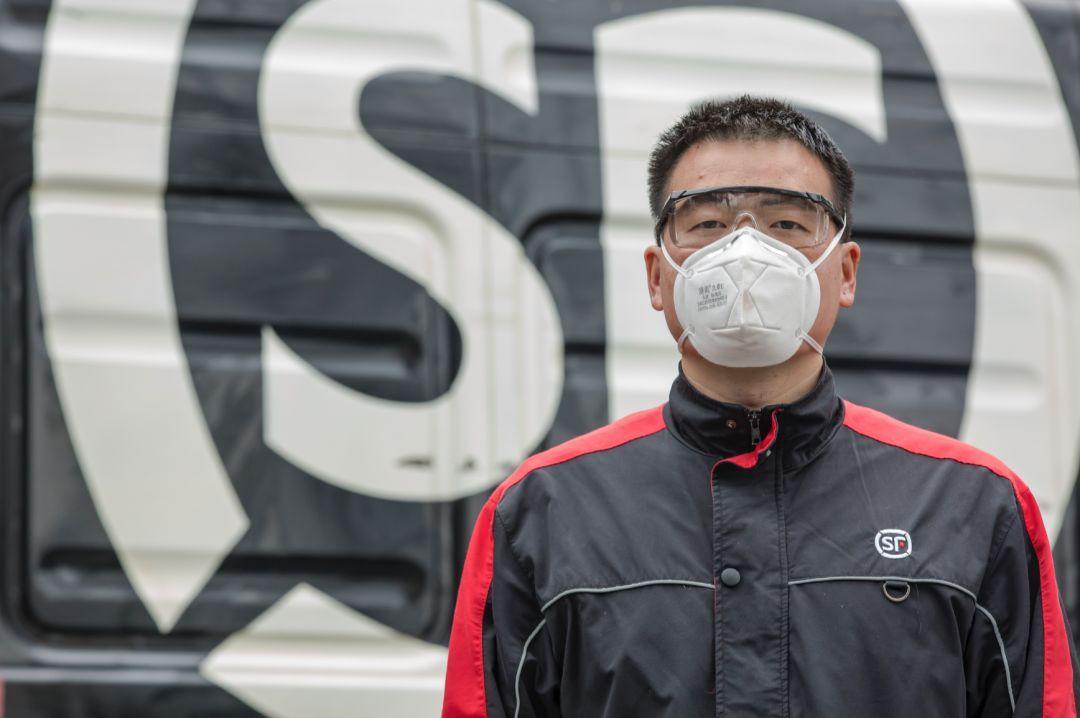
       Jinyintan Hospital, the forefront of Wuhan’s anti-epidemic campaign, is located in the service area of Yong Wang. On New Year’s Eve in 2020, Yong Wang learned that the nurses in Jinyintan Hospital couldn’t make an appointment to go home and asked for help online. He persuaded his family to rush to Jinyintan Hospital and take the nurse home. Seeing so many doctors and nurses fighting continuously in the front line against the epidemic, there was no place to sleep peacefully. Wang Yongxin stopped going home for reunion. On the first day of the new year, he sent 30 doctors and nurses home in succession. When a person’s ability is limited, he will start a circle of friends to help. The driver gap was too big, so Yong Wang contacted many enterprises, which finally guaranteed the medical staff.

       After the travel problem was solved, Wang Yong contacted many parties to let the convenience store start again, which solved the dining needs of many medical staff. During the epidemic, a medical service group was specially set up in Yong Wang. As long as the medical staff shouted in the group, Yong Wang and his volunteer team would come out to fix it.

The vice president of the United States said that "China’ stole’ American technology" and Hua Chunying responded with four "mistakes".

CCTV News:On July 18, 2018, Foreign Ministry Spokesperson Hua Chunying held a regular press conference. A reporter asked: According to the White House website, US Vice President Burns said in his speech that in all industries, the tariffs imposed by China on American goods are three times that imposed by the United States on China goods, and the United States will take tough measures to prevent China from "stealing" technology. If China refuses fair trade and continues to retaliate against the United States, the United States will not back down. What is China’s response to this?

Hua Chunying:A few days ago, the statement of the Ministry of Commerce of China has systematically and clearly clarified China’s relevant position. Since American officials have also mentioned the so-called tariffs, fairness, "theft" and retaliation in Sino-US economic and trade relations, I can briefly respond to several points:

First, in all industries, China’s tariff on the United States is three times that on China? Wrong! Take automobile tariffs as an example. The import tax rate of passenger cars in the United States is 2.5%, but the import tax rate of trucks is 25%, while the tariff of imported automobile parts in China is only 10%, which has recently dropped to 6%.

Second, China refuses fair trade? Wrong! China has always advocated fair trade. But fairness can’t talk to itself, and it can’t set standards completely according to its own interests and needs. China is promoting a new round of opening up and will continue to strive to create an open, transparent, fair and predictable business environment. The United States, on the other hand, is making all kinds of excuses and even abusing absurd reasons such as "national security" to create all kinds of obstacles and restrictions on the normal investment and business activities of China enterprises in the United States. China is opening the door, and the United States is closing the door. Who is right and who is wrong is clear at a glance.

Third, China "stole" American intellectual property rights? Wrong! The US slanders China for "stealing" intellectual property rights, which is a serious distortion of history and reality. China is firmly implementing the strategy of innovation-driven development. China’s innovation achievements are not based on stealing or robbing, but on the wisdom and sweat of more than 1.3 billion people in China. Summers, the former US Treasury Secretary, made a fair remark: China’s enterprises are in a leading position in technology, which is not the result of "stealing" American technology, but originated from China’s excellent scientists in the field of basic science and the education system that values talents and pays attention to science. I suggest that those egotistical people in the United States might as well read the History of Science and Technology in China by Mr. Needham, a famous British historian.

Fourth, if China continues to retaliate, the United States will not back down? Wrong! The correct statement should be that if the United States continues to be willful, countries around the world will fight back more resolutely and forcefully. This is a dispute between unilateralism and multilateralism, protectionism and free trade, power and rules initiated by the United States. It is the strong consensus and determination of the international community to resolutely safeguard its legitimate rights and interests and safeguard multilateral trade rules and systems. If the United States continues to cling to the hegemonic logic of "the United States is right to attack people, and other countries defend themselves unreasonably", it will only go further and further on the wrong road of being alone.

What about the golden monkeys in Yunnan, Guizhou and Sichuan?

Original Ran Hao, Huang Zijian shell nature.

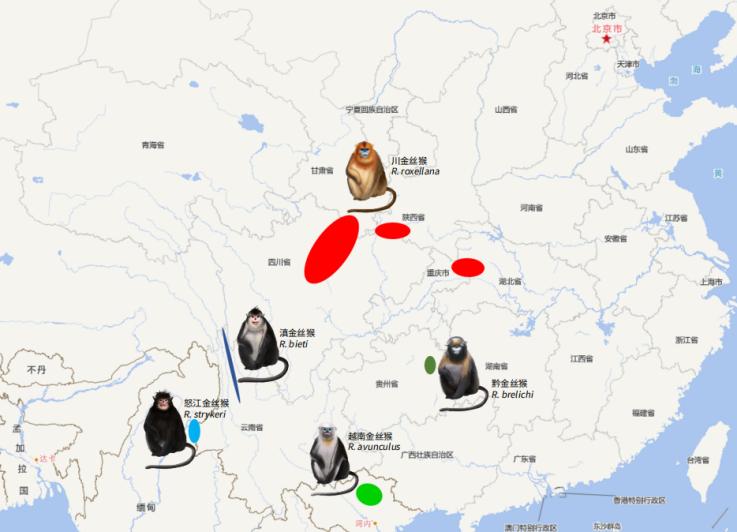
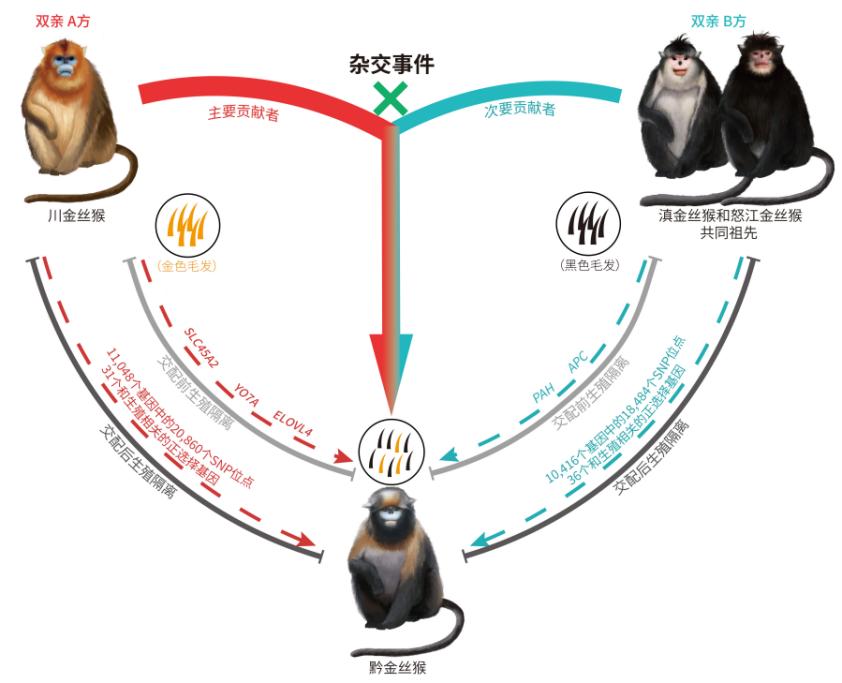
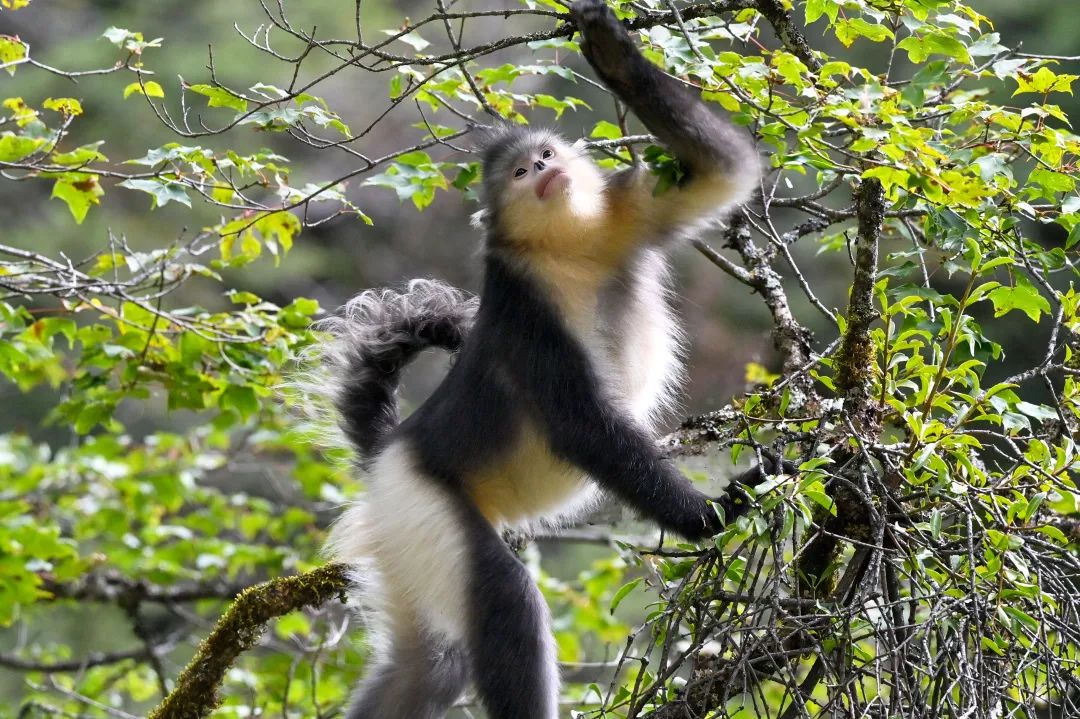
The golden monkey is a very famous rare primate, and everyone may have heard its name more or less. However, in fact, golden monkeys have not only one species, but five species. Moreover, not all golden monkeys are covered with golden hair. Among them, Rhinopithecus brelichi, known as the "only child in the world", is a mixture of black and gold. Its head and deltoid hair tend to be golden, while the hair on its limbs is completely black and looks very special.

Rhinopithecus brelichi, the gray snub-nosed monkey | Photo: Li Guiyun

Recently, the Primate Genome Project initiated by Chinese scientists published a special research issue in the famous academic journal Science, which not only explained the origin of the black and gold mixed hair of Guizhou golden monkey, but also found ancient parents for Guizhou golden monkey, and the story inside was quite tortuous.

A monkey with a nostril facing upwards.

Golden monkeys belong to langurs, whose heads often look a little sharp in appearance. They take plants as their main food, and chewing leaves is a daily thing. The Primate Genome Project reconstructed the spreading route of langurs in Asia for 8 million years, and denied the hypothesis that they entered East Asia through the north, but thought that they arrived in East Asia through the southern foothills of the Himalayas and south to Southeast Asia. And about 7.5 million years ago, the strange-nosed monkey, where the golden monkey belongs, began to rise and became a major force among Asian langurs.

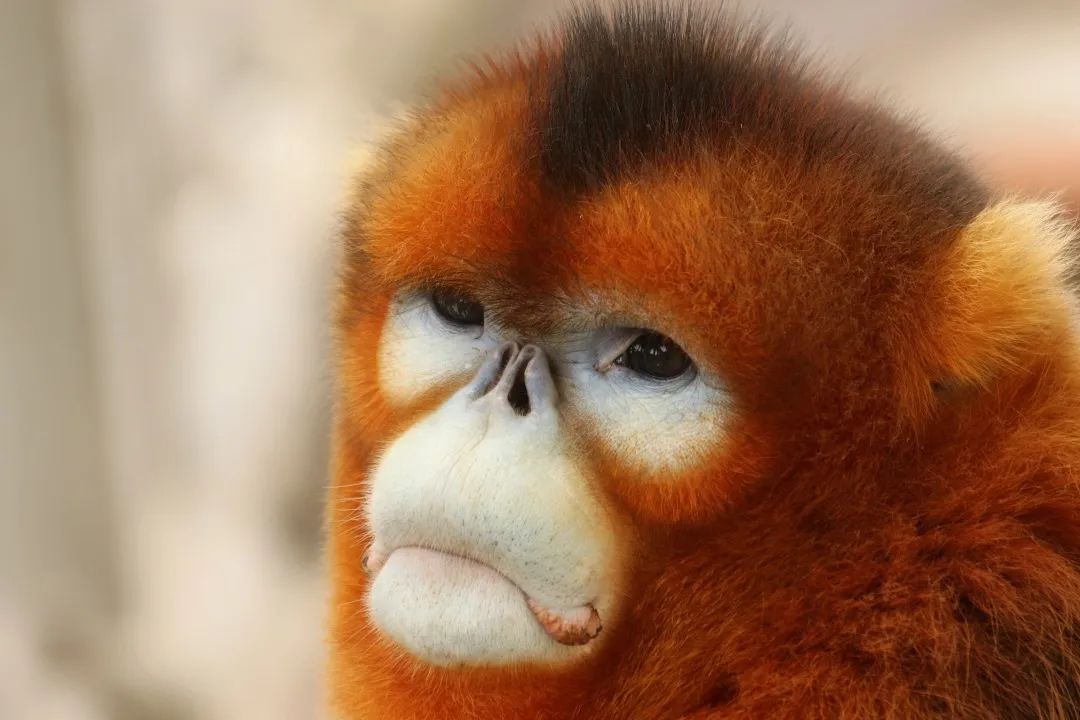
Why is it called a strange nose monkey? Because if you count the golden snub-nosed monkeys, the four genera of the strange-nosed monkeys together can’t make up a Zhou Zheng’s nose-yes, so can the golden snub-nosed monkeys. Their official name is Rhinopithecus, which means that their nostrils are facing the sky.

The famous Sichuan golden monkey also has its nostrils facing the sky. Do you think it will get into the water in rainy days? | Figure worm creativity

Noses facing the sky do not represent the arrogance of the golden monkey, they are just the nasal bone. In the long-term evolution process, the nasal bone completely degenerates and disappears, resulting in a shorter nose, so it seems that the nostrils are a little upturned, which is conducive to increasing ventilation in plateau areas. In fact, the golden monkey is relatively mild among monkeys, belonging to the kind of good temper, and can form large groups. The primate genome project also explains the emergence of this characteristic from the molecular mechanism, which may be related to adapting to the cold climate.

Let’s talk about the color of the golden monkey. In fact, only R. roxellana in Sichuan, Shaanxi, Gansu and Shennongjia, Hubei, China, is really covered with golden hair. It is the first species found in the golden monkey, and it is also the reason why the golden monkey got its name. While Yunnan golden monkey (R. bieti), Nujiang golden monkey (R. strykeri) and Vietnamese golden monkey (R. avunculus) are called golden monkeys, but their hair is mainly black or mixed with black and white.

Distribution areas of five species of golden monkeys | Photo courtesy of Yu Li’s research group, etc.

The Guizhou golden monkey is the third case, which has both golden hair and black hair. Moreover, Guizhou golden monkeys are particularly rare. There are currently more than 2,400 giant pandas, while there are only about 850 golden monkeys in Guizhou. Its distribution area is also particularly limited, only distributed in Fanjing Mountain area in northern Guizhou, and it is called "the only child in the world".

This makes people wonder how the unique hair of Guizhou golden monkey came from. How did this golden monkey with such a limited distribution originate? What is the genetic relationship with several other golden monkeys? How did this species form?

Classical seed formation and hybrid seed formation

In the classical evolutionary theory, an ancestor population was separated into several independent populations that could not communicate with each other due to migration and environmental changes, and each of them accumulated different mutations and became different. Then, even when they meet again, they can’t produce fertile offspring, which is the reproductive isolation caused by geographical isolation. Based on this, ernst meier thinks that the key to the definition of a species is to see whether a population can be isolated from other populations, that is, the generation of reproductive isolation marks the formation of new species. This argument has been regarded as a standard by countless people, and has been written into high school textbooks, which is well known to people.

It is precisely because of this that the evolution process is often described as an evolutionary tree-a tree structure in which the common ancestor population keeps branching out over time. This tree structure, in which each branch does not cross each other, shows us that the ancestors of each living species at any historical stage came from the same population. Today, the tree of species evolution is one of the most commonly used things for biologists to discuss species evolution.

Did you find a human | |openlearn

Later, people gradually realized that cross-species hybridization is also one of the mechanisms for the formation of new species. Especially in the process of plant evolution, hybrid speciation is considered as an important mode of speciation, which can usually be divided into three forms: polyploid speciation, homoploid hybrid speciation and introgressive hybrid speciation.

Polyploidization is to keep the chromosomes of two parent species at the same time, so as to double the genetic material, and quickly produce reproductive isolation with the parents to form new species. For example, the tetraploid Primula kewensis comes from the hybridization of two diploid species Primula verticillata and Primula floribunda. However, this method can only occur in plants and other highly compatible genetic systems, and it is almost impossible to happen in animals. Autoploid hybridization and introgression will not change the multiple of genetic material, but will only show a "mosaic/patch" genetic composition due to recombination. In the process of introgression, the offspring will cross with at least one parent species for many times before forming a new species.

Hybrid Primula Qiuyuan | |penprimulas

Botanists are very familiar with hybridization. However, when it comes to animal evolution, zoologists have different views. In the past, they generally believed that animals were unlikely to cross into species.

However, with the analysis of genome data of more and more species, zoologists have found that the reproductive isolation between species in many groups is not as strong as expected, and it is very likely that hybridization can occur. At present, there are many known groups such as butterflies, wolves, baboons, birds and bears, which have experienced rapid adaptation to radiation, that is, a large number of new species broke out in a short period of time.

In this evolutionary process, some species come from interspecific hybridization of two or more different species, rather than always being descendants of a single ancestor species. At this time, the simple tree structure can no longer accurately describe the evolution of species.

So, what kind of formation process has the golden monkey species experienced? How did the Guizhou golden monkey form?

An unexpected and reasonable conclusion

Guizhou golden monkey is probably an example of hybridization in nature.

As one of the projects of Primate Genome Project, the team of researcher Yu Li from Yunnan University, together with several research teams, assembled the high-quality reference genome sequence of Yunnan golden monkey, and conducted population genetics analysis on the whole genome data of 106 samples from all five species of golden monkey.

The results show that the genome of Guizhou golden monkey has mixed genetic components from Sichuan golden monkey population and Yunnan golden monkey/Nujiang golden monkey ancestor population, which are equivalent to the parents of Guizhou golden monkey. But this is different from ordinary mating. Generally speaking, the genetic material ratio of offspring from parents is close to 1:1, but a larger proportion of the genome of Guizhou golden monkey comes from the parents of Sichuan golden monkey. That is to say, from the perspective of genome, Guizhou golden monkey is more like Sichuan golden monkey. This is probably the reason why it is widely used as a sister species of Sichuan golden monkey in previous studies.

According to the genome, the researchers made a backward inference and carried out an ancestor simulation. The results show that the evolution model of Guizhou golden monkey is likely to be like this:

About 1.87 million years ago, there was a hybridization event between the ancestors of Sichuan golden monkey and Yunnan golden monkey/Nujiang golden monkey, resulting in the original Guizhou golden monkey population.

In later years, Guizhou golden monkey, which originated from hybridization, screened the genetic components of different parents in order to restore or maintain the stability of genomic biological function.

In addition, there were two hybridization events between the common ancestors of Guizhou golden monkey, Sichuan golden monkey and Yunnan golden monkey/Nujiang golden monkey.

Therefore, this story sounds a bit chaotic, but it explains why the genetic material from different parent species in the genome of Guizhou golden monkey is not balanced.

Evolution of Guizhou golden monkey | Photo courtesy of Yu Li’s research group

The next step is the hair color of Guizhou golden monkey. The researchers found genes related to the formation of special mosaic coat color of Guizhou golden monkey. It was found that the hair color of golden monkey was determined by the ratio of melanin to eumelanin. When the proportion of brown melanin is high, there will be golden hair. When the proportion of melanin is low, there will be black hair. The proportion of brown melanin in the head and deltoid muscle of Guizhou golden monkey is high, showing golden color; The proportion of brown melanin in limbs is low, showing black. Yu Li and others discovered five genes related to melanin synthesis in Guizhou golden monkey, and they came from different sources-SLC45A2, MYO7A and ELOVL4 genes came from Sichuan golden monkey, while PAH and APC genes came from the common ancestor of Yunnan golden monkey and Nujiang golden monkey. It is precisely because of the recombination of melanin synthesis genes from different sources in the genome of Guizhou golden monkey that the unique mosaic coat color of Guizhou golden monkey is caused.

Then how did the Guizhou golden monkey form reproductive isolation from the other two species and eventually become an independent species?

Maybe it was related to the color of hair at first. Sexual selection may be the explanation-the hair of the golden monkey is different from that of the other two species. A great possibility is that for Sichuan golden monkeys, individuals with golden hair are often more popular with the opposite sex; For Yunnan golden monkey or Nujiang golden monkey, individuals with black hair often have more advantages in mate selection; For Guizhou golden monkeys, they prefer individuals with golden heads and black limbs. As a result, pre-mating isolation is formed.

To put it bluntly, they don’t like each other, and they are not each other’s "dishes". The picture shows the idea of Yunnan golden monkey | worm.

In addition to the isolation before mating, the isolation after mating may also promote the evolutionary independence of Guizhou golden monkey and its two parents. For example, in terms of genes related to reproductive traits, there are 31 genes inherited from Sichuan golden monkey and 36 genes inherited from another parent in the genome of Guizhou golden monkey. As a result, based on these two functional gene sets related to reproduction, Guizhou golden monkey may establish cross-mating isolation with two parents, and eventually form an independent species.

The evolution of Guizhou golden monkey proves that mammals can form new species through hybridization. The success of this research also shows that the primate genome project initiated by Chinese scientists has unlimited potential. There are more than 500 primate species in the world. Studying them can help us to know more about the origin, evolution, physiological characteristics, genetic variation map and pathogenic gene variation of human beings.

references

[1]Bi XP, Zhou L, Zhang JJ, …, Zhang GJ. 2023. Lineage-specific accelerated sequences underlying primate evolution. Science Advances 9. Doi: 10.1126/sciadv.adc9507.

[2]Fiziev PP, Mcrae J, Ulirsch JC, …, Farh K K-H. 2023. Rare penetrant mutations confer severe risk of common diseases. Science 380. Doi: 10.1126/science.abo1131.

[3]Gao H, Hamp T, Ede J, …, Farh K K-H. 2023. The landscape of tolerated genetic variation in humans and primates. Science 380. Doi: 10.1126/science.abn8197.

[4]Kuderna LFK, Gao H, Janiak MC, …, Bonet TM. 2023. A global catalog of whole-genome diversity from 233 primate species. Science 380, 906-913. Doi: 10.1126/science.abn7829.

[5]Qi XG, Wu JW, Zhao L, …, Li BG. 2003. Adaptations to a cold climate promoted social evolution in Asian colobine primates. Science 380.Doi: 10.1126/science.abl8621.

[6]Rivas-gonzález I, Rousselle M, Li F,…, Zhang GJ. Pervasive incomplete lineage sorting illuminates speciation and selection in primates. Science 380.DOI: 10.1126/science.abn4409.

[7]Shao Y, Zhou L, Li F,…, Wu DD. 2023. Phylogenomic analyses provide insights into primate evolution, Science 380, 913-924.Doi: 10.1126/science.abn6919.

[8]Sørensen EF, Harris RA, Zhang LY, …, Rogers J. 2023. Genome-wide coancestry reveals details of ancient and recent male-driven reticulation in baboons. Science 380. Doi: 10.1126/science.abn8153.

[9]Wu H, Wang Z, Zhang Y, …, Yu L. 2023. Hybrid origin of a primate, the gray snub-nosed monkey. Science 380. Doi: 10.1126/science.abl4997.

[10]Zhang BL, Chen W, Wang ZF, …, Wu DD. 2023. Comparative genomics reveals the hybrid origin of a macaque group. Science Advances 9. Doi: 10.1126/sciadv.add3580.

[11]Zhou Y, Zhan XY, Jin JZ, …, Zhang GJ. 2023. Eighty million years of rapid evolution of the primate Y chromosome. Nature Ecology & Evolution. Doi: 10.1038/s41559-022-01974-x.

Authors: Ran Hao and Huang Zijian.

Editor: You Zhiyu, Sister Hei jio

Thanks to Mr. Yu Li and Mr. Wu Hong for their comments.

Cover Image Source: Picture Worm Creativity

Original title: "Do something" gross "! What happened to the golden monkeys in Yunnan, Guizhou and Sichuan? 》

Read the original text