Yangguang Finance Review | Attract the film and television industry to invest in living water and tell the beautiful story of China.

  Directed by the State Film Bureau, the 21st Shanghai International Film Festival sponsored by the Central Radio and Television General Station and the Shanghai Municipal People’s Government is under way. The development of China’s film and television industry has made remarkable achievements in recent years, from the first breakthrough of 10 billion in 2010,By the end of 2017, the total box office of China movies has increased fivefold in just seven years.The investment of capital in the film industry is also increasing at an annual rate of about 50%. The entry of capital has greatly enhanced the vitality and influence of industrial development, and many investors and production companies have shared the huge dividends in the development of the film market.

  What is the capitalization scale of our film and television industry and what are its characteristics? Capital is a double-edged sword. What problems does the rapid expansion bring? How to stand out among many film and television companies and how to reflect their competitiveness?

  Attract the film and television industry to invest in living water and tell the beautiful story of China.

  Economic voice commentatorZiliang

  Dean, Cultural and Economic Research Institute, Central University of Finance and EconomicsWei pengju

  140 billion market, competing with each other.

  Voice of the Economy commentator Zi Liang:How to evaluate the progress of capitalization of China’s film and television industry in recent years?

  Wei Pengju, Dean of Cultural and Economic Research Institute of Central University of Finance and Economics:The main reason why capital is enthusiastic about the film and television industry is to take a fancy to the dividends.Policy dividendThe country has regarded film development as a very important part of its cultural development strategy, and the Film Industry Promotion Law was specially promulgated two years ago.Consumption dividendThe people’s yearning and pursuit for a better life has become the biggest market potential.

  Voice of the Economy commentator Zi Liang:What order of magnitude has the annual investment scale in the industry reached? What are the structural features?

  Wei Pengju, Dean of Cultural and Economic Research Institute of Central University of Finance and Economics:Around 2016, the scale of our entire film industry should have exceeded 140 billion, which is a rough estimate. Structurally, at present, we mainly invest more in hardware and channels, such as cinema lines.In 2017, the number of movie screens in China surpassed the United States in one fell swoop, becoming the first in the world.

  The investment in content should be about 30 billion yuan per year for production. There was a crazy period of rapid growth before, and the growth at this stage began to be reasonable, and the investment gradually improved from hardware to software.

  Voice of the Economy commentator Zi Liang:Capital investment has brought rapid expansion to China film and television, which has both advantages and disadvantages on the content itself, and this is also a hot issue in the industry. What do you think of this?

  Wei Pengju, Dean of Cultural and Economic Research Institute of Central University of Finance and Economics:There is no doubt that the attribute of capital is the primary pursuit of profit, which will form a certain tension with the artistic attribute of movies. But on the whole, judging from the development history of international film industry and China film industry, the relationship between them is still harmonious, and the capital is actually very clear.If you want to make a profit, you must first have high-quality content and form a good IP..

  Now, this film investment model dominated by mainstream companies has basically stabilized. A large amount of non-industry capital has also begun to enter the film industry, but it is more cautious and rational, mainly with investment. All these indicate thatFilm and television and capital tend to be rational..

  Voice of the Economy commentator Zi Liang:Obviously, the cooperation between capital and the film and television industry itself needs further running-in. How to make more effective use of capital to make the film industry in China develop better?

  Wei Pengju, Dean of Cultural and Economic Research Institute of Central University of Finance and Economics:First, improve market concentration.Nowadays, the concentration of China film and television companies is becoming more and more obvious, such as Light Media, which has gained capital through listing and formed a leading position in the industry. But I think, from the content to the channel, to the distribution, and then to the development of derivatives, industry consolidation is still not strong enough.

  Second, we should encourage social capital to create content.Do investment in the sense of assets, rather than focusing too much on channels to make quick money or investments in areas such as distribution.

  Third, if China films want to enter the international market, they should encourage capital to play an important role.On the one hand, it is beneficial for capital to obtain wider benefits in a larger market; On the other hand, it is also very conducive to the healthy development of China films in the direction of more international competitiveness.

  Voice of the Economy commentator Zi Liang:With the continuous improvement of industrial concentration, enterprises can finally stand out and must have core competitiveness. What do you think is the core competitiveness of film and television industry companies?

  Wei Pengju, Dean of Cultural and Economic Research Institute of Central University of Finance and Economics:The first is content, which is the core competitiveness of the film industry.Second, we should gradually take the mode of the whole industry chain, so that the value of content can be universally realized in the whole industry chain.Only when the content value is "eat more than one dish" and the income is maximized can the enthusiasm of social capital be further stimulated. Therefore, having content production and its industrial chain is the core competitiveness of leading companies.

  Wei Pengju, Dean of Cultural and Economic Research Institute of Central University of Finance and Economics:From the industrial point of view, only the complete story can be told, the story has great potential to dig deep, and the complete content with intellectual property rights protected by law is the biggest key point of content production.

  In my opinion, the content that reflects the excellent traditional culture of the Chinese nation, Chinese’s thoughts and Chinese’s longing for a better life must be the most popular and potential content in the film market.
The Tenth Five-Year Plan for Bio-economic Development was released | Focus on the higher-level needs in the fields of medicine, food, beauty and safety.

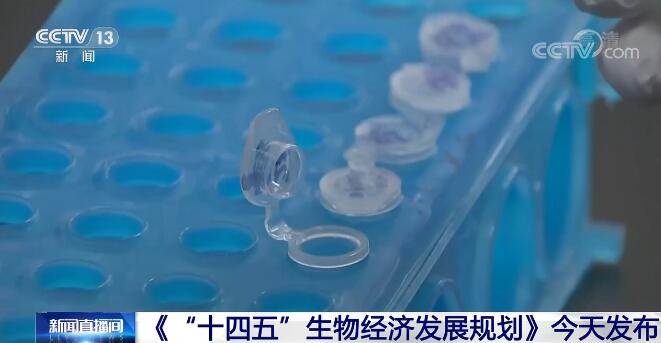
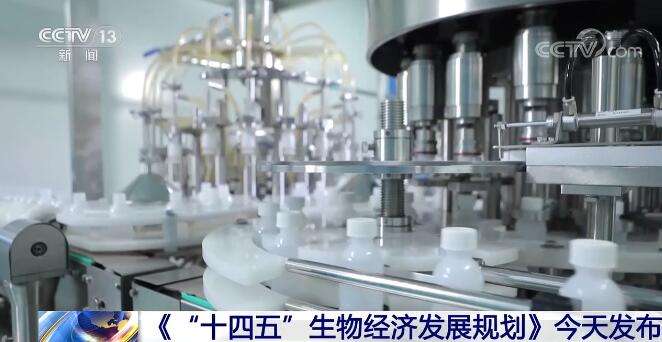
       CCTV News:Today (May 10th), the National Development and Reform Commission released the first five-year plan of bio-economy in China, "The Development Plan of Bio-economy in the 14th Five-Year Plan", which clearly defined what bio-economy is and its development goals and tasks.

       According to reports, bio-economy is an economic form with the development and progress of life science and biotechnology as the driving force, the protection, development and utilization of biological resources as the basis, and the extensive and in-depth integration of industries such as medicine, health, agriculture, forestry, energy and environmental protection.

       Wang Xiang, Deputy Director of High-tech Department of National Development and Reform Commission:Focusing on the higher-level needs of the people in the fields of "medicine", "food", "beauty" and "safety", it is proposed to develop four key development areas, namely, biomedicine, bio-agriculture, biomass substitution and bio-safety, as well as seven major projects, such as improving innovation ability, benefiting the people with biomedical technology, upgrading modern seed industry, demonstrating bio-energy and environmental protection industry, integrating and applying biotechnology and information technology, preserving and developing bio-resources, and building a bio-economic pilot zone.

       During the "Fourteenth Five-Year Plan" period, China will develop bio-economy from five aspects: vigorously consolidating the foundation of bio-economic innovation and cultivating and expanding the pillar industries of bio-economy. By 2025, China’s total bio-economic scale will reach a new level, and the number of enterprises with annual operating income of more than 10 billion yuan will increase significantly. At the same time, biotechnology and bio-industry benefit people’s health, food security, energy security, rural revitalization and green development more widely. In addition, it is necessary to basically build a biosafety risk prevention and control and governance system.

Bio-economy involves a wide range and covers many industrial fields. In order to highlight the key points, the Plan deploys the pillar industries of bio-economy to be cultivated from four aspects: biomedicine, bio-breeding, bio-energy and bio-information.

These four aspects are as follows: firstly, we should accelerate the empowerment of health industry by biotechnology. Promote the deep integration of advanced technologies such as genetic testing and biological inheritance with disease prevention, and improve the clinical medical level. Secondly, we should speed up biological breeding technology to empower bio-agricultural industry. We will develop biological breeding technologies such as gene editing in an orderly manner, improve the production capacity and quality of important agricultural products such as grain, and improve agricultural production efficiency. In accelerating bio-manufacturing technology to empower bio-energy and bio-environmental protection industries, we should develop high-performance bio-environmental protection materials and biological agents to promote the transformation of fossil energy into green and low-carbon renewable energy. At the same time, we must accelerate the information technology to empower the bio-information industry.

       Wang Xiang, Deputy Director of High-tech Department of National Development and Reform Commission:Relying on artificial intelligence technology, biomedicine and health big data resources, develop intelligent decision-making cognitive models and algorithms to assist personalized new drug research and development; Use cutting-edge technologies such as 5G, blockchain and Internet of Things to realize the life cycle management of drugs and vaccines from production to use; Deepen the application of health big data in medical research, education and training, clinical diagnosis and treatment, product research and development, industry governance, and medical insurance payment.

The "Tenth Five-Year Plan" for the development of bio-economy puts forward that "persisting in innovation drive" should be the first of the five principles for the development of bio-economy in the "Tenth Five-Year Plan", and the innovation ability of bio-economy should be promoted from four aspects.

The Plan adheres to the problem orientation and promotes the bio-economic innovation ability from four aspects. First, speed up the improvement of biotechnology innovation ability. Focus on key areas to implement major national science and technology projects and key R&D plans, deploy leading major national science and technology infrastructure in advance, and build a national strategic scientific and technological force in the biological field. The second is to cultivate innovative subjects with strong competitiveness. Strengthen the main body of enterprise innovation, give play to the leading and supporting role of leading enterprises, cultivate individual champions in subdivided fields, and support leading enterprises to take the lead in setting up innovation consortia.

Wang Xiang, Deputy Director of High-tech Department of National Development and Reform Commission:We will strengthen new innovative forces, support the establishment of production-use consortia, accelerate the construction of research hospitals, clinical medical research centers and translational medical research centers, and encourage the construction of industry research institutes and innovation and development alliances.

       The third is to optimize the regional layout of innovation and development. Guide innovative resources to gather in key areas, implement special promotion actions for key industries, and try reform measures first to create a bio-economic innovation pole and a bio-industry innovation highland. Promote the development of the national bio-industrial base in the direction of high-end, internationalization and platform. The fourth is to deepen cooperation in bio-economic innovation. Encourage domestic scientific research institutions to initiate and participate in international science projects, encourage enterprises to accelerate their integration into the international market, and promote key products to go abroad.

The relevant person in charge of the Ministry of Industry and Information Technology said that as an important part of bio-economy, biomedical industry is not only a strategic emerging industry related to the national economy, people’s livelihood and national security, but also an important foundation for building a healthy China. China will promote the high-quality development of biomedical industry by accelerating the development of cutting-edge technologies and strengthening key technologies.

In accelerating the development of cutting-edge technology, we should encourage the deep integration of Industry-University-Research doctors and promote the research and development and industrialization of a number of new drugs and new medical devices.

In strengthening core technology research, we will further develop and apply advanced manufacturing technologies and equipment, enhance key core competitiveness, improve total factor production efficiency, and continuously strengthen the advantages of large-scale and systematic manufacturing.

In improving the innovative service system, support pharmaceutical enterprises to strengthen cooperation with national laboratories, scientific research institutions and other institutions, and promote the orderly convergence and coordinated development of results transformation.

In addition, to enhance the competitiveness of pharmaceutical enterprises, it is necessary to form a number of large pharmaceutical companies, and at the same time support the development of "little giant" enterprises that focus on segmentation.

Zhou Jian, Deputy Director of Consumer Goods Industry Department of Ministry of Industry and Information Technology:We will implement the cultivation project of pharmaceutical leading enterprises, support large enterprises to implement innovation and transformation, enhance market competitiveness and sustainable development ability, and form a number of large pharmaceutical companies with high degree of internationalization and global layout development in combination with the implementation of policies such as consistency evaluation of generic drugs and quantity procurement.

The "year of interest rate reduction" was put in question mark! The Year of the Loong, the global central bank, is divided: Is the banner of raising interest rates still standing?

Cailian News on February 19th (edited by Xiaoxiang)Will 2024 really be a "year of interest rate cuts" for global central banks? As time officially entered the the Year of the Loong of the Lunar New Year, people’s predictions that were once firmly believed at the end of last year have now become more and more shaken-at least, it seems increasingly unlikely that countries will open the door to interest rate cuts at the same time in a short time, just as the major global central banks entered the tightening cycle two years ago …

There are signs that, with the influence of domestic driving factors that determine the price outlook gradually replacing the global trend, the synchronization of monetary policy in developed countries in the past four years is about to begin to crack.

Some central banks may even raise interest rates in 2024 …

As a pioneer in setting up inflation targeting system in the early 1990s, the New Zealand Federal Reserve is very good at setting the trend of monetary policy. According to ANZ economists, the Fed may raise interest rates again at the end of February at the earliest, and traders believe that New Zealand may once again break the consistency of monetary policies of major global central banks.

In addition, Australia, New Zealand’s neighbor, has recently become more hawkish. Michele Bullock, chairman of the Reserve Bank of Australia, said earlier this month that "the possibility of further interest rate hikes cannot be ruled out", which highlighted the policy path completely different from market expectations. The market originally thought that the Reserve Bank would adopt a dove tone at its first interest rate meeting this year on February 6.

In fact, even the Federal Reserve, which everyone expected to cut interest rates many times in 2024 at the end of last year, seems to be facing new variables at the arrival of the Lunar the Year of the Loong.

After the release of ——CPI and PPI, two US heavy inflation reports that exceeded market expectations in zhou yuan, the surge in employment growth, the persistent stickiness of inflation and the overall economic performance of the United States, which are constantly contrary to pessimistic expectations, have pushed the yield of US Treasury bonds back to the highest point in about two months, and traders have greatly lowered their expectations for interest rate cuts this year.

The current interest rate forecast of the US interest rate futures market at the end of this year is almost consistent with the bitmap of the Federal Reserve in December.-The median forecast of policy makers corresponds to three interest rate cuts of 25 basis points in 2024, and the current pricing of derivatives contracts also corresponds to the same range, and it is estimated that there is only a small possibility of a fourth interest rate cut. You know, at the end of last year, traders once bet that there would be seven interest rate cuts this year.

More extreme, it is also the "interest rate hike" voice issued by several Wall Street investment banks and former US Treasury Secretary Summers last week.Kit Juckes, an analyst at Socié té Gé né rale, said last week that the Fed "has no reason to rush" to cut interest rates. If the US economy accelerates growth again, then the Fed’s next interest rate decision may be to raise interest rates rather than cut interest rates.

Summers, the former US Treasury Secretary, also threatened in a recent interview that the Fed’s next step is likely to raise interest rates instead of lowering them. He believes that the Fed’s actions must be "very careful".

At the same time, Japan, which has been in an ultra-loose state for a long time, may raise interest rates for the first time since 2007 in the coming months.

Judging from the latest policy expectations of these central banks, whether 2024 is a "year of interest rate reduction" that was originally brilliant in the industry really needs to be marked with a big question mark. At least in the first half of this year, the strength of the "interest rate hike camp" is still completely enough to compete with the "interest rate cut camp" …

Will the Year of the Loong, the global central bank, embark on the road of divergence?

Of course, the easing path of some major global central banks during the year may not be easily changed, such as Europe, where the economy is on the verge of recession.

Last year, the euro zone only narrowly avoided economic recession, and its price pressure fell faster than expected, which supported the views of those in the industry who promoted early interest rate cuts. Traders are also betting that the Swiss National Bank will cut interest rates as early as next month. Britain is still in the dilemma of economic recession and high inflation, which may put the Bank of England in the most difficult situation.

The latest economic forecast of the International Monetary Fund (IMF) highlights this difference:The economic outlook of the United States has improved, the economic outlook of the euro zone has deteriorated, and the economic data of the United Kingdom is bleak.

Bond traders now predict that after one year, the benchmark interest rate in the United States will drop by about 100 basis points, Europe will drop by about 120 basis points, while Australia will only be about 40 basis points lower than the current level, and Japan will raise interest rates by about 30 basis points.

Citigroup strategists said that traders need to hedge against the risk that the Fed will raise interest rates soon after a very short easing cycle.

This is what the world’s major central banks, including ECB officials, are trying to avoid. They are worried that a quick 180-degree turn may eventually prove that they underestimate inflation again.

In the past six months, policy makers in various countries have spent a lot of time discussing the risk of acting too early or too late. The former may be startled by the renewed price pressure, while the latter may restrain demand too much. But at present, the latter has obviously gained more support.

Pierre-Olivier Gourinchas, chief economist of IMF, said that central banks should avoid premature easing, because it will lose hard-won credibility and lead to a rebound in inflation; However, we should not delay the interest rate cut too much, so as not to endanger economic growth and put the inflation rate at risk of falling below the target.

He wrote in a recent report: "My feeling is that the United States, where inflation seems to be more demand-driven, needs to pay attention to the above-mentioned first-class risks, while the euro zone, where soaring energy prices have played a disproportionate role in the upward inflation, needs to manage the second-class risks even more. In both cases, it may not be easy to maintain a soft landing. "

In the long run, central banks in Europe, North America and the South Pacific must deal with different structural problems, such as different population growth rates, energy import dependence, supply chain transfer and housing dynamics. Therefore, the global monetary policy consistency that has emerged since mid-2020 (COVID-19 outbreak) will almost inevitably weaken.

Mickey Levy, a visiting scholar at the Hoover Institution, said, "Central banks will cut interest rates at different rates. Although inflation is declining in most places, central bank governors are facing different inflation and economic conditions, which determines the appropriate policy interest rate needed to achieve their goals. "

Looking ahead to this week, the minutes of the January meeting of the Federal Reserve and the European Central Bank, which will be released on Wednesday and Thursday, are expected to be closely watched by people to understand the latest views of internal officials of the two central banks on the direction and pace of policies.

(Cailian Xiaoxiang)
Reporting/feedback

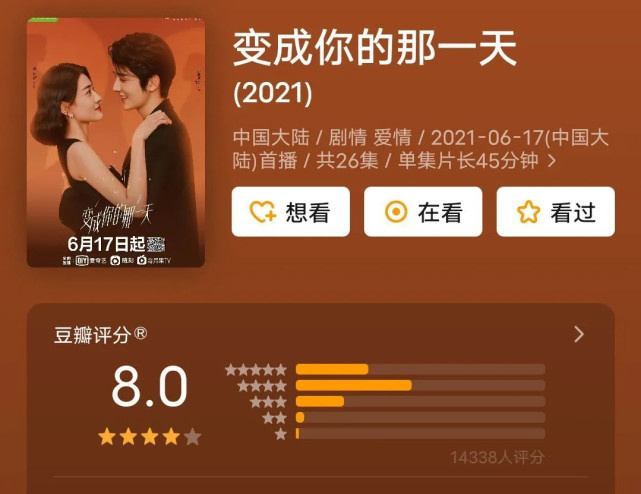
Opening a painting scored 8.0 points, which was funny and sweet. Zhang Xincheng and Liang Jie’s new drama easily achieved it.

In the hot broadcast of iQiyi video, the modern love drama "The Day It Becomes You" starring Zhang Xincheng and Liang Jie officially opened in Douban.I got a high score of 8.0 when I started painting.. This is the highest score among similar dramas being broadcast recently. What’s more, in the future, Douban’s prejudice and contempt for this type of drama, 8.0 can definitely be said to be a quite good result.

The play tells an old story of soul exchange, and the people are not so novel. One is a popular male team leader, and the other is an entertainment WeChat official account reporter. After exchanging bodies, they are forced to get along day and night, and they are secretly in love with each other.

The plot is so simple. According to all kinds of sweet pet dramas that are being refurbished now, there is nothing particularly outstanding and attractive in the general plot content.But the victory lies in the compact plot, interesting painting style and the actor’s acting skills.. Most viewers said that they watched 12 episodes in one breath and laughed their heads off. Now, the play is very optimistic and may become an explosion drama.

As an ordinary sweet pet drama, love drama,It is enough to be funny and sweet.. But the key problem is that even these two points are difficult to do in these dramas.The day I became you scored 8.0, which is exactly what I did.

The excellent part of the funny part is that while all kinds of stalks appear in the plot, it can alsoGuaranteed logical self-consistencyThe later soundtrack is also very suitable.BGM has played its own role in icing on the cake..

The most popular love festival is a scene of smashing walnuts. It was after the man and the woman exchanged bodies that the heroine mistakenly put the decorative walnuts (worth 600,000 yuan and served for seven years) one after another under the condition that she didn’t know the truth and wanted to eat walnuts.

It’s not too funny to say how funny this play is, but the soundtrack is too wonderful. First, after hearing the real price of this walnut, BGM gave a cock crow. When Steven Zhang, who reacted, sat limply in the ground, BGM gave an eerie ghost, which immediately made the audience understand that the heroine in the hero’s body felt that she was going to be in trouble and would not live long.It has achieved a good comedy effect.

Needless to say, this part is sweet, and the signboard of this drama is sweet. The problem is how to be sweet but not greasy, which is the difficulty.

Thanks to the setting of this play,Because of being forced to exchange bodies, it is inevitable to face a series of physical contact between men and women.Very much in love, cuddling is inevitable, you look at my body, I look at your body, who took advantage of who, entangled in this matter, the audience is always tired of watching.

The series can make everyone so high,A large part of the credit really belongs to the hero and heroine Zhang Xincheng and Liang Jie.. Their acting skills and their vision of choosing scripts are well-known.

From last year to now, Steven Zhang has had "Stewed Sydney with Rock Sugar" and "In the Name of Family".Several works have gained both word-of-mouth and actual combat achievements.

When Steven Zhang took part in the art examination, he got the first place in North Film, Shanghai Opera, Chinese Opera and Military Arts, so the audience can understand that this artist is estimated to be a slow and steady academic. Although several works are all modern plays, it can’t be said that people are very different, or they are deep, complex and difficult to shape. However, these characters that Zhang Xincheng finally presents to the audience are not Zhang Xin’s cost, but these characters.This in the current idol flow niche, Steven Zhang’s level is very rare.

Liang JieMany people may not be familiar with the name, but speaking of itQu Tan ‘er in Two-time Spoiled PrincessEveryone will react instantly. "Two-time Spoiled Princess" has already shot the third film, which seems to be an online drama with little gold content. It is also rare to shoot three films in succession.

However, does this also show that this online drama does have some loyal fans, which can attract viewers to follow it year after year? After all, it is conceivable that when a drama is filmed in the second part, it can be said that it is to rub the heat of the first part, so everyone can shoot the third part. It seems that people do have two brushes.

This series of dramas "Two-time Spoiled Princess" is mainly to see the heroine’s personal psychological activities. Liang Jie’s trivial thoughts in the drama and the performance of N-corner decoration can make the audience give her a five-star praise.

Combine that past acting experience of these two actors, and today,We can see why the credit for making this play funny and sweet is attributed to the two actors.

first,Zhang Xincheng and Liang Jie have always chosen their own scripts and roles in the process of filming these years, and they are not necessarily greedy for big production.

The dramas shot by Liang Jie are basically online dramas. Even if the online drama market is booming now, there are still more dramas with small production and small investment in this market. The same is true of Steven Zhang. Youth dramas, modern dramas and idol dramas have no great ambitions. They bite the iron and bite the steel, and they overreach themselves to shoot some difficult film and television dramas and roles.

In addition, the acting skills of the two actors are not first-class or superb, but they both pay great attention to the atmosphere when acting with each other.

Originally, this kind of ordinary sweet pet drama is not particularly demanding on acting, because the script is there, and it won’t make everyone play so deeply. But the question is, why is it difficult for sweet pet dramas to produce fine products? It is among many actors that there is a lack of atmosphere with each other. Like Liang Jie, her face value is not particularly outstanding, but we can always feel the pink bubble between her and the actor. Steven Zhang, too, in the process of cooperation, the audience can see each other in his eyes.

Is it difficult for sweet pet drama to score 8 points in Douban? Difficult! But Zhang Xincheng and Liang Jie did it easily.

Precise Supervision and Guidance to Boost Operation Management to Improve Quality and Efficiency

Sun Hong, Duty Inspector, Daowai District, Harbin City, Heilongjiang Province

  [Case background]

  In 2021, the Notice of the General Office of the Ministry of Education on Strengthening the Management of Homework in Compulsory Education Schools put forward the requirements of "grasping the educational function of homework, strictly controlling the total amount of written homework, innovating the types and methods of homework, and improving the quality of homework design". When I went deep into the school supervision in the responsibility area, I found that the principals and teachers were very confused about "total control of homework": Can you leave less homework? With this problem, I try to make a fuss from the perspective of scientific "homework design and management", and strive to "supervise, inspect" and "guide and serve" the schools in the responsibility area by means of "supervision" and "guidance", so as to help improve the level of homework management and the overall quality of running schools in the responsibility area.

  [Case description]

  First, the investigation and study, found that the misunderstanding

  Although the schools in the process of my supervision have also issued documents and systems around "homework management", teachers have consciously followed the requirements in actual teaching, but the effect is not ideal. To this end, since September last year, I have made an all-round understanding of the schools in the responsibility area by attending classes, participating in teaching and research, discussing with teachers and students, consulting materials, and conducting questionnaires, in an effort to find out the reasons why schools and teachers are unwilling and afraid to implement the "double reduction". After investigation, I found that the school has the following misunderstandings about "homework design and management":

  First, the homework design is narrow. Some teachers say that except Chinese, mathematics, English, physics and chemistry, other subjects do not need homework design and management, because these subjects are not examination subjects and do not need to be assigned homework.

  The second is to strictly control the superficiality of time. Some teachers say that in order to ensure that they don’t cross the red line, they rarely leave homework or not at all.

  The third is the formalization of hierarchical operations. Some teachers say that hierarchical homework is to divide the homework to be left into two or three pieces, corresponding to different students respectively.

  The fourth is the simplification of practical work. When asked how to arrange practical homework, teachers’ first reaction is often a single form of practical homework such as knowledge map and handwritten newspaper.

  The fifth is the simplification of homework management. Some schools blindly ask for the length of homework, but they lack management in coordinating the time arrangement of various subjects and giving feedback to students’ completion. Teachers lack trace sorting, analysis and feedback on students’ homework.

  Second, analyze the reasons and make suggestions.

  The root cause of the above problems is that after the implementation of the "double reduction" policy, although teachers have made corresponding changes, the traditional concept of homework still affects teachers and lacks experience in homework design and management.

  Therefore, I will start with Harbin A Middle School in the responsibility area. This school is a famous school in Daowai District, with high-quality teachers and students and well-organized school management. Through discussion with teachers, study the principles and methods of homework design with them, and recommend advanced homework concepts and forms from other provinces for everyone to learn. I suggested to the headmaster to issue a questionnaire on the completion of students’ homework to improve the homework design. I put forward three suggestions according to the actual situation of investigation in Harbin A Middle School:

  The first is to set up a special project for homework design research. Combined with the characteristics of the school, the school takes the lead in applying for special homework management topics, and decomposes the research topics into various disciplines, taking the dominant disciplines of the school as the starting point to drive the weak disciplines to conduct homework research, leading everyone to think about homework design and management from the perspective of combining theory with practice, and fundamentally changing the old concept of homework.

  The second is to establish an evaluation system for homework design. I help the school to formulate the basic standards of homework management from the aspects of homework design form, homework duration, homework correction, statistical analysis, evaluation and guidance, and play a guiding role by evaluating homework, leading teachers to do a good job in normal homework design.

  The third is to set up an excellent homework design resource library. The school displays and exchanges excellent assignments of different types, such as basic assignments, practical assignments and hierarchical assignments. Teachers of each subject assemble their own homework designs into a part of the resource pool, which realizes the sharing of high-quality resources and lays a solid foundation for the optimization and innovation of homework designs in the future.

  Through many supervision visits and focusing on the breakthrough point of "homework design and management", the school I supervised has achieved gratifying results. At present, A school in Harbin has formed a good atmosphere in which everyone pays attention to homework and everyone studies homework. Every subject in the school has established a school-level homework design research topic and actively carried out research. The school has selected the basic homework from the sea of questions and screened out the mechanical repetition; Hierarchical homework is accurate to every student, and students are given an accurate diagnosis by using knowledge curves and so on, and then layered homework is arranged; Exquisite design of practical work, closely combined with in-class knowledge, can expand and improve ability; The exhibition assignments are carefully arranged, and the exhibition hall and WeChat official account have become platforms for students to show their elegance, forming paper-based, practical, hierarchical and characteristic assignments, so that students can experience the sense of accomplishment in completing their assignments; The school’s evaluation of homework is fine and scientific, and the school has established a series of complete evaluation systems, such as homework form, homework duration and homework correction. The school has also established an excellent homework resource pool, which shares resources, forming a virtuous circle of spiraling homework design quality and scientific and reasonable homework evaluation. The students’ academic burden is lighter, and their academic performance is rising instead of falling, and their parents are satisfied.

  Accordingly, I also take "homework design and management" as a breakthrough for schools with weak teaching foundation in the responsibility area. After a period of "supervision" and "guidance", each school has also formed its own homework design characteristics. For example, the rural labor practice homework in School B was displayed in a concentrated way through photos and videos, which enhanced students’ labor consciousness and exercised children’s practical ability, and was praised by the Daowai District Education Bureau.

  [Case Reflection]

  The special supervision of "homework design and management" under the background of "double reduction" has made me have a deeper understanding of "supervision" and made me more clear about the three-step supervision strategy of "seeking truth is the basis of supervision, seeking truth is the core of supervision, and promotion is the goal of supervision"

  Seeking truth is the basis of supervision. Responsible inspectors need to fully investigate and understand the advantages and disadvantages of each school, focus on the problems in combination with the actual situation, conduct targeted supervision, and form a feasible supervision plan. Without full and detailed investigation, it is impossible to produce a "guide" with practical application value. Inspectors can only put forward grounded opinions on the basis of full investigation, blindly accusing the criticism of being ineffective, and the suggestions on paper are like castles in the air. Without practicality, the purpose of "guiding" cannot be achieved.

  Seeking truth is the core of supervision. The responsibility and mission of the responsible inspector is not simply to "supervise"-check and evaluate, but to "guide"-to help schools find and solve problems and improve the level of running schools. The responsible inspector must bend down with a pragmatic attitude, find the real problem with sincerity, give the real diagnosis, come up with the real method and formulate the real strategy. Only in this way can the school not engage in ostentation, sincerely accept supervision, make real improvements and achieve real development. As an inspector, it is the unchangeable purpose of a qualified inspector to turn his usual work experience into the help of school development, really help schools in the area of responsibility of foreign inspectors to improve the quality of education and teaching, and run a satisfactory education for the people.

  Promotion is the goal of supervision. Every supervision is a diagnosis of the quality of running a school. Therefore, the supervision of each school should not take the task completion as the node to do subtraction, but think about the future direction with the school from a development perspective, and really improve the quality of running schools in the responsible area. On the one hand, the supervision of "homework management" has promoted the professional development of teachers and improved the level of education and teaching; On the other hand, it promotes the improvement of the overall quality of education and teaching in schools and even in the region. This kind of promotion requires every inspector to constantly update his knowledge, improve the professional level of supervision, constantly study problems and improve his ability to solve problems. The ultimate goal of supervision is to improve the quality of each school and better contribute to the development of education, which is also the pursuit of every inspector. 

Watson, independent director of Vanke, responded that "independent directors are not independent"

  Yesterday, Watson, an independent director of Vanke, continued to explain and respond to his voting position in Vanke’s restructuring plan. In response to the allegations in Baoneng’s statement that "independent directors have lost their independence and failed to perform their duties in good faith" and some netizens said that "this independent director can’t do it", Watson said in the article that the independent directors’ affirmative votes only won the right to speak and vote for the general public shareholders, preventing individual major shareholders from taking advantage of the board of directors to kidnap the company’s decision, and they are willing to praise everyone, including Mr. Zhang Liping.

  Yesterday, Watson continued to publish a document to disclose the relevant details of the voting of the board of directors of Vanke’s restructuring plan. However, he said that people can hate and criticize Wang Shi’s numerous personal mistakes and mistakes, but it is not in the interests of Vanke’s shareholders to fundamentally subvert Vanke’s governance structure and change its management team, and it is morally difficult to get recognition from all walks of life.

  China Resources wants to drive away the management and absolutely control Vanke?

  Yesterday, Watson continued to publish a document to disclose the relevant details of the voting of the board of directors of Vanke’s restructuring plan. Watson mentioned that according to the answers given by the representative of China Resources’ directors to his questions at the board meeting, what China Resources is seeking this time is not only the status of the largest shareholder, but also the ability to hold and control Vanke, so that Vanke can truly become a state-owned holding enterprise under China Resources, obey the centralized leadership of China Resources, and fundamentally end the situation that China Resources was the largest shareholder and kept its word. Since it is objectively impossible for China Resources to increase its shareholding in Vanke to more than 50% in the short term and become an absolute controlling shareholder, it is necessary to change the current governance structure of Vanke and drive away the management of the company that has been actually controlled for a long time.

  Watson mentioned in the article: "I heard that someone has spoken out. After China Resources leads, according to the management of central enterprises, Wang Shi must leave. Yu Liang and others can stay, but they can’t stand the new management methods of state-owned enterprises, or they can choose to leave."

  In this regard, Watson also expressed his attitude in the article. He believes that Vanke’s governance structure and management team for many years are the core competitiveness of Vanke as a benchmark enterprise in the industry. People can hate and criticize Wang Shi’s numerous personal mistakes and mistakes, but fundamentally subverting Vanke’s governance structure and changing the management team is not in the interests of Vanke’s shareholders in his view, and it is difficult to get moral recognition from all walks of life.

  Vote in favor to prevent the kidnapping of the company at the board meeting of major shareholders

  Watson mentioned that the veto reorganization plan proposed by China Resources allowed the stock to resume trading without any feasible alternatives or other attractive prospects. In addition, the acquisition theme of Baoneng was gone, and Vanke’s share price was bound to continue to fall.

  Regarding the position of voting on Vanke’s board of directors, Watson said that China Resources wanted to be the largest shareholder, and instead of increasing its holdings in the secondary market, it proposed a plan of "issuing additional shares to China Resources after the matter was settled". This inevitably sounds like saying "wait until the stock price falls to the right place before issuing additional shares to China Resources". He said, as an independent director whose duty is to protect the interests of all shareholders, how can I agree with such a plan? I guess this may be the reason why Zhang Liping, the independent director recommended by China Resources, has no choice but to avoid voting under the pressure of internal and external pressure and conscience.

  Watson said that they voted for the adoption of the plan. In fact, they did not really make any decisions on behalf of the majority of shareholders, but let them decide for themselves when they submitted it to the shareholders’ meeting later. Voting in favor only won the right to speak and vote for the majority of public shareholders, and prevented individual major shareholders from taking advantage of the board of directors to kidnap the company’s decision, which is the real function and responsibility of independent directors.

  Watson praised every Vanke independent director.

  Watson said that of Vanke’s four independent directors, three voted in favor, and one actually supported the opinions of most independent directors under the great pressure that outsiders could not understand, which was equivalent to voting in favor and fighting for the opportunities and rights of public shareholders to make their own decisions. It is the voting and voice of independent directors that have forced China Resources and perhaps Baoneng to constantly disclose their true intentions, thus avoiding the blind response and being pushed around by investors without knowing when the restructuring plan is rejected and the stock resumes trading.

  Watson said that he was sincerely willing to praise each and every one of them, including Mr. Zhang Liping, for someone jokingly mentioned that "this independent director can’t do it". Because he expressed his true will not to deny the reorganization plan under the threat of huge interests in a completely legal and compliant way and would rather suffer personally. This is another form of courage and unyielding. If all the independent directors of listed companies in China perform their duties like this, there will be real hope in the China stock market. In the article, Watson also responded to Baoneng’s query about independent directors. At the end of the article, Watson wrote: I heard that Baoneng, who has not yet proposed a candidate for the board of directors, decided to make a public decision based on his own interests, and severely accused the independent directors who won the right to speak and vote on the restructuring plan for them, saying that "independent directors lost their independence and failed to perform their duties in good faith". We have no regrets about this.

  Finally, Watson also expressed his feelings: I had no idea at that time that there were a lot of hidden secrets behind this vote that I didn’t know, and even I was quickly dragged into the whirlpool, and this subsequent plot was ups and downs, which further revealed more and deeper institutional torture.

  Text/reporter Zhu Kaiyun

  related news

  Vanke’s reorganization plan B surfaced?

  The night before yesterday, Vanke issued an announcement on the progress of suspension of major asset restructuring. Vanke said that there are uncertainties in whether the transaction with Shenzhen Metro can be approved by the relevant state-owned assets supervision and administration institutions, reviewed and approved by the company’s shareholders’ meeting and category shareholders’ meeting, and approved by the China Securities Regulatory Commission, as well as the final approval or approval time. At the same time, Vanke announced that in addition to the Metro Group, the company signed a non-legally binding letter of intent for cooperation with another potential counterparty on December 25, 2015. This is the first time that Vanke has disclosed the details of the intention transaction negotiation with another potential counterparty other than Shenzhen Metro. According to market analysts, this may mean that Vanke’s restructuring plan B has begun to surface.

  Vanke said in the announcement, "At present, the company is still negotiating with the potential counterparty, and it is uncertain whether the final transaction can be reached. According to the scope of the transaction assets currently negotiated by the two parties, the company expects that the amount of the intended transaction will not meet the requirements of major asset restructuring, and the company has no intention to issue shares as a consideration."

  According to the analysis of market participants, the intentional transaction without issuing shares as consideration means that Vanke may purchase assets in cash or by issuing convertible bonds, and although the choice of the two schemes is still inevitable in the end, at least Vanke’s future prospects have already had the possible direction of the second choice. Whether Plan B is a "compromise" or a "break" for China Resources and Baoneng will become the focus of market attention.

  Some insiders have analyzed that the potential opponent of this intentional transaction may be China Resources itself, or it may be another company that has not yet appeared. Previously, according to Watson’s description, China Resources did not object to Vanke’s introduction of partners, but it could not dilute China Resources’ shareholders’ rights and interests by issuing shares, and advocated that Vanke should increase its assets in cash before returning to China Resources’ position as the largest shareholder.

  However, regardless of the content of Vanke’s reorganization plan B, the most urgent problem for Vanke at present is still what should China Resources and Baoneng do if they object to the plan with Shenzhen Metro? And how to face further verification by the CSRC and inquiries from the Shenzhen Stock Exchange.

  Text/reporter Zhu Kaiyun

Firmly believe that China will have a better tomorrow —— The international community is highly concerned about the convening of the 19th National Congress of the Communist Party of China.

  [Nineteenth Global Hot Review]

  ■ Russia

  Moscow, October 18th (Reporter Wang Jiabo)Russian mainstream media paid close attention to the report made by the Supreme Leader in The 19th National Congress of the Communist Party of China on the 18th, and adopted such striking headlines as Supreme Leader: the 19th National Congress of the Communist Party of China is an important congress for Socialism with Chinese characteristics to enter a new era, Supreme Leader: China calls on people of all countries to work together to build a community of human destiny, Supreme Leader: China will never seek hegemony no matter how developed it is, Supreme Leader: China will not give up the policy of opening to the outside world, and Supreme Leader: China People’s Army will be built into a world-class army in the middle of this century.

  Sputnik news agency & radio reported that when the Supreme Leader made a report in The 19th National Congress of the Communist Party of China, he said that China called on people of all countries to make concerted efforts to build a community of human destiny. The Supreme Leader stated that China will hold high the banner of peace, development, cooperation and win-win, abide by the foreign policy purpose of safeguarding world peace and promoting common development, unswervingly develop friendly cooperation with other countries on the basis of the Five Principles of Peaceful Coexistence, and promote the construction of a new type of international relations featuring mutual respect, fairness, justice and win-win cooperation.

  According to the report, the supreme leader also stressed the need to build a world of lasting peace, universal security, common prosperity, openness, tolerance, cleanliness and beauty. We should respect each other and negotiate on an equal footing, resolutely abandon the cold war mentality and power politics, and take a new path of state-to-state exchanges of dialogue without confrontation and partnership without alliance. We should persist in resolving disputes through dialogue, resolve differences through consultation, make overall plans to deal with traditional and non-traditional security threats and oppose all forms of terrorism. We should help each other in the same boat, promote the liberalization and facilitation of trade and investment, and promote economic globalization in a more open, inclusive, inclusive, balanced and win-win direction. We should respect the diversity of world civilizations, transcend the barriers between civilizations, learn from each other, and coexist with each other. We should adhere to environmental friendliness, cooperate to cope with climate change, and protect the earth’s homeland on which human beings depend.

  ■ USA

  Newspaper, Washington, October 17th (Reporter Tang Xianying)The 19th National Congress of the Communist Party of China attracted the attention of American media, and various mainstream media reported it in various forms.

  On the 17th, CNN published an article entitled "What do you need to know about the 19th National Congress of the Communist Party of China". The article gives readers a detailed introduction to the organizational structure of the Communist Party of China (CPC), the number of delegates attending the 19th National Congress, the number of party member in China and the tasks held at the 19th National Congress. According to the article, China’s "international status has achieved unprecedented promotion". The article further points out that the 19th National Congress will draw up a blueprint for China’s future participation in the world process, and China’s influence in the world today is more than ever before.

  Washington post, published on 17th, reported in A10 that the 19th National Congress of the Communist Party of China would be held soon. The newspaper published a poster of the Chairman of the Supreme Leader waving and smiling with the slogan "Chinese Dream, People’s Dream" printed on it.

  In an article published on 17th about the 19th National Congress of the Communist Party of China, USA-Today, the mainstream media in the United States, quoted Elizabeth Konomi, director of the Asia Program of the Council on Foreign Relations, an American think tank, as saying that the Chairman of the Supreme Leader has put forward many initiatives, and now it is necessary to implement them properly. The article said that in the past five years, China’s economic growth has been accompanied by the improvement of people’s living standards; Strengthened influence in international affairs; Promote popular anti-corruption actions; By seeking consensus on trade and currency issues, relations with the United States have been improved. Finally, the article points out that ordinary people in China are full of expectations for the Supreme Leader Chairman to continue to lead China, and China will surely develop steadily and better.

  ■ Serbia

  Newspaper, Belgrade, October 18th, by reporter Jiazheng ZhaoThe mainstream media in Balkan countries concentrated on the opening of the 19th National Congress and the report of the supreme leader at the opening ceremony in a prominent position today.

  Serbia’s Nantong News Agency posted a live video of the opening ceremony of the 19th National Congress on its website, and distributed detailed graphic reports, saying that the Chinese nation has ushered in a great leap from standing up, getting rich and becoming strong. The Chinese nation will stand among the nations of the world with a more high-spirited attitude.

  Serbian Beta News Agency focused on the report on China’s continued openness, saying that China leaders stressed that the door to China’s opening will not be closed, but will only grow wider. It is necessary to focus on the construction of the "Belt and Road", adhere to the principle of paying equal attention to bringing in and going out, follow the principle of joint construction and sharing, strengthen open cooperation in innovation capabilities, and form an open pattern of linkage between land and sea and mutual assistance between East and West. This provides a guarantee for foreign investors to continue to expand their investment in China.

  ■ Philippines

  Newspaper, Manila, October 18th (Reporter Zhao Zhongwen)On the 18th, the opening of the 19th National Congress of the Communist Party of China attracted much attention from the Chinese community in the Philippines. World Journal, Business Daily and two other English-language media, the main media of Filipino Chinese society, sent reporters to Beijing to cover the opening ceremony of the 19th National Congress. Many Chinese watched the opening ceremony of the 19th National Congress live on TV that day and listened carefully to the report made by the supreme leader. In interviews, they all expressed their pride in the stable development of China, their confidence in the future of China and their firm belief that China will have a better tomorrow.

  Many Chinese in the Philippines said that they were very excited to watch the report of the Supreme Leader at the opening ceremony of the 19th National Congress. The report objectively summarizes the work of the CPC in the past five years and draws a grand blueprint for future work. Based on China’s national conditions, the report puts forward the concepts of "Socialism with Chinese characteristics has entered a new era", "the principal contradiction in our society has been transformed", "Socialism with Chinese characteristics Thought in the new era" and "a powerful socialist country with modernization". The report is objective and comprehensive, which not only affirms the achievements, but also does not taboo the existing problems, and points out the direction for future work. As overseas Chinese living abroad, I sincerely hope that the motherland will be richer, more stable and stronger under the leadership of the CPC.

  The reunification of the motherland has always been the focus of overseas Chinese. The report emphasizes, "Insist on ‘ One country, two systems ’ And promote the reunification of the motherland ",which greatly encouraged Chinese in the Philippines and strengthened their confidence in opposing the" Taiwan independence ". In 2016 and 2017, Philippine-Chinese groups issued statements against "Taiwan independence" for many times. The report stated that it adheres to the concept of "one family on both sides of the strait" and that it resolutely safeguards national sovereignty and territorial integrity and will never tolerate the recurrence of the historical tragedy of national division. All activities to split the motherland are bound to be resolutely opposed by all Chinese. This fully expresses the aspirations of overseas Chinese, who will continue to carry out various forms of anti-Taiwan independence activities and safeguard the reunification of the motherland.

  ■ Israel

  Tel Aviv, October 18th (Reporter Wang Shuiping)The Israeli media paid close attention to the convening of the 19th National Congress of the Communist Party of China.

  The Jerusalem Post published an article saying that the 19th National Congress of the Communist Party of China will have a far-reaching impact on the world. The article points out that the Communist Party of China (CPC), with more than 89 million party member, is the largest political party in the world, exceeding the German population and more than ten times the Israeli population.

  The article holds that in the past five years, the Communist Party of China (CPC), led by the supreme leader, launched an unprecedented anti-corruption struggle, and many leading cadres in party member were punished. Poverty alleviation has lifted tens of millions of people out of poverty, and China has become the second largest economy in the world.

  At the end of the article, the Belt and Road Initiative is China’s landmark diplomatic initiative. Connecting Asia and Europe through infrastructure networks and investment networks not only promotes China’s own economic development, but also promotes the ties among countries, which is a very good opportunity for Israel.

What does Zhu Yuanzhang, who was frightened by Daming Fenghua, really look like?

The TV series "Daming Fenghua" is being broadcast, but the popularity is mediocre. Recently, because Zhu Yuanzhang, who is Daming Fenghua, was scared into a hot search in Weibo, netizens couldn’t accept the shape of Zhu Yuanzhang.
Zhu Yuanzhang’s style in the TV series "Daming Fenghua" is like this:
Many people can’t accept this face, thinking that Daming Fenghua is "restoring my image according to the portrait of Zhu Yuanzhang in the Qing Dynasty", and accordingly lambasted the TV series for making it up.
Netizens also have different opinions.
So what does Zhu Yuanzhang, the Ming emperor, look like?
Let me show you two portraits of Zhu Yuanzhang, the Ming Emperor, in the existing Palace Museum.
(1)
(2)
Obviously, the kindness of the first painting and the hideousness of the second painting are not the same person, but they are spread to future generations in a high-sounding manner. It is said that because several painters have died in these two paintings, if we sum up these two paintings in one sentence, there is actually a huge gap between the contents described in the paintings and the objects described. So which pair is close to the truth?
Next, let’s take a look at two paintings circulating among the people.
(3)
This portrait, the white "hat" on Zhu Yuanzhang’s hat (the part circled in the red circle), is a typical feature of the Qing Dynasty, which was absolutely impossible to appear in the early Ming Dynasty where Zhu Yuanzhang himself lived.
(4)
This portrait, the neckline of Zhu Yuanzhang’s clothes (as shown by the red circle), is also a typical "wide-character collar", and such clothes were also not available in the early Ming Dynasty. Obviously, these two portraits could never have been born in the era of Zhu Yuanzhang, or even appeared in the early Qing Dynasty. Therefore, it seems really possible to say that these portraits were forged by the Manchu Dynasty. Ming Taizu’s true image included in the original statues of emperors in Qianlong years is a long face and ugly face.
As the founding emperor of the Ming Dynasty, Zhu Yuanzhang, the founder of the Ming Dynasty, also made a big public opinion about his appearance. In order to shape Zhu Yuanzhang’s dragon image, his advisers really took great pains. Dragons have a long face, so the counselors stretched Zhu Yuanzhang’s chin, and Zhu Yuanzhang changed his big face into a long and narrow cheek, and grew a "dragon jaw". Dragons have a dragon beard. Since ancient times, there has been a saying among the people that "Qiu" is a legendary little dragon with horns, and Qiu is especially long in two. It becomes a pair of eyes-catching, intense longan, and the dragon is covered with scales. Even if it becomes an adult, Long Lin can’t completely retreat, and some traces will remain. So people describe the spots on his face, that is, dark spots like pockmarked spots, as Long Lin, which is not degraded and clean. These characteristics are experienced in Zhu Yuanzhang’s ugly portraits, with long and narrow cheeks, deep eyebrows, big ears and rhinoplasty, thick beard, full of spots on his face and five senses. That is to say, this ugly portrait of Zhu Yuanzhang is for the sake of becoming an emperor. According to the appearance of the dragon, people pieced together and finally formed such an extremely ugly portrait of Zhu Yuanzhang.
At present, there are 13 existing portraits of Zhu Yuanzhang, with the largest number of portraits with dragon images, up to eight. These portraits are the portraits prepared by Zhu Yuanzhang in his early days to become emperor, mainly measured by the ancient "dragon image" standard in China. This appearance of Zhu Yuanzhang is indeed a symbol of the true dragon emperor. The "strange appearance" represents the magical fate, which contains the destiny.
According to various analyses, the portrait of Nanxun Hall in the Forbidden City is more reliable for the following reasons:
First of all, there are two official portraits of Zhu Yuanzhang in Nanxun Hall, one is Zhang Zhongnian, and the other is in his later years. These two portraits are highly similar. It can be seen that the painter should refer to the appearance of the same person in different periods. If Zhu Yuanzhang’s appearance is not like this, it is difficult for the painter to forge the portraits of the two age stages seamlessly.
(5)
Secondly, from the perspective of genetics, the portraits of Ming Taizu’s descendants, starting from Zhu Di, the Ming emperor, were all big ears, and all the way to Zhu Qizhen, the grandson of Zhu Yuanzhang’s grandson, Zhu Qizhen left a "big and round head" appearance description in the record. It can be seen that the genes of the Zhu family in Daming are really strong, so it is inferred that Zhu Yuanzhang’s own appearance will not be ugly.
(6)
From this, we can draw a conclusion that the true image of Zhu Yuanzhang should be closer to the official normal version of the portrait. The ugly appearance of "shoehorn" is mainly due to the superstition and deification of the ancient emperors, and it also has a certain relationship with the "smearing" of the Manchu Dynasty.
The first painting in this paper, Ming Taizu, is kind-hearted and gray-bearded, just like a kind-hearted old man, which is in great contrast with his early portraits of the real dragon emperor. If we look at the portraits of fifteen emperors in the later Ming Dynasty from the perspective of genetics, none of them are the same as the ugly portraits of Zhu Yuanzhang, but on the contrary, they are very similar to the portraits of Zhu Yuanzhang’s emperors in his later years. From this point, we can infer that perhaps the real Zhu Yuanzhang is not as ugly as the legend.
Comprehensive Sohu News, Shangguan News and Sina News
Reporting/feedback

Multi-course assessment of army new equipment to test the actual combat level of armored personnel

       CCTV News:Recently, an amphibious synthetic brigade of the 73rd Army took advantage of strange areas to organize hundreds of new armored crew members to assess their professional skills, so as to test the actual combat level of the new crew members’ individual operation and the coordination of vehicle groups.

       At the scene of equipment maintenance assessment, the crew members who received the assessment instructions quickly identified the damaged parts of the vehicle and quickly eliminated the faults. After the emergency repair was completed within the specified time, the crew members immediately boarded the vehicle and drove the chariot through six kinds of restricted roads and obstacles, such as rutting bridge, tuling bridge and wading bridge. At the same time, they had to complete the parameter change of the radio station, full-function sports communication and contact, and search for "enemy" targets through the observation mirror one after another during the journey, and simulated the types of bombs and strikes used.

       After entering the live ammunition assessment area, the gunner independently chooses the type of shooting ammunition, and effectively strikes several targets with different distances and different types by using multiple types of firearms, multiple types of ammunition and multiple angles.

       This multi-course comprehensive and coherent assessment of armored new occupants is the first assessment of the actual combat environment based on mountains after the installation of new equipment. At the same time, the assessment team also comprehensively tested the actual combat ability of individual soldiers and single-pack by means of "taking the opportunity to assess the vehicle group, determining the assessment course and changing the assessment content".

"Japan’s blatant discharge of nuclear polluted water into the sea is extremely irresponsible for the future of mankind."

  On August 24th, the Japanese government ignored the opposition from home and abroad and unilaterally forced the Fukushima nuclear polluted water to be discharged into the sea. People from many countries and the media pointed out that the legitimacy, legality and safety of Japan’s plan to discharge nuclear polluted water into the sea have been questioned by the international community. The Japanese government ignored the legitimate concerns of all parties, violated its international obligations, and forced nuclear polluted water to be discharged into the sea, endangering the marine environment and human health and infringing on the legitimate rights and interests of neighboring countries. It was extremely selfish and irresponsible.

  "It will destroy the marine environment, damage the social economy and bring negative effects to the whole world."

  On the afternoon of August 22nd, the "National Action to Prevent Japan’s Radioactive Contaminated Water from Discharging into the Sea" and the Common Democratic Party, the largest opposition party in South Korea, held emergency press conferences in front of the Japanese Embassy in South Korea to protest against the Japanese government’s launching of nuclear polluted water discharge into the sea. The delegates attending the rally held slogans such as "Swear to the death to oppose (nuclear polluted water) discharging into the sea" and "The sea is not a nuclear dump in Japan" and shouted slogans such as "Immediately withdraw the decision to discharge nuclear polluted water into the sea".

  The Common Democratic Party issued a statement on the 22nd, saying: "Japan, as a member of the international community, ignored the international laws and standards that should be respected and made destructive decisions, which violated the United Nations Convention on the Law of the Sea and the London Convention on Dumping." The statement on "National Action to Prevent Japan’s Radioactive Contaminated Water from Discharging into the Sea" said that under the circumstance that the safety of Fukushima nuclear contaminated water discharge into the sea could not be confirmed by experts, the Japanese government still pushed this plan, "which will destroy the marine environment, damage the social economy and bring negative effects to the whole world".

  On the 23rd, environmental groups and civil society groups all over Korea continued to hold protests. The Common Democratic Party held a rally in front of the main building of the National Assembly that night. More than 1,000 people attended the rally, and all parties demanded that the Japanese government immediately withdraw its plan to discharge nuclear polluted water into the sea. Li Zaiming, a representative of the Common Democratic Party, said that Japan had launched an imperialist war of aggression and threatened neighboring countries, but now it has once again brought irreparable disasters to South Korea and countries along the Pacific Ocean by discharging nuclear polluted water into the sea.

  The South Korean government said on the 24th that it will continue to maintain the import ban on aquatic products in Fukushima and other places in Japan. Yonhap News Agency reported that the start of the work of discharging nuclear polluted water into the sea will cause Korean people to worry about the safety of aquatic products. South Korea’s "Korean National Daily" published an editorial saying that the Japanese government decided to forcibly discharge Fukushima nuclear polluted water into the ocean. "This behavior is a crime against history." Japan’s move completely ignores the opposition and worries of many countries and people in the world.

  South Korea’s "Jingxiang News" published an editorial saying that the safety of nuclear polluted water discharged into the sea has not been scientifically verified. Japan concealed the fact that the multi-nuclide treatment system (ALPS) often broke down from the initial stage of its startup, and rejected the request of the International Atomic Energy Agency to collect samples to confirm the performance of ALPS. In the next few decades, it is difficult to ensure that accidents or wrong operations will not occur. Although experts have put forward methods such as concrete preservation of nuclear contaminated water, Japan has chosen the most economical method of discharging it into the sea. The discharge of nuclear polluted water into the sea harms people’s right to live safely and is an act of passing on the danger to the future generation. "Nuclear pollution will flow around the world along ocean currents. In case of problems, the responsibility will be entirely borne by Japan."

  Kim Hyun-cheol, Dean of the School of International Studies at Seoul National University, told this reporter that after the defeat of the Pacific War, Japan has always stressed that it was a victim of the nuclear explosions in Hiroshima and Nagasaki, avoiding the introspection and apology needed as a war victim. Now, Japan has begun to discharge nuclear polluted water into the sea again, which has undoubtedly become an injurer threatening the safety of all mankind.

  "The Japanese government’s actions, regardless of the safety and worries of neighboring countries, endanger the food chain of all mankind and are tantamount to criminal acts."

  Matai Serimaya, Vanuatu’s Deputy Prime Minister and Foreign Minister, called on the 23rd for the Pacific region to take strong actions to resist Japan’s actions. "Unless it can be proved beyond dispute that the nuclear polluted water is safe, Japan cannot discharge it into the sea".

  The Fiji NGO Human Rights League issued a statement saying that Japan’s discharge of nuclear polluted water into the Pacific Ocean violated the human rights of all people in the Pacific region, which would pose a great threat to marine life and the livelihood of people in the Asia-Pacific region who depend on marine resources.

  "Japan’s actions are undoubtedly selfish, irresponsible and arrogant, which will cause permanent damage to marine ecology." Joseph Matthews, a senior professor at Bertai International University in Cambodia, said that in the next few decades, radioactive substances in nuclear polluted water will remain in Japanese waters and even the entire Pacific Ocean, which will greatly affect the global seafood trade. "The Japanese government’s actions, regardless of the safety and worries of neighboring countries, endanger the food chain of all mankind and are tantamount to criminal acts."

  "Japan’s blatant discharge of nuclear polluted water into the sea is extremely irresponsible for the future of mankind, and radioactive substances in the ocean will always affect the development of mankind." Laurel, founder of the Philippine BRICS Policy Research Association, said that there are a large number of fishermen living by the sea in the Philippines, and the nuclear polluted water will affect the livelihood of these fishermen and the global seafood production and trade. "Will the Japanese government compensate for these losses?"

  Alfred Welissa Gonzaga, editor-in-chief of Solomon Islands’ mainstream media, the Solomon Star, said that in the implementation of the whole plan of discharging nuclear polluted water into the sea, Japan did not focus on protecting the interests of the Pacific Ocean, but tried its best to achieve the purpose of discharging the sea.

  Daryl Guppy, a well-known Australian political commentator, said in an interview with this reporter that discharging nuclear polluted water into the sea is not an ideal option. "If the Japanese side really has confidence in the safety statement, it may be necessary to discharge the nuclear polluted water into its own land water source."

  "This is an atrocity that violates the human rights of people in Fukushima, other neighboring counties and the Asia-Pacific region."

  Greenpeace issued a statement on the 22nd, criticizing the Japanese government for ignoring scientific evidence and violating the human rights of people in Japan and the Pacific region.

  The statement stressed that scientists warned that the radioactive risk of these nuclear polluted waters has not been fully assessed. This emission plan failed to conduct a comprehensive environmental impact assessment in accordance with the requirements of international legal obligations.

  Sean Bernie, a senior nuclear expert in Greenpeace’s East Asia region, said: "The Fukushima Daiichi nuclear power plant is still in crisis, which has caused unprecedented serious harm, and there is no credible reactor scrapping plan at present. The Japanese government did not give an honest explanation on this issue, but deliberately polluted the marine environment by radioactivity for decades. This is an atrocity that violates the human rights of people in Fukushima, other neighboring counties and the Asia-Pacific region. "

  On the 22nd, the website of Russian Viewpoint quoted experts as saying that once Japan starts discharging nuclear polluted water into the sea, it will cause serious harm to marine life and human beings. Japan is conducting the largest experiment of deliberately polluting the ocean in human history. It is completely reasonable for neighboring countries in Japan to oppose the discharge of nuclear polluted water into the sea. Japan’s behavior of ignoring disputes and focusing on its own short-term interests will threaten the ecological environment in the Asia-Pacific region.

  CNN reported that there is no technology to remove tritium, a radioactive isotope of hydrogen. Some scientists worry that even if the nuclear polluted water is diluted, it may cause harm to marine life, and pollutants may accumulate in the already fragile ecosystem.

  The New York Times issued a document saying that the incident of Japanese nuclear polluted water being discharged into the sea set a "wrong example". Japan’s decision-making is "neither transparent nor inclusive", which is bound to trigger decades of debate in the future.

  According to the website of the British magazine Nature, Robert Richmond, a member of the nuclear expert group of the Pacific Island Forum and director of the Kevalo Marine Laboratory at the University of Hawaii, Manoa, USA, asked whether people who promoted the process of discharging nuclear polluted water into the sea proved that it was safe for the marine environment and human health. "The answer is no". Richmond said that several of their scientists have reviewed all the data provided by TEPCO and the Japanese government and visited the Fukushima nuclear power plant, but the questions about tritium and carbon 14 have not been answered.

  According to Deutsche Bahn, German environmental organizations criticized Japan’s forced launch of nuclear pollution water discharge into the sea. The German Federation for Environment and Nature Conservation said that "the ocean is not a garbage dump".

  (Reporter Shine Wong, Ma Fei, Zhao Yipu, Chen Xiaowei, Li Zhiwei, Xiao Xinxin, Guo Ziyun, Shang Kaiyuan, Liu Hui)