Resume of Comrade Wu Weihua

(Current Affairs) Statue of Wu Weihua, Chairman of the Central Committee of Jiu San Society

  Xinhua News Agency, Beijing, December 7th, Wu Weihua, male, born in September, 1956, is a native of Xiaoyi, Shanxi, Han nationality. Joined Jiu San Society in 2010. Chairman of the 14th Central Committee of Jiu San Society. Director of State Key Laboratory of Plant Physiology and Biochemistry, China Agricultural University, Director and Professor of Academic Committee of China Agricultural University. Distinguished professor, academician of China Academy of Sciences and Changjiang Scholar. The 12th Standing Committee of Chinese People’s Political Consultative Conference. Chairman botanical society of china.

  Worked in 1974. From 1978 to 1982, he studied in the Biology Department of Shanxi University and got a bachelor’s degree. From 1982 to 1984, he studied in Shanghai Institute of Plant Physiology, China Academy of Sciences, and obtained a master’s degree. From 1984 to 1987, he was a lecturer in the School of Biology of Beijing Agricultural University (now China Agricultural University). From 1987 to 1989, he visited the Department of Plant Science, New Jersey State University, USA. From 1989 to 1991, he was a graduate student in the Department of Plant Science, New Jersey State University, USA, and received a doctorate. From 1991 to 1994, he went to Harvard University and Penn State University for postdoctoral research. Since 1994, he has served as an associate professor, professor, director of the Department of Plant Science, dean of the School of Biology, and director of the State Key Laboratory of Plant Physiology and Biochemistry. In the meantime, from 2011 to 2012, he served as the deputy director of the Beijing Rural Work Committee, and from 2008 to 2016, he served as the director of the Life Science Department of the National Natural Science Foundation of China.

  Member of the Standing Committee of the 12th Central Committee of Jiu San Society and Vice Chairman of the 13th Central Committee. Member of the 10th Chinese People’s Political Consultative Conference and the 11th Standing Committee of Chinese People’s Political Consultative Conference.

Overmanned van leads to extra-large smuggling case. Police dig deep and destroy 7 criminal gangs.

  Recently, the reporter learned from the Baise Border Management Detachment in Guangxi that they cracked a serious smuggling case, seized 230 "three non-"foreigners, arrested 50 organized transporters and destroyed 7 criminal gangs. This extra-large smuggling case has a long time span, many people have been arrested, and the first clue of the case is that the van is overcrowded.

  One day in October, 2022, the police at Tongling border checkpoint in Jingxi, Guangxi, found a suspicious van during routine inspection.

  Guangxi Baise Border Management Detachment Jingxi Brigade Immigration Management Police
Pang Jiaxing: A mini-car has transported 21 people, and the car is full of heads, which is very suspicious. We asked everyone on the bus to come down for inspection. They were all foreigners and they were very nervous because they didn’t speak Chinese. According to work experience, we know that these people are "three non-"foreigners.

Overmanned van leads to extra-large smuggling case. Police dig deep and destroy 7 criminal gangs.

  The "three non-"foreigners refer to foreigners who enter the country illegally, reside illegally and are employed illegally. After the van was found to be overloaded with "three non-"foreigners, the police at the border checkpoint followed the line and successively seized eight batches of 78 "three non-"foreigners who illegally entered the country to work. After a surprise trial, the police found some important clues.

  Guangxi Baise Border Management Detachment Jingxi Brigade Immigration Management Police
Pang Jiaxing: These foreigners gathered in Fujian and Guangdong first, and then the "snakehead" arranged vehicles. They stayed at the transit point, had payment records in their mobile phones, and took photos when they felt fresh in a place.

  After the police conducted multiple comparisons on the information in the mobile phone, several "snakeheads" such as Guo Mouquan, Liao Modong and Yao Mouzhi surfaced, and behind the "snakeheads" may involve multiple criminal chains of a cross-border criminal gang.

Overmanned van leads to extra-large smuggling case. Police dig deep and destroy 7 criminal gangs.

  Guangxi Baise Border Management Detachment Law Enforcement Investigation Team Immigration Management Police
Lu Jungu: Through the serial investigation of several cases, we found that these illegal immigrants were smuggled by the same foreign organization (smuggling gang). In order to make huge profits, this gang has been organizing smuggling activities in the border areas of Guangdong, Guangxi and China and Vietnam, seriously undermining social order and endangering border security.

  The small leader led out the "big boss" and "top snake head" and was arrested.

  Although the police have seized many stowaways, the real backbone members continue to commit crimes thousands of miles away. They lured drivers at high prices, organized "three non-"personnel to return and smuggle, and people were arrested in Nanning, Guigang and other counties and cities in Guangxi. The task force decided to extend the attack.

  After surprise trial and extended investigation, the task force has the latest knowledge of the network structure and the relationship between superiors and subordinates of criminal gangs, and Pei, the highest-level "snakehead" in the gang, has surfaced. In view of the complexity of the case and the large number of suspects involved, the National Immigration Bureau listed the case as No.001 supervised case, focusing on investigation.

  Guangxi Baise Border Management Detachment Jingxi Brigade Immigration Management Police
Pang Jiaxing: The structure of this criminal gang is: first, there are "three non-"foreigners, second, there are transport drivers, third, there are transit points and responsible persons, and fourth, there are foreign "snakeheads".

  The task of the police at this time is to break down the four-tier structure of the criminal gang layer by layer, and the breakthrough point is the temporary transit point for stowaways. The police have learned that the gang has set up transit points in four key cities, and the transit point in Foshan, Guangdong Province is ripe for arrest.

Overmanned van leads to extra-large smuggling case. Police dig deep and destroy 7 criminal gangs.

  Guangxi Baise Border Management Detachment Jingxi Brigade Immigration Management Police
Pang Jiaxing: We squatted for two days, and a suitable time to close the net was captured together with the person in charge of the transit point, the "three non-"foreigners and the transport driver.

  Subsequently, the illegal transit dens in Guangzhou, Guangdong and Nanning, Guangxi were successively destroyed by the police. However, the top of the gang, Pei, is still at large and continues to commit crimes.

  Through close monitoring, the police finally successfully locked Pei’s transit point in Tunbu Town, Chaozhou City, Guangdong Province. The task force immediately cooperated with the public security organs of Chaozhou City to carry out a centralized network-closing operation and arrested Pei, the "snake head", in a rented house.

  Dig deep, strike hard and completely destroy criminal gangs

  Pei, a 44-year-old Vietnamese gang member, had been working illegally in China before he was arrested. He hid in a tableware factory in Guangdong, used his identity to collude inside and outside, and gradually formed a gang to commit crimes, and the characteristics of collectivization and chain were obvious. After Pei was arrested, the task force pursued the victory. After nearly eight months of concentrated attack, the case has carried out more than 30 arrests and seized 230 "three non-"foreigners. At present, 230 "three non-"foreigners have been deported after being punished according to law.

  Guangxi Baise Border Management Detachment Jingxi Brigade Immigration Management Police
Pang Jiaxing: Because he has resources, he was originally a "three non-"personnel and knew where the "three non-"personnel gathered. He is also familiar with Chinese and can communicate with the delivery drivers in China.

  Pei confessed that he usually attracts customers through some social platforms. At first, Pei only helped stowaways to dock with Vietnamese "snakeheads".

Overmanned van leads to extra-large smuggling case. Police dig deep and destroy 7 criminal gangs.

  As Pei discovered the huge potential benefits, he began to build his own transit point and train his own personnel.

  According to Pei’s confession, the task force pursued victory, inspected the factories that recruited "three non-"foreigners, and arrested the rest of the behind-the-scenes organizers. After nearly eight months of concentrated attack, the case has carried out more than 30 arrests, seized 230 "three non-"foreigners, arrested 50 organized transporters, smashed 6 transit dens, and 7 criminal gangs integrating overseas recruitment, border leading and transit hiding were completely destroyed.

Overmanned van leads to extra-large smuggling case. Police dig deep and destroy 7 criminal gangs.

  At present, 230 "three non-"foreigners have been deported after being punished according to law, and all the suspects involved have been sentenced to fixed-term imprisonment ranging from three years to six months.


[Editor in charge:

]

How does the "Olympic effect" boost the French economy

  Xinhua News Agency, Paris, August 2nd Question: How does the "Olympic effect" boost the French economy?

  Xinhua News Agency reporter Li Wenxin Liu Fang

  The Paris Olympic Games is in full swing, and the influence of the "Olympic effect" on the French economy has attracted people’s attention. French economic research institutions believe that the Paris Olympic Games will help boost the French economy in the short term and bring long-term benefits to French tourism.

  This is the Eiffel Tower, which was shot on July 26th. On the same day, the opening ceremony of the 33rd Summer Olympic Games was held in Paris. Xinhua News Agency reporter Xu Changshe

  According to a recent report released by the French National Institute of Statistics and Economics, the Paris Olympic Games will contribute 0.3 percentage points to France’s GDP growth in the third quarter. Among them, the income from Olympic tickets and broadcasting rights contributed 0.25 percentage points, and the increase in the number of tourists led to the contribution of transportation, hotels and restaurants by 0.05 percentage points.

  Dorian Ruxie, director of the Institute’s Economic Situation Department, said that the above situation is similar to the boost to the British economy from the 2012 London Olympic Games. In the third quarter of 2012, Britain’s GDP increased by 1 percentage point month-on-month, of which the contribution of London Olympic Games was about 0.2 to 0.4 percentage point.

  According to the French Center for Sports Law and Economics (CDES), from 2018, when the Paris Olympic Games began to be prepared, to 2034, 10 years after the end of the event, the economic benefits brought by the "Olympic effect" to the French island region where Paris is located are estimated to be between 6.7 billion and 11.1 billion euros.

  The center believes that more than 80% of the "Olympic effect" will be released during the preparation and hosting of the Olympic Games, and the rest of the driving effect will gradually emerge in the 10 years after the Olympic Games. The tourism industry in the French island region will gain economic benefits of 201 million to 1.236 billion euros.

  On July 26th, the main torch in the shape of a hot air balloon was lit in Dolores Garden. Xinhua News Agency reporter Xue Yuxi photo

  Didier Arino, director of "Promoting Tourism", a French tourism consulting company, believes that the positive impact of the Paris Olympic Games on French tourism will continue to appear in the next few years, "because the Olympic Games have given France an extraordinary image".

  According to the Paris Tourism Bureau, during the Olympic Games this year, Paris is expected to welcome 15.3 million tourists, while under normal circumstances, Paris receives about 12 million tourists from July to August. According to the statistics of Paris Tourism Bureau, from July 24th to 27th, Paris has received 650,000 tourists, a year-on-year increase of 16%. On the day before the opening ceremony, the number of visitors to Paris increased by 34.6% year-on-year.

  Corinna Menago, director of the Paris Tourism Bureau, said that Paris has always been "quiet" in August, but the tourism situation in Paris will be "very good" in August this year. The Paris Tourism Bureau predicts that the occupancy rate of hotels in Paris will be close to 90% in the first weekend of August.

  According to the statistics of the French Tourism Development Agency, the occupancy rate of hotels in Paris will exceed 80% during the whole Olympic Games, and the number of days for booking short-term rental houses with furniture will increase by 60%.

  On July 26th, the main torch in the shape of a hot air balloon was lit in front of the glass pyramid in the Louvre. Xinhua News Agency reporter Sun Fei photo

  In the center near Paris by car — The "Olympic effect" is also very obvious in the Loire Valley region, Champagne region and Normandy region. According to the French Tourism Development Agency, this is partly driven by foreign tourists who come to watch the Olympic Games.

  As the Olympic Games are distributed in many cities in France, there are more than 1,000 Olympic preparation centers in France, which are used as training and rest bases for Olympic delegations. Almost all French cities that host Olympic events and provide training venues will benefit from the "Olympic effect".

  In Marseille, a tourist city in southern France where football and sailing events are held, local institutions predict that the city will receive 825,000 visitors during the Olympic Games and gain economic benefits of about 179 million euros.

  In terms of employment, according to French media reports, the Paris Olympic Games will create nearly 90,000 jobs for the French island region, which are distributed in hotels, restaurants, logistics, tourism and other fields. The International Olympic Committee predicts that the Paris Olympic Games will create a total of 181,000 related jobs and enable 30,000 people to acquire vocational skills through training.

Baotou Yellow River Ballad Craftsman Museum: A piece of "Yellow River Ballad" Craftsman’s Love is Unfinished.

  It is said that the Yellow River has 9,999 bays, one of which flows through Baotou, Inner Mongolia.

  This bay is not turbulent. In Halingeer Town, Jiuyuan District, beside the quiet Yellow River, is the Yellow River Landscape Avenue. Next to the avenue, a tall waterwheel keeps spinning in the warm breeze. Dry-laid foundations, original wooden stakes, stone fences, old houses and rafters, and old objects that were once busy but now quiet tell the passionate life of people on both sides of the Yellow River for thousands of years, and tell the history and legend of ancient Yellow River craftsmen. This is Baotou’s "Yellow River Folk Culture and Creation Park", and the most famous one in the park is the "Yellow River Folk Craftsman Museum".

  Like a rumor, not a rumor.

  Through a loess arch, you step into the "Yellow River Ballad". Being here seems to be back to the farming era. The typical elements of the Yellow River basin, such as old fishing boats, original wooden stakes and Yellow River stones, are integrated with the natural landscape, which adds a heavy and vicissitudes to the whole scenic spot under the contrast of the original ecological design techniques.

  Here, everything is restored to the most primitive rural appearance, and the scenery everywhere is aimed at showing the farming culture along the Yellow River and the history of nomadic culture in the north, and creating a home of craftsman spirit.

  The whole park was designed and supervised by Li Tiandong himself, and some processes were even completed by himself. His son Li Sha was responsible for assisting the museum with multimedia and model display, integrating reality and virtual technology, so that the exhibits could be displayed and interacted synchronously online and offline.

  "The really good ecological landscape construction is not how excellent architects do it with drawings, but an obsession with culture and injecting their own efforts into construction. I have lived in Baotou since I was a child. Now the design here is my childhood memory, and I think it is also the memory of most people. " Li Tiandong said.

  The core area of the park is the Yellow River Folk Craftsman Museum.

  When you enter the lobby of the Museum, you are greeted by the Yellow River fish flying above the museum. This lifelike yellow river golden-winged carp is a symbol of the Yellow River. There are 28 craftsmen’s workshops in the museum, such as real oil mill, wine shop, carpet workshop, old mill and weaving workshop, with more than 20,000 old objects collected by Li Tiandong from all over the country. Loom, camel bell, wickerwork oil basket and other daily necessities that are hard to see now are all gathered here. These old objects used by ordinary people on both sides of the Yellow River in the past have passed through more than 200 years of history.

  The whole park, including the craftsman museum, actually has not a long history.

  Construction started in September, 2015, and it was put into trial operation in July, 2016. After three years of painstaking efforts, the Yellow River Ballad Park was completed. In July 2017, the "Yellow River Folk Craftsman Museum" was officially opened.

  Every exhibit in the museum has an indissoluble bond with Li Tiandong.

  Although this museum is "young", for Li Tiandong, who is 64 years old and has gray hair, the hobby of collecting old things has almost spanned his whole life.

  40 years, the Yellow River craftsmen love.

  Li Tiandong is a native of Baotou.

  "I am the second generation of Baotou Steel." Li Tiandong came to Baotou with his parents since childhood and lived in Baotou Steel since childhood. People come and go in that factory, and the towering steel-making blast furnace is branded into his childhood memory.

  At that time, he lived in an environment with a relatively high degree of industrialization and modernization, and he didn’t know much about the crafts and craftsmen in rural areas.

  22 years old is a turning point in his life. In that year, Li Tiandong, like many young people at that time, went to the countryside to go to the pasture of Baiyun Obo mining area in Baotou and became an educated youth. He changed from a "second generation of steel" to a carpenter on the ranch.

  Since then, Li Tiandong has been dealing with farm tools and old craftsmen in all walks of life throughout his lush years, thus starting a journey of understanding crafts and craftsmen.

  "When I went to the countryside, the pickaxes and palladium of more than 400 educated youths were all installed by our four carpenters. It is precisely because I deal with these appliances every day that I like to collect various farm tools and folk objects over time." Three years’ experience in the countryside made him have a strong feeling for the land under his feet.

  In addition to the carpenter’s tools, as well as the dazzling array of "things" in the blacksmith’s shop, the "gadgets" in the master’s hand, etc., all opened his eyes.

  Work has also made this young man from the "Steel City" begin to understand the labor on the land and the labor tools in his hands.

  He said that from then on, he began to realize that "craftsman" represents a determined spirit and the strength to persist.

  "I have a special fascination with craftsmen and their old objects!" At the age of 27, Li Tiandong began to collect all kinds of farm tools and folk objects for more than 30 years. In the 1970s, the "eighteen weapons" of different old craftsmen in the adobe houses built of loess in rural areas of Baotou opened another door of his life.

  In 1978, Li Tiandong became interested in photography and was admitted to the photography major. After graduation, he worked in landscape planning and design.

  Today, Li Tiandong has become a well-known original landscape and architectural designer in rural style in China. Over the past decades, his collection of handicraft tools and folk products has become more and more huge.

  Set up a monument for "outdated" labor tools

  Collecting old objects was entirely due to my own interest at first, but more than twenty years ago, because a foreign friend questioned that there was no museum related to folk farming culture in the Yellow River, he vowed to build a folk museum in his lifetime.

  At the end of 2014, Li Tiandong participated in the construction planning of beautiful countryside in Baotou City, which made him feel that the time was ripe. With the support of Baotou City and Jiuyuan District Government, with the help of his son, he finally realized his dream of "Yellow River craftsman" in a swamp and an abandoned brick factory blocked in the west of the Yellow River.

  Before the establishment of the museum, in fact, many people did not quite understand his "collection". Most of Li Tiandong’s collections are not precious jade, porcelain, gold and silver treasures and the like. Some people say that he collects rubbish.

  Half a century ago, the oil jugs, ironware and farm implements used by the working people, the camel bells that can still make a crisp sound, the wood saved from the burning wood factory, and the pottery cups dug out of the ashes of the closed pottery factory … … Everything that has long been of no use value to outsiders has become a work of art in Li Tiandong’s hands.

  In addition to the folk collections he collected from villages along the Baotou section of the Yellow River in the past 30 years, there are also precious handicraft tools he collected from 27 craftsmen of the Yellow River, all of which are presented in the museum.

  This over-60-year-old artist finally placed his "Yellow River feelings" and the entrustment of many Yellow River craftsmen on his hometown land beside his mother’s river.

  The simple and heavy traditional culture has attracted tourists from all corners of the country. Since its operation, the "Yellow River Ballad" has driven more than 1 million passengers every year.

  In addition, the park also provides vocational training and jobs for surrounding villagers. On the one hand, it directly provides more than 50 jobs for surrounding farmers. On the other hand, through passenger flow driving, technical guidance and other ways, it has increased income by more than 20 million yuan for surrounding industries such as planting, breeding, processing and distribution of agricultural products, catering and accommodation.

  Many times, some elderly people were too excited to speak for a long time after visiting Li Tiandong’s museum. Li Tiandong knew the taste when he saw them gently stroking the adobe low house with tears in their eyes. He said that the mission of the Yellow River Ballad is to tell stories and legends about the Yellow River one by one and make them pass on.

  "Baotou has been a flood and drought wharf since ancient times, and the craftsman spirit carries history and culture. With the progress of the times, these processes are facing disappearance. " Li Tiandong said that the reason why history is called history is that people have innovated the old mode of production, but it is undeniable that history cannot be forgotten, and cultural inheritance cannot be forgotten. "Tools can be innovated, and the spirit of old craftsmen should not be lost."

  When talking about the original conception of the Yellow River Ballad, Li Tiandong said that the craftsman museum is based on the Yellow River culture, and the craftsman spirit and the soul of the Yellow River are integrated. "The Yellow River Ballad is a reproduction by the hand of a craftsman, so that everyone can know that the soul of the Yellow River that people have been looking for is actually around." He said that when the museum was built, the craftsmen on both sides of the Yellow River were the main line, and the purpose was to set up a monument for the most common labor tools and to set up a monument for the old craftsmen on both sides of the Yellow River.

  Reporter Rand Huawen/map

The Ministry of Industry and Information Technology released the situation and typical cases of cracking down on "black broadcasting" and "pseudo base stations" in May

CCTV News:According to the website of the Ministry of Industry and Information Technology, in May 2023, in order to further intensify the investigation and punishment of illegal and criminal acts of "black broadcasting" and "pseudo base stations", we made every effort to ensure the radio safety of major events such as the China-Central Asia Summit (hereinafter referred to as the Summit) and the national college entrance examination in 2023. Radio management agencies at all levels deepened departmental cooperation, optimized technical support means, made "combination boxing" and fought "active battles" to fully safeguard the activities and surrounding areas.

In May, radio management agencies at all levels investigated and dealt with 49 illegal and criminal cases of "black broadcasting" and seized 38 sets of "black broadcasting" equipment, which realized the dynamic clearing of illegal and criminal cases of "pseudo base stations" and effectively shocked the arrogance of illegal elements.

Typical case 1: Shaanxi radio management agencies quickly investigated and dealt with two cases of "black broadcasting"

During the summit, the monitoring personnel of Shaanxi Radio Administration investigated the unknown broadcast signal with the frequency of 99.3MHz, and found that its content was a drug advertisement. After several directions, the "black broadcast" was located near Gaojia Village, Baqiao District, Xi ‘an. Two groups of monitors immediately dispatched to conduct interference investigation. After monitoring and positioning, it is judged that the erection site is located on the high mountain near Lantian County. Finally, the monitoring personnel found the transmitter in Nanzhangpo Village, Ancun Town, Lantian County. The equipment was placed in the computer room of the radio and television transmission tower, and the law enforcement personnel shut down the equipment on the spot.

During the summit, the monitoring personnel of Shaanxi Radio Management Agency investigated the unknown signal with the frequency of 92.8MHz. According to the monitoring direction finding information, the monitoring personnel basically determined that the signal came from Chang ‘an County, Xi ‘an, and immediately dispatched to investigate and finally found the "black broadcasting" equipment hidden in the deep mountain next to Sitianmen Village. The equipment was in working condition when it was found, and the transmission frequency was 92.8MHz. Law enforcement officers immediately dismantled the "black broadcast" equipment.

Typical case 2: Zhejiang radio management agency quickly investigated and dealt with a case of "black broadcasting"

On May 11th, the monitoring personnel of Zhejiang Radio Management Agency discovered the illegal insertion of 95.8MHz signal in Dapanshan area of Fuyang through the mobile crowdsourcing monitoring system. After monitoring and comparison, it was confirmed as "black broadcasting". The monitoring personnel then used the monitoring equipment to quickly locate the "black broadcast", and finally found the "black broadcast" transmitting equipment on an iron tower in Dapanshan, Fuyang, and dismantled it.

Typical case 3: Shandong radio management agency quickly investigated and dealt with a case of "black broadcasting"

On the evening of May 11th, the monitoring personnel of Shandong Radio Management Agency monitored that an illegal broadcast signal was playing junk advertisements on duty. After investigation, monitoring and analysis, it was determined to be a "black broadcast" and its location was initially locked in zhoucun district, Zibo. On the 12th, the signal reappeared, and the monitoring personnel immediately carried out monitoring and positioning, and finally found and seized the "black broadcasting" equipment on the roof of a residential building in zhoucun district.

Typical case 4: Tianjin radio management agency quickly investigated and dealt with a case of "black broadcasting"

On May 23rd, when the staff of Tianjin Radio Management Agency carried out routine monitoring, they found a high-power "black broadcasting" device on the top of the high-rise building of Yue Long Garden Community in Binhai New Area. Because the "black broadcasting" equipment set in this area may seriously interfere with the ground-air communication command of Binhai International Airport, the law enforcement officers of Tianjin radio management agency immediately attacked with the public security police, conducted technical appraisal on the "black broadcasting" equipment, conducted inquiry and investigation on the person in charge of the residential property, and issued a seizure document. Finally, law enforcement officers cooperated with the public security department to extract trace material evidence, which provided clues for the follow-up investigation of cases and the pursuit of criminal suspects.

The goal of improving the ecological environment quality was successfully completed.

  Source: Cartography of Ministry of Ecology and Environment: Andy.

  Beijing, 18 Feb (Reporter Liu Yi, Kou Jiangze) The reporter learned from the recently held National Conference on Ecological Environment Protection that in 2022, the construction of beautiful China was solidly promoted, the national discharge of major pollutants continued to decline, the goal of improving the ecological environment quality was successfully completed, and the ecological environment protection work achieved hard-won new results.

  According to the Ministry of Ecology and Environment, in 2022, 25 new cities across the country were included in the scope of clean heating support in the northern region, and the ultra-low emission transformation of 210 million tons of crude steel production capacity and the rectification of more than 46,000 outstanding volatile organic compounds were completed. We will continue to investigate and rectify the sewage outlets of the Yangtze River, the Yellow River and the Bohai Sea into the sea, start the investigation and evaluation of the pollution situation of mines left over from the history of the Yellow River Basin, promote the remediation of black and odorous water bodies in county towns and county-level cities, delimit township-level centralized drinking water source protection zones, and implement actions to improve the water quality of rivers entering the sea. Carry out actions to prevent and control the source of heavy metal pollution such as cadmium in agricultural land soil. Environmental improvement in 16,000 administrative villages has been completed nationwide. The construction of a "waste-free city" was launched in an all-round way, and 14 new pollutants were included in the key control list.

  According to reports, in the past 10 years, China has continued to fight the defense of blue sky, clear water and pure land, and the prevention and control of pollution has advanced in depth, and the improvement of ecological environment quality has achieved remarkable results. The average concentration of PM2.5 in key cities in China decreased by 57%, and the concentration of PM2.5 in cities at prefecture level and above fell below the first-stage transition value of 35 μ g/m3 determined by WHO for three consecutive years from 2020 to 2022. In 2022, the proportion of days with excellent air quality in cities at prefecture level and above reached 86.5%, making China the country with the fastest improvement rate of air quality in the world.

  In the past 10 years, the proportion of excellent surface water quality in China has increased by 23.8 percentage points, reaching 87.9%, which is close to the level of developed countries. For three consecutive years, the main stream of the Yangtze River reached Grade II water quality, and the main stream of the Yellow River reached Grade II water quality for the first time. The proportion of excellent water quality in coastal waters nationwide increased by 17.6 percentage points. Black and odorous water bodies are basically eliminated in the built-up areas of cities at prefecture level and above. In the past 10 years, China has successfully achieved the goal of "zero import" of solid waste, effectively controlled the environmental risks of soil and groundwater, and significantly improved the rural ecological environment.

  The Ministry of Ecology and Environment said that the prevention and control of environmental pollution will be further promoted in 2023.

  Advance the defense of the blue sky — — Promote the construction of environmental infrastructure such as natural gas pipeline network, promote clean heating in the northern region in an orderly manner according to local conditions, promote ultra-low emission transformation and comprehensive treatment of key industries, carry out in-depth treatment of volatile organic compounds, deepen joint prevention and control of air pollution in key areas, and implement noise pollution prevention and control action plans.

  Advance the defense of clear water — — We will promote the pilot project of water ecological assessment in the Yangtze River basin, fully implement the rectification of tributaries entering the Yellow River, organize the rectification of black and odorous water bodies in cities (including counties), consolidate and improve the level of drinking water safety, and comprehensively strengthen the supervision of mariculture, marine engineering, marine dumping and marine garbage.

  Advancing the Defence of Pure Land — — Strengthen the implementation effect of major projects to control the source of soil pollution, strengthen the control of soil pollution in production enterprises and closed relocation enterprises, delimit key areas for groundwater pollution prevention and control, and continue to promote rural environmental improvement. Strengthen the treatment of solid waste and new pollutants, further promote the high-quality construction of "waste-free cities", further promote the reform of strengthening the supervision, utilization and disposal capacity of hazardous wastes, start the pilot project of new pollutant treatment, and carry out in-depth prevention and control of heavy metal pollution in key industries.

The front desk tests the water first: what about the AI that has launched many generative AI programs and knows more about Chinese culture?

  It is generally believed in the industry that if 2023 is a "wild year" for generative artificial intelligence technology, then 2024 is expected to be the "first year" for the great development of artificial intelligence applications. With the development of AI big model and various text generation, Wensheng pictures and Wensheng video tools all the way this year, the global media industry will also usher in all-round changes in the way of content production, dissemination and consumption. The revolutionary breakthrough of technology presents the creator with a "magic pen". How should the media seize the opportunity to become a "good horse" who makes good use of this wonderful pen?

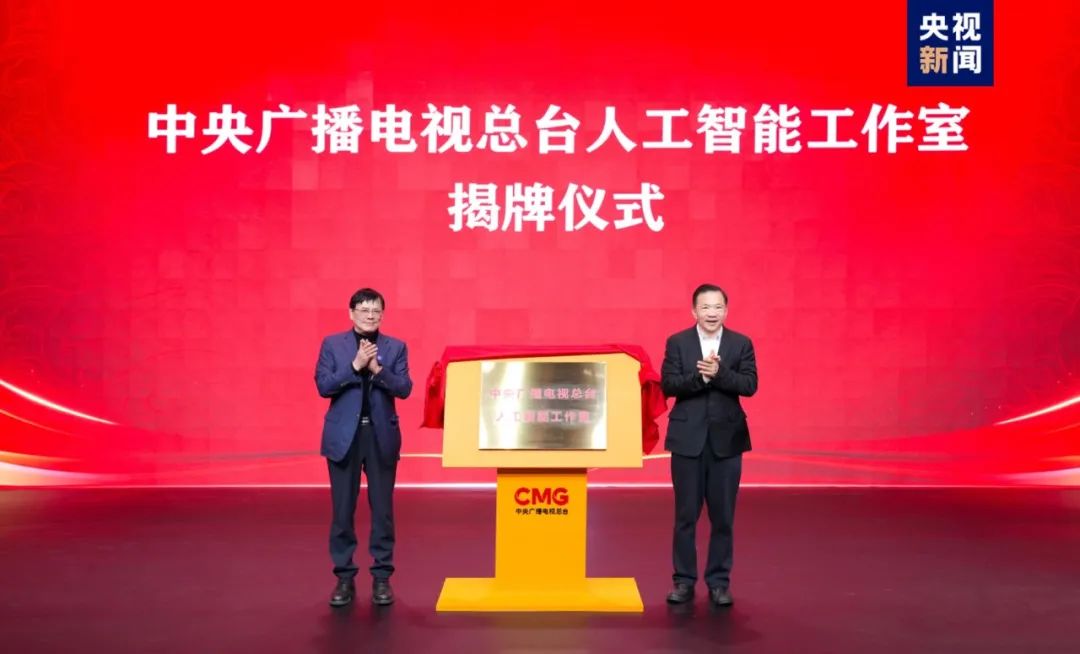
  On February 26th, China’s first Wensheng video AI series was produced by the Central Radio and Television General Station.200 episodesThe animated film "Ode to a Thousand Years" was launched. The first AI mini-drama "The Myth of China" and the first AI translated English series of micro-documentaries "The Story and the Story" were also released.This is a set of concrete practices for the Headquarters to actively explore the innovative application of generative artificial intelligence technology in the media field, seize a new round of scientific and technological revolution and industrial transformation, and strive to seize the commanding heights of future industrial competition to empower the cultural industry and international communication.

  With the empowerment of AI, the future of the media industry has come. How to tell Chinese cultural stories well through generative AI? How to make the new quality productivity become the biggest increment of the high quality development of the main station? Let’s start with a series of AI practices led by the reception desk.

  AI big model with China aesthetic.

  Let it sing, and ask for its friendly voice. The communication between people begins with the communication of language. Similarly, the communication between creators and AI has to go through the communication process of "meeting friends with literature".

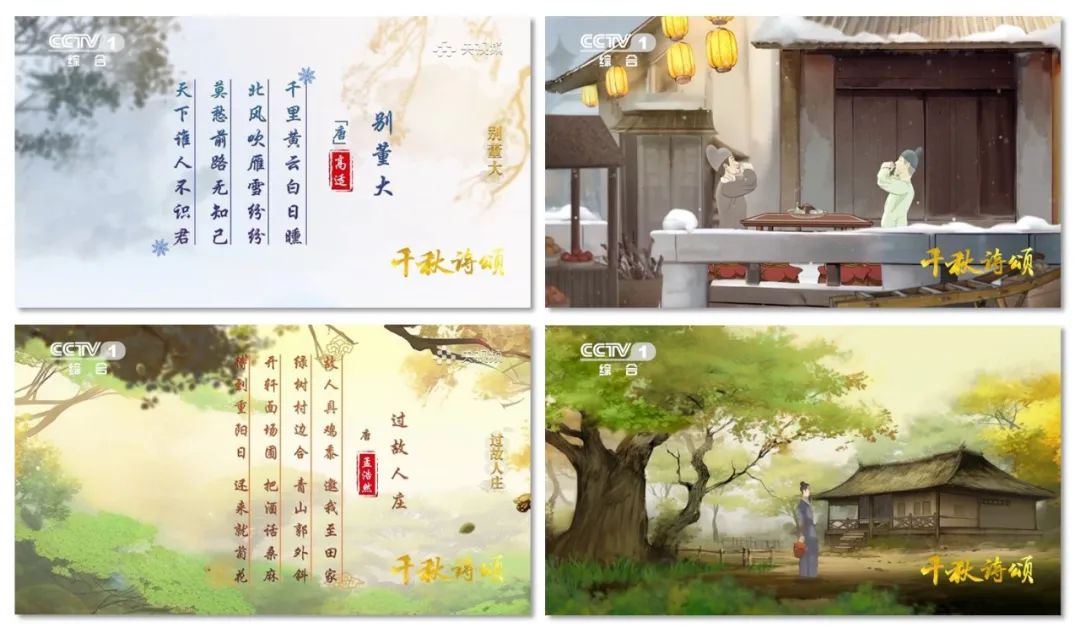
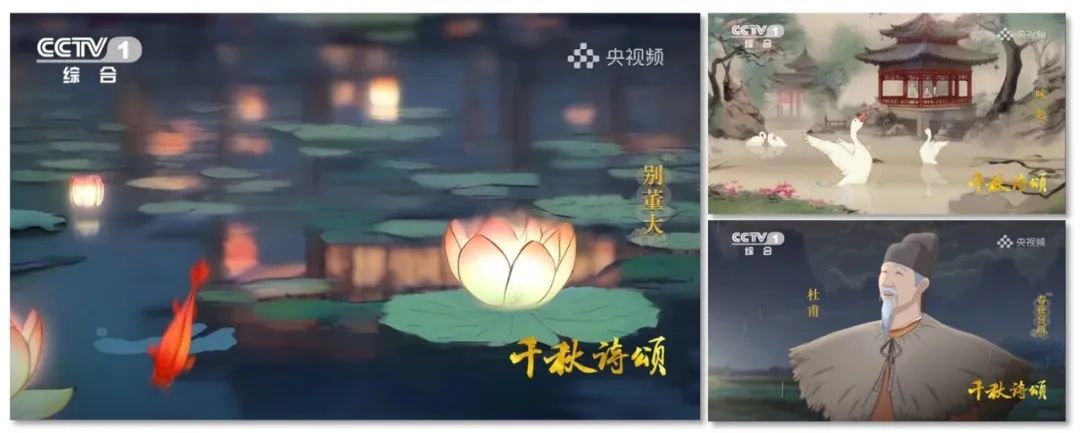
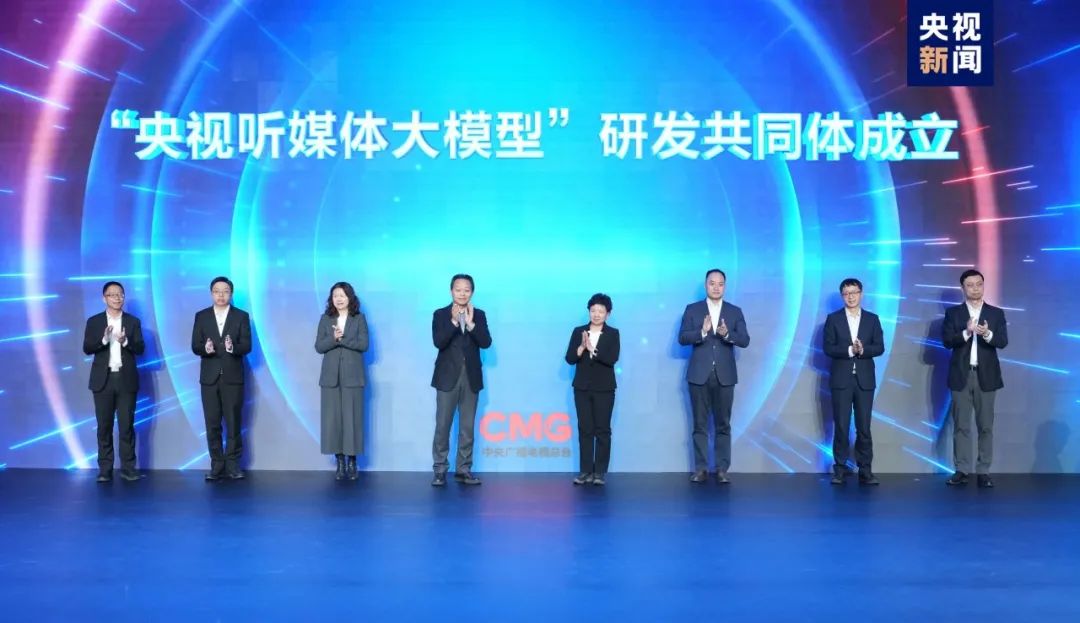
  In July 2023, the Headquarters and Shanghai Artificial Intelligence Laboratory released the "CCTV Listening Media Model", which was first applied to the creation of Ode to a Thousand Years.In the first season of Ode to a Thousand Years, the latest technological achievements such as controllable image generation, dynamic character generation and literary video were comprehensively used.Six well-known Tang poems, such as Ode to Goose, Crossing the Old Man’s Village and a farewell to meng haoran on his way to yangzhou of the Yellow Crane Tower, were transformed into beautiful national animation.

  The program creation team uses a large number of Chinese paintings and ancient poems as training materials to communicate with the AI ? ? model. After countless collisions between artistic creation language and code language,"CCTV listening to the media model" has a unique style and strength — — China’s aesthetics.It can accurately understand the traditional cultural words such as "national style, Tang Dynasty, freehand brushwork and meticulous painting", and generate fine art materials such as meticulous painting and ink painting, so as to reproduce the artistic conception and beauty of poetry to the maximum extent.

  The ratings of the first six episodes of Ode to a Thousand Years’ Poetry ranked first among all the cartoons on the satellite channel in China, reaching a total audience of 94.413 million people., the central video client’s live viewing volume reached 13.182 million person-times, and Weibo’s topic reading volume totaled 92.814 million person-times. Hundreds of mainstream media at home and abroad, including VOA, pay attention to the innovative practice of the reception desk. Many experts and scholars in the fields of science and technology, media and education expressed their support and affirmation.

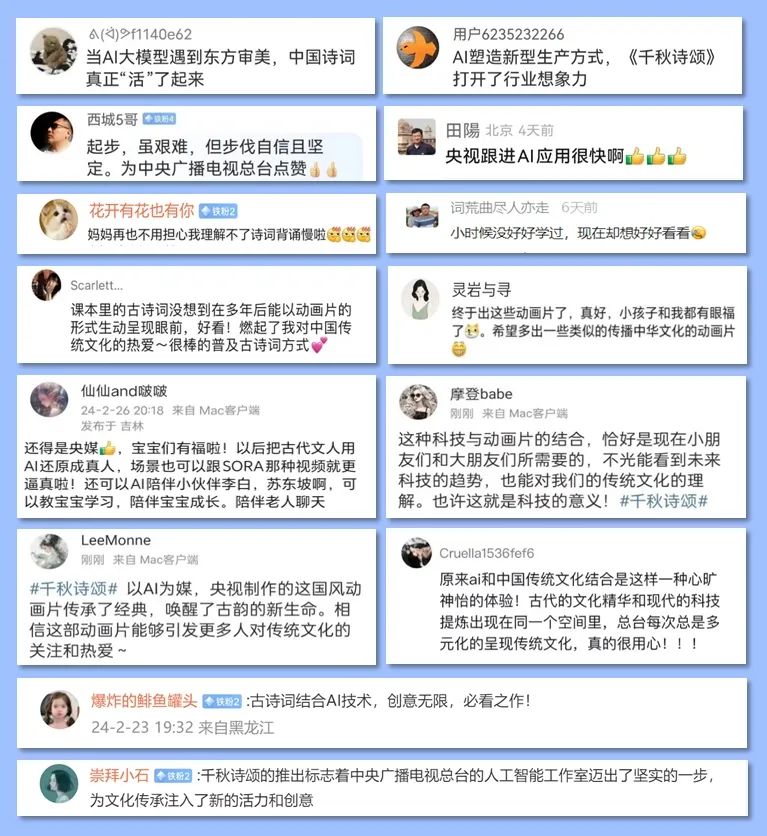
  Many netizens commented that "AI has shaped a new mode of production, and Ode to a Thousand Years of Poetry has opened up the imagination of the industry." "When the AI ? ? big model meets the oriental aesthetics, China’s poetry is really ‘ Live ’ Get up "and" enter the smart primary and secondary school platform early, which is convenient for teachers and students to use "… …

  AI can also activate the imagination of more cultures. "Ode to a Thousand Years" has just started broadcasting. On February 29th, the artificial intelligence studio of the General Station and the Tsinghua University Yuan Universe Culture Laboratory jointly produced the "China Myth Series Mini-short Drama" and "Mending the Sky", which was released to creatively interpret the enduring code of Chinese civilization contained in myths and legends.This is the first full-process mini-drama of AI in China. Art, camera, video, dubbing and soundtrack are all completed by AI, which is another pioneering practice for the film and television application of AI technology.

  The key to Wensheng video is "text". Long-term infiltration in Chinese culture, repeated training and deep learning, the research and development of "CCTV listening to media model" is becoming more and more mature, the future program production cycle will be further shortened, and the fineness of works will be continuously upgraded. More and more "understanding" AI partners can not only save time and effort in film and television animation production, game development and advertising design, but also accelerate the development process of mature application of Wensheng video, business model expansion and overseas spread.

  How does AI improve the efficiency of international communication?

  The application practice of AI in many international communication scenes at the main station shows that AI-assisted production can not only greatly improve the efficiency of multi-language conversion and multi-platform distribution, but also realize authentic and loving cross-cultural interaction under the escort of man-machine collaboration.

  Question 1:

  Suppose you are an artificial intelligence. Today’s job is to translate a documentary in English. When a dragon talks seriously about how to "fine raise dragons" and talks about "Nagada in Northeast China" with his own accent, how should you deal with it?

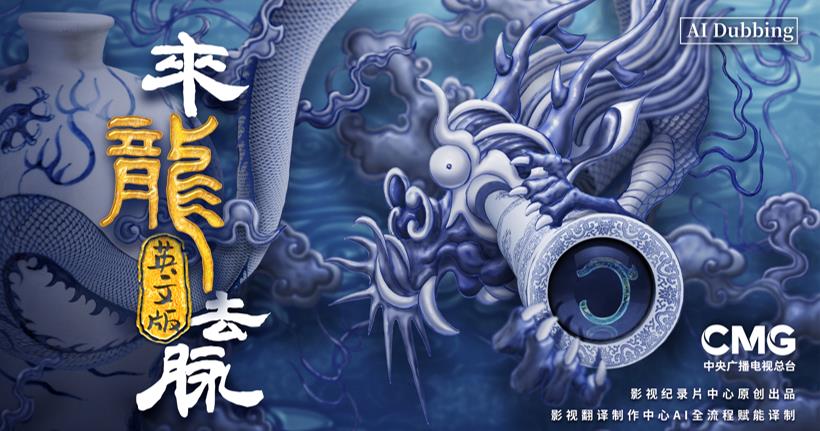
  A: Note that to explain loong’s "ins and outs" clearly in a foreign language, you should not only translate it accurately and rigorously, but also speak it erudite and lovely.

  This documentary, named "The Story", is a series of loong-themed micro-documentaries translated by the Headquarters with the full AI process empowerment, and will be launched soon.The film effectively explores the efficient application scenario of the whole process of film and television translation of AI. Using AI technology, the whole translation process from voice recognition, text translation, voice cloning to track-splitting replacement has been completed, which highly restored the style of the original Chinese film and the "character dragon design" of narration.The accuracy of translation is ensured by man-machine cooperation, which greatly improves the efficiency of translation.

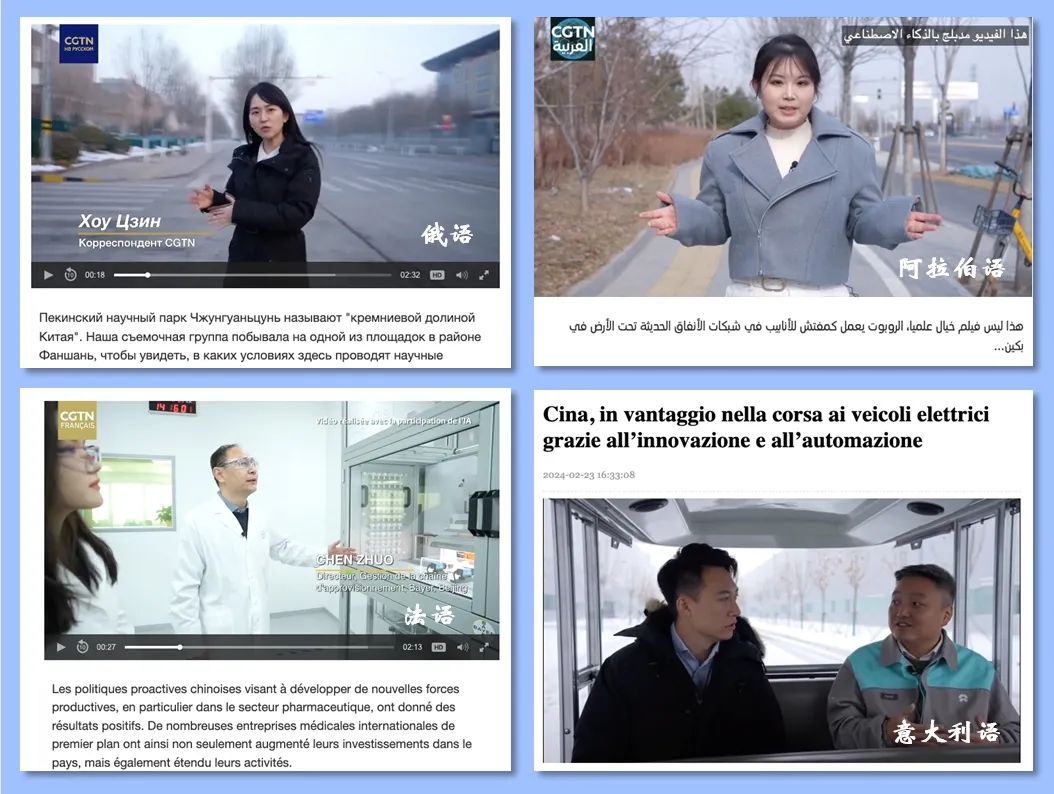
  In addition to the English version, the Spanish, Portuguese, Indonesian, Filipino and other versions of The Story, the multilingual version of Ode to a Thousand Years ago and other excellent programs have fully utilized the independent AI technology of the reception desk to assist in the translation. On March 10th, the English and Spanish versions of Ode to a Thousand Years’ Poetry were officially released on CGTN. At the same time, multilingual film and television translation will be included in the training plan of CCTV Listening to Media Model, which will help the construction of the national multilingual film and television translation base of the General Station and effectively improve the international communication efficiency of Chinese film and television culture.

  Question 2:

  There is a group of news reports that need to be translated in multiple languages and distributed overseas in the shortest time. Is there any way to quickly generate multilingual and batch video products?

  A: Yes.The main station makes full use of AI technology, and realizes the geometric progression growth of news output and broadcast quantity through the form of multi-language superposition and multi-platform distribution.For example, in a short period of one week, the series of English reports of Opportunity China: A First-line Economic Observation was transformed into nearly 100 multilingual video products in 10 languages, including Spain, France, Albania, Russia, Germany and Portugal, and broadcast on overseas platforms, which strongly refuted the so-called "China economic summit theory" in the United States and the West.

  These products have clear and bright pictures and real and natural sounds, which bring surprises to overseas netizens. A Russian netizen left a message: "I am also surprised that this Chinese speaks Russian without any accent. It turned out to be AI, which is really awesome!"

  It is not only the reported multilingual conversion, but also the AI virtual digital avatars of several CGTN hosts. The production mode of generating video through manuscript input saves the real-life recording link, shortens the shooting and material export work that originally took up to 2 hours to only 5 minutes, and greatly improves the upper limit of single-person single-day video output.

How does the AI track run steadily and accelerate?

  There is a view that the development of artificial intelligence, especially the exponential growth of generative AI, has shortened the unit of measurement of technological change from years and months to days, and may even be calculated in hours and minutes in the future. If you don’t advance, you will retreat, and if you advance slowly, you will retreat. All in or wait and see? For the media industry, it is more critical to find a way to increase productivity through technological innovation.

  How does the media industry run out of "acceleration" on the AI ? ? track? In the development and application of generative AI technology, there are two main development concepts that the main station has always adhered to.

  On the one hand, we should insist on original research, and strive to build an internationally leading model of Wensheng video with China cultural characteristics.Compared with Sora’s vivid visual effects, the AI animation of programs such as Ode to a Thousand Years ago has some problems, such as blurred background and insufficient coherence of characters’ actions, which shows that there is still a certain gap between the video generation model independently developed by China and the world’s advanced technology. However, at present, the Chinese corpus accounts for only 1.3% of the global large-scale model data training set, and the characteristics of China are obviously insufficient. Facts show that insisting on original research is the fundamental to promote the development of independent general artificial intelligence in China.

  In 2023, the Headquarters and Shanghai Artificial Intelligence Laboratory jointly established the "China Large Model Corpus Database Alliance".On the understanding and expression of Chinese culture, and the integration with the actual production process created by the media, the AI practice led by the General Desk has unique China aesthetic and Chinese cultural characteristics.

  The main station has a rich and standardized audio-visual corpus such as China Audio-visual Archive, and all materials have been tagged, which is also the largest Chinese audio-visual corpus in the world.Training with the massive high-quality audio-visual data and professional media creation knowledge of the main station, the model is expected to grow rapidly in continuous actual combat and embark on a differentiated road of China’s technological development.

  On the other hand, to do a good job in platform construction, we should promote the integration of "Industry-University-Research" and continuously optimize the safe and reliable AIGC technology platform.The core of big model breakthrough lies in algorithm, computing power and data. The Headquarters will work with Shanghai Artificial Intelligence Laboratory to build an independent and controllable domestic intelligent computing platform, and further promote the newly established large-scale model research and development community and artificial intelligence studio construction. Linking the upstream and downstream of the industrial chain, the first-class scientific research institutions, universities and enterprises in the United Nations will cooperate in the fields of scientific research, demand application, safe development and industrial ecology.

  Since the establishment of the main station, the whole stage has always maintained a state of being in danger, breaking through difficulties and seizing opportunities. Beginning in 2019, the head office leaders visited Shanghai Jiaotong University and other institutions to discuss the high-quality development of the artificial intelligence empowerment head office and set up relevant cooperative research institutions. After the Sora Wensheng video appeared, the leader of the main station asked the whole station to pay close attention to it and keep a close eye on it to prevent a complete defeat overnight.Artificial intelligence does not make creativity "fall from the sky", but opens up new application scenarios for "golden ideas" from all walks of life, providing innovative infrastructure and auxiliary capabilities.

  After several years of practice, the Headquarters has continuously deepened the development strategy of "5G+4K/8K+AI", and at the same time vigorously promoted the innovation of media technology, transformed the new quality productivity into more refreshing quality programs. A series of practical achievements about generative AI made by the Headquarters are not a temporary follow-up "early adopters", but a series of "products made by the Headquarters" and "golden business cards" of Chinese culture. How will the AI road of the main station continue to break through the boundaries of media technology and create new imagination and fresh experience about Chinese culture for the global audience? I believe there are more scenic spots ahead.

Tales of mainland Olympic athletes visiting Hong Kong

  Xinhua News Agency, Beijing, December 1st (Reporter Pan Yi, Wang Yao, Wei Hua) A highly anticipated delegation of mainland Olympic athletes will arrive in Hong Kong on December 3rd for a three-day exchange activity. A total of 29 athletes from track and field, swimming, diving, weightlifting, gymnastics, trampoline, rowing, kayaking, cycling, fencing, table tennis and badminton participated in the Tokyo Olympic Games. The following are biographies (in order of projects):

  "Asian Flying Man": Su Bingtian

  In the men’s 100-meter semi-final of the Tokyo Olympic Games, Su Bingtian broke the Asian record at a speed of 9.83 seconds, ranking first in the semi-final and advancing to the final, becoming the first Chinese to stand on the runway of the Olympic men’s "flying man" final. After that, Su Bingtian won the sixth place in the final in 9.98 seconds, setting a new record. Running for 10 seconds twice in such a short time is a miracle in Asia.

  Women’s shot put champion: Gong Lixiao.

  Gong Lixiao has been practicing shot put for 21 years, and she is the leader of women’s shot put in China. At the Tokyo Olympic Games, Gong Lixiao, as the "four-dynasty veteran" of the Olympic Games, wrote the "Veteran Legend". In the final, she refreshed her personal best again and again, and finally won the championship with 20 meters 58. This is also the first gold medal in field events in the history of China Olympic Games.

  Women Javelin Champion: Liu Shiying

  At the Tokyo Olympic Games, Liu Shiying won the women’s javelin gold medal with a score of 66.34 meters, becoming the first person in China and even Asia to win the Olympic javelin gold medal. At the critical moment, strength plus a stable mentality played a decisive role.

  Women’s 4X200 freestyle relay champions: Yang Junxuan and Tang Muhan.

  In the women’s 4X200 freestyle relay final of Tokyo Olympic Games, Yang Junxuan and Tang Muhan cooperated with Zhang Yufei and Li Bingjie to win the championship and break the world record with 7 minutes 40.33 seconds.

  Yang Junxuan swam first, giving China a lead. Tang Muhan, the second best player, extended China’s lead from 0.14 seconds when he received the bat to 0.45 seconds when he handed it over.

  Yang Junxuan is quiet and likes painting and calligraphy. She is a "talented girl" in the swimming team. On holidays, the gifts she often gives are hand-painted paintings, couplets and blessings.

  Diving Men’s Double Single 3m Slab Double Champion: Xie Sicai

  At the Tokyo Olympic Games, Xie Sicai won the men’s 3m springboard synchronized gold medal with Wang Zongyuan, and then defeated Wang Zongyuan to win the men’s 3m springboard gold medal. Wang Zongyuan won the silver medal. Xie Sicai also became the second athlete to win the men’s 3m springboard "double champion" in a single Olympic Games after Xiong Ni, the diving prince.

  Xie Sizhen suffered a serious ankle fracture in 2014, and two steel nails and a rivet were implanted in the injury. The doctor warned him that he could no longer practice diving. However, he refused to surrender to fate.

  Diving men’s synchronized 3m springboard champion: Wang Zongyuan.

  In Tokyo, Wang Zongyuan, who played in the Olympic Games for the first time, won the gold medal in the men’s synchronized 3m springboard with Xie Sichai, which was the only event that China’s diving "dream team" missed in Rio Olympic Games. Wang Zongyuan and Xie Sichai succeeded in making up for this regret.

  Women’s 49 kg weightlifting champion: Hou Zhihui

  Hou Zhihui won the gold medal with a total score of 210kg in the women’s 49kg weightlifting competition in Tokyo Olympic Games. The coach’s evaluation of her is "high concentration and good coordination, and she is an athlete who trains with her brain".

  Women’s weightlifting 87kg champion: Wang Zhouyu

  The women’s 87 kg class is a new level set by the International Federation of Weightlifting in 2018. Wang Zhouyu rose from the 76 kg class. It is not everyone’s wish to gain 10 kg.

  Women’s weightlifting champion over 87kg: Li Wenwen.

  Li Wenwen is cheerful, and once became popular on the Internet because of a small video of sleeping on the floor. She once joked: "Every fat girl has her own dream."

  Weightlifting men’s 61kg champion: Li Fabin

  In the national team with many experts, Li Fabin didn’t get the chance to participate in the Olympic Games until he was nearly 30 years old. In the final in Tokyo, Li Fabin’s "Golden Rooster Independence" shocked the world.

  Men’s 67 kg weightlifting champion: Chen Lijun

  In the final of the Tokyo Olympic Games, due to the poor performance of snatch, the Huli Army was 11 kilograms behind its Colombian opponent. However, he only used one of the last two clean and jerk opportunities to reverse the turnaround and successfully lifted 187 kilograms, an astonishing 12 kilograms more than his last attempt.

  Men’s 73kg weightlifting champion: Shi Zhiyong.

  Won the men’s weightlifting 73kg class in Tokyo Olympic Games and broke the world record in total score. At the age of 11, Shi Zhiyong went to Ningbo alone with a woven bag, and later became the 69kg champion of the Rio Olympic Games. After the Rio Olympic Games, the International Weightlifting Federation adjusted the weightlifting level, and he was upgraded to 73kg, but it didn’t beat Shi Zhiyong. Since 2018, he has continuously set a world record, and he stands out in the 73 kg class.

  Men’s weightlifting 81kg champion: Lv Xiaojun.

  Lv Xiaojun is the weightlifter who won the most Olympic medals in China and became the oldest Olympic champion in weightlifting history at the age of 37. This is also his second Olympic gold medal in his life after winning the gold medal at the London Olympics.

  The champion of men’s gymnastics parallel bars: Zou Jingyuan

  Zou Jingyuan’s parallel bars strength can be described as a ride in the current men’s gymnastics world. In the parallel bars final of the Tokyo Olympic Games, his almost perfect movements left no chance for his opponents to surpass him.

  Men’s Gymnastics Rings Champion: Liu Yang.

  Liu Yang’s rings are as beautiful as a textbook. At the Tokyo Olympic Games, his "Wang Zhi’s contempt" for turning his neck on the rings was described by the official Twitter of the International Olympic Committee as: "How can someone look so cool while competing on the rings!"

  Women trampoline champion: Zhu Xueying

  On August 28th, 2021, Zhu Xueying donated her Olympic gold medal and award-winning clothing to Tianjin Sports Museum, becoming the first athlete to donate the gold medal of Tokyo Olympic Games. She said, "It is more meaningful to display the Olympic gold medals in the museum than at home. I look forward to more audiences entering the exhibition hall, feeling the Olympic spirit, feeling the charm of sports culture and drawing on the strength of forging ahead. "

  Women’s rowing quadruple sculls champions: Cui Xiaotong, Lu Yang, Zhang Ling and Chen Yunxia.

  Cui Xiaotong, Zhang Ling, Chen Yunxia and Lu Yang worked closely together to lead the way in the women’s rowing quadruple sculls final of Tokyo Olympic Games, winning the championship with the world’s best result of 6: 05.13.

  Cui Xiaotong, who has an excellent sense of water, as the No.4 rower, has well controlled the rowing rhythm of the four people. Cui Xiaotong, who used to practice single oar, only changed to practice double oars three years ago, but she trained hard and made rapid progress. She often said, "If you don’t torture yourself in training, you will be tortured by your opponent in the game."

  As the No.2 rower, Zhang Ling is the driving force of the whole boat. As the No.1 rower with the highest technical requirements, Chen Yunxia kept the balance of the whole boat well. She changed to rowing after practicing track and field for five years, and her physical fitness is outstanding. Lu Yang, the No.3 rower, plays the role of all-round assistant, on the one hand, helping the No.4 rower to control the rhythm, on the other hand, helping the No.2 rower to become the strength support in the rowing process.

  Still water women’s 500m synchronized rowing champion: Xu Shixiao and Sun Mengya.

  In the final of the still water women’s double rowing in Tokyo Olympic Games, Xu Shixiao and Sun Mengya teamed up to win the championship with the best performance in the Olympic Games, winning the first Olympic gold medal for the China women’s canoeing team in history.

  Xu Shixiao, who became famous at a young age, has experienced injuries, retirement and comeback. Xu Shixiao said that kayaking is a kind of feeling for her. Although there are losses and valleys in the process, these eventually become the driving force on her way forward.

  Sun Mengya, who entered the sports school only one year ago, almost gave up kayaking because of her father’s injury, but she finally persisted.

  Champion of track cycling women’s team racing: Zhong Angel

  At the Rio Olympic Games five years ago, Zhong Angel partnered with gong jinjie to win the gold medal in this event, achieving the breakthrough of "zero" in China’s cycling Olympic gold medal. At the Tokyo Olympic Games, Angel Zhong and Bao Shanju broke the world record of women’s team racing held by China in 31.804 seconds, and defeated the German team in the final, winning the second cycling gold medal for China in Olympic history.

  Women’s individual epee champion: Sun Yiwen

  At the Tokyo Olympic Games, Sun Yiwen won the first women’s weightlifting individual gold medal in the history of China Olympic Games in the final overtime, becoming the first China fencer to win individual medals in two consecutive Olympic Games.

  Table tennis men’s singles and men’s team champion: Malone

  Malone is the first winner of men’s double slam and full slam in the history of world table tennis. Tokyo Olympic Games has become a stage for Malone to constantly refresh history. Beating the world number one Fan Zhendong to win the gold medal in men’s singles, Malone became the first defending man in the history of Olympic table tennis and the player with the most world titles in the history of table tennis.

  Table tennis men’s team champion: Xu Xin.

  Left-handed straight, unique play. In October this year, at the Asian Table Tennis Federation Congress held in Doha, Qatar, Xu Xin was elected as the vice chairman of the Asian Table Tennis Federation.

  Badminton mixed doubles champions: Wang Yilu and Huang Dongping

  In the badminton mixed doubles final of Tokyo Olympic Games, Wang Yiliu’s partner Huang Dongping, who participated in the Olympic Games for the first time, defeated teammate and top seed Zheng Siwei/Huang Yaqiong 2-1.

  Wang Yilu has outstanding physical fitness and firm will. He often says: "What people fear most is that they have no goal, just like salted fish. With clear goals, happiness will increase. "

  Huang Dongping often reminds himself: "No matter whether there is harvest or not, it is definitely right to pay."

Pre-cooked vegetables are rushing, and self-heating food "rice bowl" is hard to protect?

"The prefabricated vegetable market is hot, and everyone is cooking prefabricated vegetables now. In the future, the rice bowl of self-heating food may be lost!"

Recently, at a food exhibition, the operator of a food enterprise sent such feelings to the insight of prefabricated dishes. Is this really the case? Do prefabricated dishes really stand in the way of self-heating food?

The potential energy of self-heated food has declined, but the prepared food has been rising all the way.

Before exploring the above problems, it is necessary to look at the definition of self-heating food and prepared vegetables.

According to the Classification of National Economic Industries, foods made from rice, wheat flour, miscellaneous grains, etc., which can be used as staple food only by simple cooking, are called convenience foods.

Thus, both self-heating food and prepared vegetables belong to convenience food.

Because self-heating food also belongs to pre-packaged finished or semi-finished food, there are also views that self-heating food is a kind of prepared food.

However, in the eyes of most food producers and operators, self-heating food is a rice or vegetable package made of modern technology that can be stored for a long time. It can be eaten by heating with its own heating package, which is highly standardized and can achieve long-term preservation and longer transportation distance.

However, for some dishes with complicated cooking procedures, prefabricated dishes are convenient dishes formed by using modern standardized flow process to prepare the raw materials in the early stage, simplify the production steps, pack them in a hygienic and scientific way, and then heat or steam fry them.

It can be seen that self-heating food is more convenient than prefabricated dishes, and it can be completed without going through the kitchen and cooking, but prefabricated dishes often need to be cooked simply.

In fact, self-heating hot pot probably rose at the end of 2015, and broke out in the e-commerce platform in 2017. According to public data, on the day of Tmall double 11 in 2017, self-heating hot pot products sold 1.7 million copies; In 2018, the popularity of self-heating hot pot increased explosively, and double 11 sold 4.53 million copies of self-heating hot pot that day, up 1.7 times year-on-year.

The hot market has spawned brands that focus on the field of self-heating hot pot, such as self-cooking pot and Mo Xiaoxian. At the same time, it also attracted enterprises from Haidilao, Dezhuang, Uni-President, Jinmailang, Master Kong, Baixiang, Zhengda, Liangpin Shop and so on.

Therefore, self-heating hot pot was once the same, and even considered as a substitute for instant noodles. However, since the second half of 2020, the heat of self-heating food has begun to fade. With the influx of a large number of brands, while expanding the market, there have been a lot of low-price competition, homogeneous competition and even some safety accidents in the self-heating food market, which have had a bad impact on the whole industry.

An enterprise manager who provides heating packages for self-heating food factories once told Xinhua that since the second half of 2020, the heat of self-heating food has declined, and the orders for heating packages have dropped significantly. In the face of market changes, the factory has to adjust the product structure to avoid being more affected.

"A wave of people buy self-heating food for early adopters. After curiosity, the overall sales volume will inevitably decline." The person in charge of a self-heating food brand said.

The evaluation and notes of many consumers on social platforms also show that in recent years, everyone’s enthusiasm for self-heating food is gradually fading.

However, while the potential energy of self-heated food has declined, the prepared food has started to rise all the way.

According to statistics from Deloitte, the market size of China’s pre-cooked vegetables is about 550 billion yuan in 2021, and the compound growth rate in the next five years is expected to reach 13%, and the market size is expected to reach 1 trillion by 2026.

"It also meets consumers’ demand for convenient and fast food, and can also bring consumers multiple experiences of cooking and enjoying food at home. The fiery heat of prefabricated dishes will inevitably affect self-heating food." Some food producers and operators stressed this.

What’s more, it is believed that in the future, pre-cooked dishes will divide the market of self-heating food and gradually replace self-heating food.

Will prefabricated dishes take away the "rice bowl" of self-heating food?

Pre-cooked food insight believes that pre-cooked food and self-heating food are not competitive.

First of all, the target consumers of pre-cooked vegetables and self-heating foods are not completely coincident. According to the data of Tmall, 47.75% of the consumers of self-heating hot pot are 18-24 years old, 19.61% are 25-29 years old, and nearly 50% are college students and white-collar workers who have just entered the workplace. Self-heating hot pot is more suitable for lazy economy and fast-paced life because it can be eaten anytime and anywhere without fire or plug-in.

The main consumer groups of prefabricated dishes (here only refers to C-end consumer groups) are those who can cook, pay attention to health, have high requirements for food safety, have relatively high quality of life and are relatively insensitive to prices. Among them, the majority are urban people who have families and children and pay more attention to health and quality of life.

Secondly, the application scenarios of the two types of products are also very different. To a certain extent, both prepared dishes and self-heating foods are convenient and quick solutions for people to have a meal. However, consumers choose to eat self-heating food, mostly in the scenes of eating alone, working overtime and staying up late, and traveling; However, prefabricated dishes are more common in family meals, dinners and other scenes. Therefore, compared with self-heating food, consumers will have higher expectations for prefabricated dishes, and the demand for "eating well" will be more obvious.

It can also be seen from the market sales of prefabricated vegetables. Data from JD.COM, Tmall and other platforms show that most of the pre-cooked dishes with high sales volume are common "hard dishes" on the dining table, such as braised pork with plum vegetables, pork belly chicken, fish with pickled vegetables, Buddha jumping over the wall and so on. Some insiders commented that the consumption of prefabricated vegetables reflects consumers’ pursuit of consumption upgrading and quality life on the basis of convenient life.

It can be seen that the pre-cooked food and self-heating food face different groups of people, and the demand they can meet is slightly different. They are not absolutely competitive, and it is basically impossible for pre-cooked food to completely replace self-heating food.

The key to the future development of prefabricated dishes is quality, richness and high cost performance.

Considering that the product attributes of prepared food and self-heating food are very close, the shackles encountered in the development of self-heating food are also worth thinking about and learning from. For example, the homogenization is serious, the quality is not guaranteed, and the cost performance is low.

"I bought a prefabricated Buddha jumping wall, which is not delicious and the price is not affordable. It is better to order takeout with this money! "

"It seems that there are only a few kinds of prefabricated dishes. Take pickled fish as an example. The tastes of products from different brands are not too different. If you eat more than a few times, you will get bored and you will no longer be interested. "

"Eating is the taste of industrial additives. Where is it delicious?"

……

On social platforms, it is not uncommon for consumers to comment on prefabricated dishes and the like.

How to improve the user’s eating experience? Prefabricated dishes insight has communicated with many people in the industry. It is generally believed that in order to break through the dilemma of self-heating food in the future, prefabricated dishes need to make great efforts in three aspects: product quality, dish type and product cost performance.

In terms of product quality, it is necessary to ensure the safety of ingredients and improve the taste of products. In order to meet consumers’ demand for "eating well", prefabricated dishes should be oriented towards "delicious, nutritious and healthy".

In terms of the types of dishes, the brand of prefabricated dishes can not only increase the SKU of products, but also develop more differentiated niche ingredients and special dishes according to the diversified needs of consumers, such as Anjing Food’s introduction of new prefabricated dishes of soft-shelled turtle and puffer fish in the world of Chinese fish, etc. There is still a lot of room for exploration in the variety of prefabricated dishes.

In terms of product price, under the trend of more and more obvious consumption degradation, the ultimate cost performance is also an important measure for consumers to choose products. In terms of price, if the price of prepared dishes is basically the same as that of take-away, or even higher than the take-away price, it will be difficult to attract consumers.

After the epidemic, the social economy is constantly recovering, consumers’ confidence in future income growth is still insufficient, and the wave of consumption degradation in the catering industry will continue.

Under such circumstances, imagine how many people would refuse a delicious, easy-to-cook and inexpensive prepared dish.

(Contributed by: Red Meal Industry Research Institute)

Direct drinking of tap water will be realized in Shenzhen in 2025.

In the Mid-Levels Valley Garden in Yantian District, resident Zhang Shuying showed reporters how to drink direct drinking water.

  Turning on the tap and filling the glass with tap water, Zhang Shuying, who lives in Building 2 of Banshan Valley Garden in Yantian District, drank it without hesitation. "This water is delicious, and I feel better than foreign direct drinking water."

  In April 2019, Yantian District realized direct drinking of tap water in the whole district, which is also the first administrative district in the city to realize direct drinking of tap water. It is estimated that by 2023, Shenzhen will achieve full coverage of direct drinking water in all central cities, and in 2025, it will achieve direct drinking water in the whole city.

  The day when you turn on the tap and drink is getting closer and closer to all Shenzhen people.

  Yantian district is the first in the city to realize direct drinking of tap water.

  Yantian District, where Mid-Levels Valley Garden is located, is the first administrative district in Shenzhen to realize direct drinking of tap water.

  Yantian District has a small area, only 74.99 square kilometers, and the municipal water supply network is 220 kilometers long. Hu Ping, an engineer of Yantian District Water Affairs Bureau, said that although the ontology conditions are good, some municipal pipe networks in the whole region use rustable pipes such as welded steel pipes and gray cast iron; In some residential areas, due to the different quality standards of development and construction units, yellow water, rusty water and high leakage rate of pipe network are common; In other communities, there is no distinction between the production and consumption of the second supply pump room (domestic water and fire water), the level of property management is low, and the irregular cleaning of the pool water tank causes secondary pollution.

  In 2012, in order to improve the quality of life of residents, Yantian District Committee and Government took the initiative to start the renovation project of high-quality drinking water pipe network in the city. This also provided experience for the later implementation of the high-quality drinking water household project in the whole city. Subsequently, Yantian District successively carried out various work of drinking tap water directly, and solved all kinds of historical problems in a package. City Water Group actively cooperated in the construction process to provide supporting water meters, valves and other equipment.

  Since 2012, the municipal, district government and water group have invested a total of 947 million yuan, and successively completed the upgrading and renovation of the double-source Yantian branch line, two main water plants, 13.09 km old municipal water supply pipe network, water supply pipe network of about 40,000 residential quarters in 222 communities, 4 municipal pressurized pump houses and secondary water supply facilities in 131 communities. At the beginning of 2019, the work of drinking tap water directly in Yantian District passed the evaluation of an expert team headed by Academician Qu Jiuhui, and the first demonstration zone of drinking tap water directly in Shenzhen was officially built. By the end of 2021, Yantian District will also achieve full coverage of meter reading in residential quarters, and the whole chain of water plants, municipal pipe networks, residential pipe networks and secondary water supply facilities in the whole district will be professionally managed, so that residents’ water safety will be more guaranteed.

  Five water plants in our city have built advanced treatment processes.

  The quality of tap water is directly related to the health and quality of life of the citizens. However, when water enters thousands of households from nature, it mainly goes through three stages: water source project, waterworks and water supply pipe network. After flowing into high-rise residential areas, it needs secondary pressurization, so the problem of secondary water supply facilities arises. For Shenzhen, except for a small amount of local self-produced water, the water source mainly comes from Dongjiang outside the city, and the water quality is excellent and stable. Therefore, whether tap water can meet the standard of direct drinking depends on the water plant, the pipe network and the facilities for supply.

  Less than 1 km away from the northwest of Shenzhen North Railway Station, which is densely populated, is the location of Shenzhen Longhua Redwood Landscape Factory. In December, 2020, the second phase project of Redwood Shanshui Factory was completed and put into water, with a new conventional treatment capacity of 150,000 cubic meters/day and an advanced treatment capacity of 300,000 cubic meters/day, making it the first modern water plant with advanced treatment technology outside the original special zone.

  Sun Jun, chairman of Deepwater Longhua Water Company, said: "The successful completion of the Redwood Landscape Factory has laid a solid foundation for Longhua District to realize direct drinking of tap water, created a replicable and scalable experience for the new renovation and expansion of the city’s water plants, and also made up a key link for the balanced and full coverage of water supply services in all districts inside and outside the original special zone."

  Yang Qun, director of the Water Resources and Water Supply Security Department of Shenzhen Water Affairs Bureau, said that in recent years, the city has continuously increased the new renovation and expansion of waterworks and the upgrading of standards. At present, five waterworks, including Bijiashan, Meilin and Hongmushan, have built advanced treatment processes with a total capacity of 1.27 million cubic meters per day. At the same time, Miaokeng, Baguang and Jiazitang waterworks are under new (expanded) construction, the second phase expansion project of waterworks in large industrial zone is about to enter the site, and more than 10 waterworks such as Nanshan and Donghu are under preliminary work; In the future, our city will also shut down a number of small water plants with low early construction standards.

  "It is estimated that by 2025, through the integration of waterworks, the total number of waterworks in the city will be about 30, with a total water supply capacity of 8.44 million cubic meters per day, all of which are equipped with advanced treatment processes, which means that the basic conditions for producing direct drinking water are available." Yang Qun said.

  The city will complete the renovation and upgrading of pipe network and secondary supply facilities next year.

  Compared with the bidding of waterworks, the transformation and upgrading of pipe network and secondary supply facilities are more complicated because of their many points and wide areas.

  Yujing Huacheng, located in Futian Street, is a large community in Futian District, consisting of 7 high-rise buildings for commercial and residential use, with a total of 3,580 households and more than 10,000 people. In the pump room on the second floor of the basement, six temporary water supply pumps are roaring, and the workers are preparing to dismantle the old pumps, which will be completed in a few days.

  "The old pump is big and heavy, and the temporary pump and the new pump are only half the size of the old pump, which is more stable and energy-saving." Long Ling Feng, the site manager of the second water supply project of Liyuan Water Design Consulting Company, told the reporter that the renovation of Yujing Huacheng will implement the high-quality drinking water project and the second water supply facility upgrading project simultaneously, which will save time and coordination cost compared with separate construction.

  Among them, the high-quality drinking water project will transform the old buried water supply pipeline into ductile iron pipe and the exposed pipeline into 316L thin-walled stainless steel pipe; The upgrading of secondary water supply facilities will separate the existing pool for domestic fire fighting, thus reducing the residence time of water flow. The original concrete pool wall of the pool is covered with food-grade ceramic tiles, and the water pump, pipes and fittings in the pump room are made of 316L stainless steel, which will significantly improve the water supply quality of the community.

  The reporter learned from Shenzhen Water Affairs Bureau that in terms of pipe network, since 2013, our city has successively carried out two high-quality drinking water household projects. The renovation funds are borne by the city and district according to the ratio of 1:1, and the water supply enterprises bear the cost of user water meters and supporting valve groups. The scope of renovation mainly includes the total water meter in the community, user sub-meters, municipal pipe network and the water supply pipes between each user’s household location. After the renovation, it will be handed over to the water supply enterprises for maintenance and management, and the water supply enterprises will realize meter reading to households. In the first phase of the city, the renovation project of the old water supply pipe network in about 1050 residential quarters was completed, and the project effect was good; At present, the renovation of 1000 residential areas has been completed in the second phase, and it is estimated that by June 2022, the renovation of the old water supply pipe network in the remaining residential areas will be completed.

  In terms of secondary water supply facilities, at the end of 2018, the city started the upgrading project of secondary water supply facilities in residential areas of the city. The renovation funds were borne by the city and district according to the ratio of 1:1, and the water supply facilities such as pump houses, pools (boxes), pumps and monitoring equipment in about 2,900 residential areas in the city were upgraded. At present, all districts have fully entered the construction site, and more than 300 residential renovation projects have been completed. It is expected that all renovation tasks will be completed by the end of 2022. After the renovation, the water supply facilities in the community will be handed over to the water supply enterprises for maintenance and management, and the water quality and water pressure will be effectively improved, further improving the water supply service level of the whole city.

  After the completion of these two projects, and the implementation of the upgrading of water plants, direct drinking of tap water will be realized in various districts of Shenzhen.