Look again from "the beginning of investigation" to "the opening of investigation"
There is only one word difference from "opening" to "opening the way", which can have a profound meaning. The most fundamental point is to make the individual behavior of leaders change into the collective behavior of leaders, and from "temporary work" into an institutionalized mechanism.
4月24日至27日,最高领袖总书记在安徽调研。24日,他来到大别山片区扶贫攻坚重点县金寨县,同当地干部群众共商脱贫攻坚大计。
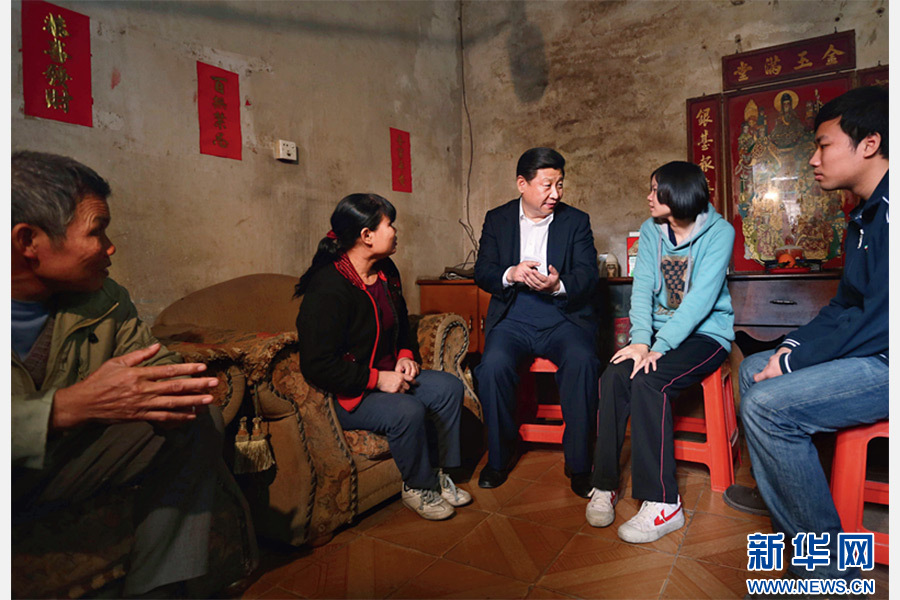
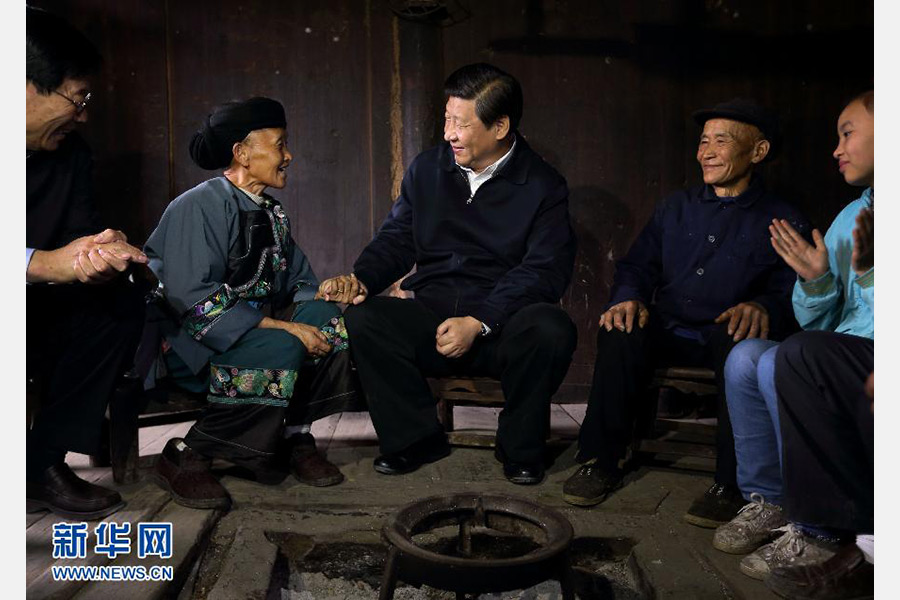
在花石乡大湾村,总书记一连走进5户农家。他对乡亲们说,我这次专门来看望大家。从北京坐了1个半小时飞机到合肥,又坐了1个半小时汽车到金寨,再用1个多小时进山来到你们这里,就是要了解农村脱贫特别是革命老区扶贫的真实情况。
到基层问计于民,坚持眼睛向下、脚步向下,党的十八大以来,最高领袖总书记等中央领导同志正是通过深入调查研究,通过了解基层群众所思、所想、所盼,找到啃掉“硬骨头”、越过“险滩”的具体路径。
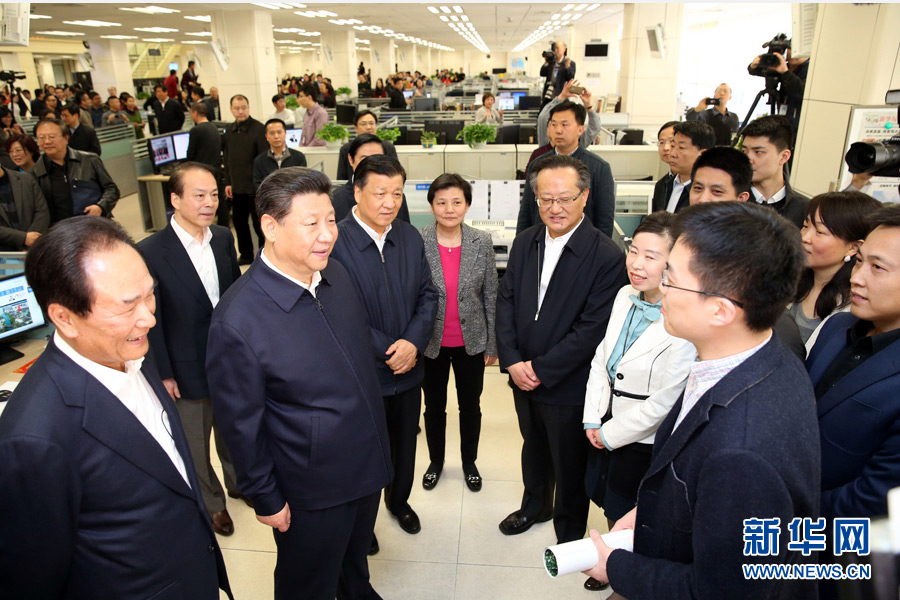
两个多月前,2月19日,最高领袖总书记到三家中央媒体调研。在新华社,他同刚从河北正定县“走基层”回来的记者交谈,与正在河南兰考县谷营镇爪营四村采访的记者视频连线,还点题记者做好基层干部作风建设的调研,并叮咛:“新闻记者要深入调查研究,多掌握一手情况。”
深入实际、调查研究绝不只是习总书记对新闻媒体的殷切期望。他在不同场合、不同时间都多次强调,这是党的重要工作作风和工作方法,鲜明地指出:“没有调查,就没有发言权,更没有决策权。”
A close reading of the speeches and articles of the Supreme Leader since he took office can clearly show his persistent emphasis on going deep into reality, investigation and research. He advocated that investigation and research should be "carried out in the whole process of decision-making", and stressed that we must persist in coming from the masses and listening to their opinions extensively, especially on the problems that the masses "are most eager, anxious, worried and resentful", and we must seize on them and take the initiative to investigate. He also figuratively said that investigation and research are like "pregnancy in October" and decision-making is like "delivery once".
In 2011, at the opening ceremony of the second batch of students enrolled in the autumn semester of the Party School of the Central Committee of the Communist Party of China, the top leader comrades even made a speech with "investigation and research" as the key word, pointing out that investigation and research is a basic skill to do a good job in leadership, and investigation and research ability is an integral part of the overall quality and ability of leading cadres.
On July 23, 2013, when General Secretary of the Supreme Leader held a symposium of some provincial and municipal leaders in Wuhan, he stressed that it is necessary to strengthen investigation and research on major issues of reform and improve the scientific decision-making of comprehensively deepening reform. On January 24, 2014, General Secretary of the Supreme Leader presided over the the Political Bureau of the Communist Party of China (CPC) Central Committee meeting, proposing to promote the investigation and research style in the whole party, and improve the investigation and research mechanism of leading cadres taking the lead in improving their work style and going deep into the grassroots. On February 23, 2016, General Secretary of the Supreme Leader presided over the 21st meeting of the Central Deep Reform Group, stressing the importance of investigation and research, keeping eyes down and feet down, understanding the thoughts, thoughts and expectations of the grassroots, and making the reform more grounded.
Comrade Supreme Leader attaches great importance to investigation and research, which is embodied in his practice of asking questions for the people. The 11th issue of Lookout published on March 17th, 2003 and the 15th issue of Lookout published on April 12th, 2004 respectively published two reports: Learning from Practice and the Masses-A Documentary Survey of the Supreme Leader of Zhejiang Provincial Party Committee Secretary, and From "Investigation Opening" to "Investigation Opening"-A Documentary Survey of committee of cpc zhejiang provincial committee Standing Committee.
In these two reports, the reporter of Lookout recorded the practice of the supreme leader of committee of cpc zhejiang provincial committee who advocated "grasping the implementation of work through investigation and research" and "mastering the right to speak and command through the beginning of investigation". It was under his leadership that this working method of "investigation opening" influenced the "investigation opening" of the personal work of the "class leader" of the Standing Committee of Zhejiang Provincial Party Committee at that time and became the "investigation opening" of the whole Standing Committee of the Provincial Party Committee.
There is only one word difference from "opening" to "opening the way", which can have a profound meaning. The most fundamental point is to make the individual behavior of leaders change into the collective behavior of leaders, and from "temporary work" into an institutionalized mechanism.
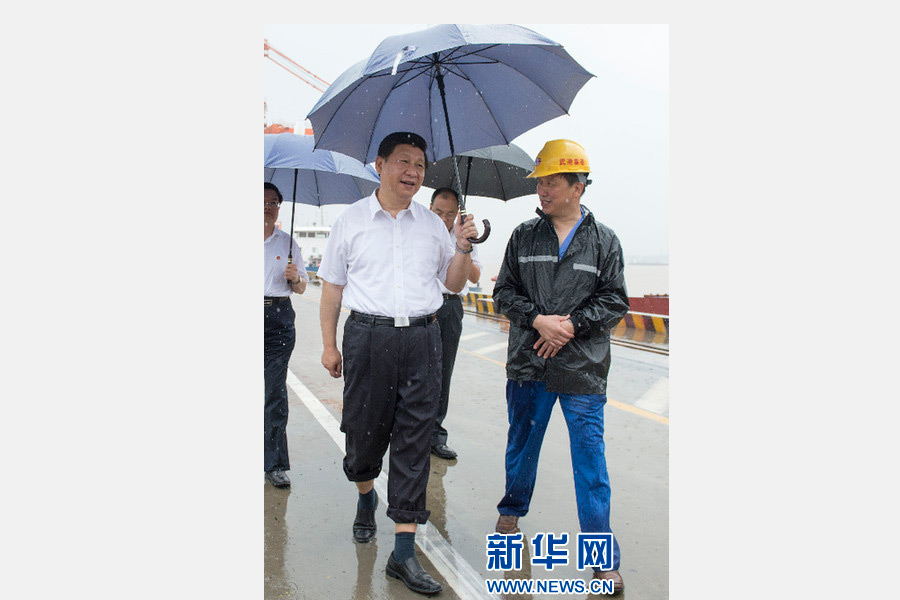
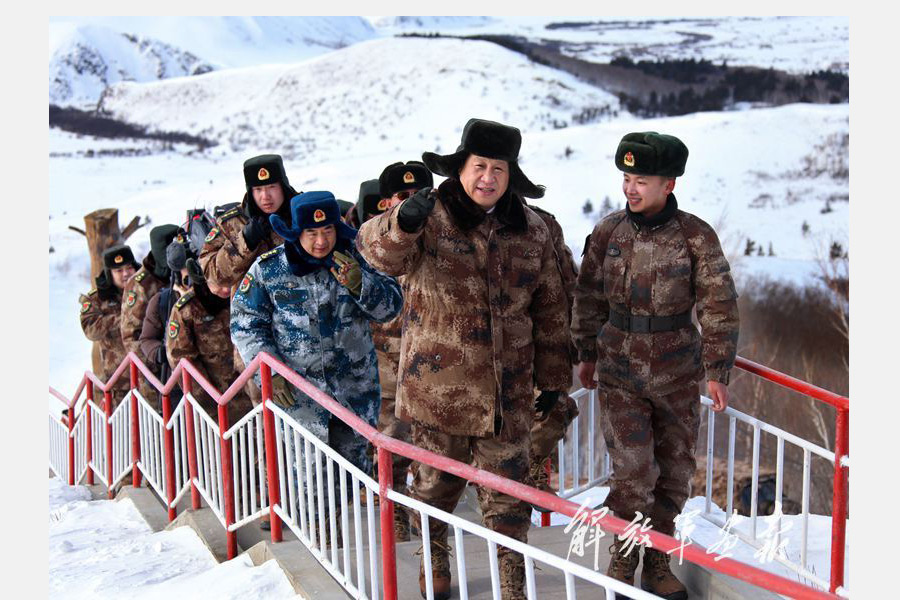
Since the 18th National Congress of the Communist Party of China, General Secretary of the Supreme Leader and other central leading comrades have made investigations all over the country, including communities, villages, enterprises, schools and the army, observing people’s feelings, visiting people’s opinions and asking for good advice.
"The central government has repeatedly called for the rise of the wind of learning, the wind of research, and the wind of doing things, emphasizing that leaders should take the lead in going deep into grassroots research, attach importance to research, and be good at research. This is a major feature of the CPC Central Committee’s thoughts and working methods of governing the country with the Supreme Leader as the general secretary. " Professor Xie Chuntao, director of the Party History Teaching and Research Department of the Party School of the Central Committee of the Communist Party of China, said that in the new era of comprehensively strengthening the construction of the ruling party, doing a good job of investigation and research is an important starting point for improving the ruling ability and level of the whole party, and it is also an important follow-up for the rulers to understand the reality, study problems, formulate policies and promote their work.
Today, when the goal of building a well-off society in an all-round way is approaching and the layout of the 13th Five-Year Plan is being implemented, the brand-new development of China will start from the "start" to "open the way", and it is of great practical and far-reaching significance to revisit the "heirloom" of our party advocated by the Supreme Leader General Secretary. From the "investigation opening" of the top leaders to the "investigation opening" of a group of leaders and cadres at all levels across the country, we need to "clear the obstacles" and "eliminate the disadvantages", unify our thinking and clarify our direction, and finally "walk on the road to the great rejuvenation of the Chinese nation".
"Investigation and study.
It is the foundation of man’s plan and the way to accomplish things. "
Seeking truth and being pragmatic, investigating and studying is a consistent fine tradition of the Communist Party of China (CPC), and it is an important basis for planning work and making scientific decisions.
As early as 1930, Comrade Mao Zedong wrote "Against Bookishness" and put forward the famous thesis that "No investigation, no right to speak". In 1961, he called on the whole party to vigorously investigate and study. Turning to Selected Works of Mao Zedong, we can see that it is started by social investigation articles such as Analysis of Social Classes in China and Investigation Report of Peasant Movement in Hunan. It is through solid investigation and study that Comrade Mao Zedong profoundly grasped the revolutionary problem in China, and also left many expositions about going deep into reality and investigation and study.
Before taking part in making decisions and making final decisions, Comrade Deng Xiaoping should ask for figures and calculate detailed accounts. He said that when we do things and work, we must conduct in-depth investigation and study, and solve problems in connection with the reality of our unit. He asked leading cadres to go to local places to understand the situation, not to express their opinions casually, but first to seriously investigate and study.
Comrade Jiang Zemin put forward the important conclusion that "there is no decision-making power without investigation".
Comrade Hu Jintao, on the other hand, asked leading cadres at all levels to persist in going deep into the grassroots, the masses and the front line, and to carry out systematic investigations and studies around some important issues of reform, development and stability, so as to understand the real situation and grasp the initiative in work.
Comrade Supreme Leader warned the whole party: "Investigation and research are the foundation of seeking something and the way to accomplish it."
"History shows that when the whole party attaches importance to investigation and research from top to bottom, the work guidelines formulated are in line with objective reality and the party’s cause will develop smoothly; When investigation and research are neglected, the formulated policies will deviate from reality, which will lead to the separation of subjectivity and objectivity, and the cause of the party and the people will suffer losses and even setbacks. " Xie Chuntao told the reporter of Outlook News Weekly.
Go deep into reality, investigate and study, just like a bridge, connecting true knowledge and action, information and decision-making, and connecting the party’s heart and people’s hearts. The party’s history and work practice have repeatedly proved that there is only one way to gain the right to speak and truly seek truth from facts, spread your legs, go into practice and go among the masses. Investigation and research is a "thermometer" that reflects the level of cadres’ work, and also a "touchstone" to test their sense of purpose. It is related to the work style, mental state and ruling level of cadres, and it is also related to the people’s hearts and minds. It is an "heirloom" that can never be abandoned.
"When the county party secretary must travel to all villages, the local (city) party secretary must travel to all towns and villages, and when the provincial party secretary must travel to all counties and cities." Going deep into the front line and mastering first-hand detailed information has always been the work style of the supreme leader comrade. He has always maintained the work habit of traveling around the grassroots in his work area without pomp.
《最高领袖谈治国理政》一书中记载:在正定,他跑遍了所有村;在宁德,他到任3个月就走遍了9个县,后来又跑遍了绝大部分乡镇;到任浙江后,用一年多时间跑遍了全省90个县市区;在上海仅7个月,他就跑遍了全市19个区县;到中央工作后,他的足迹已遍及31个省区市。
党的十八大以来,在最高领袖总书记的率先垂范之下,中央领导同志紧抓调查研究,深入地方、深入基层、深入群众,展开高频次的实地调研。
根据新华社、《人民日报》等公开报道的信息,《瞭望》新闻周刊统计、勾勒出自2012年11月15日最高领袖就任中共中央总书记以来,在3年多时间里的调研日程表。我们可以看到,据不完全统计,截至2016年4月27日,最高领袖总书记已在全国26个省、自治区、直辖市和特别行政区展开调研、考察40余次,用时近百天;出访21次,累计140余天,足迹遍及世界六大洲,行程相当于绕地球飞行了近10圈。
从公开的信息还可以看到,最高领袖总书记等中央领导同志到全国各地调研,主要围绕四件大事展开,即“四个全面”战略布局所涉及的重要问题,新发展理念、全面深化改革、精准扶贫等等均在其中,改善民生是各项调研工作的出发点和落脚点。
This is a schedule of sleepless nights. We can see that the General Secretary of the Supreme Leader came to Shenzhen, Guangdong Province to express his determination to promote reform and opening up; Come to Wuhan Rural Comprehensive Property Rights Exchange in Hubei Province to learn more about agricultural property rights transactions, especially land transfer transactions; Come to Shanghai, go deep into the Shanghai Pilot Free Trade Zone, and encourage Shanghai to continue to be the vanguard of national reform and opening up and the forerunner of scientific development; In Jilin, he stressed that "we should closely follow the key areas to do a good job in reform planning, move forward steadily, and not miss the opportunity of reform and delay the reform process while waiting and waiting"; In Xiaogang Village, Anhui Province, he went down to the wheat field and into the farmhouse to relive the reform process in China.
We can see that General Secretary of the Supreme Leader talked with three academicians who participated in the construction and application of the Beijing Electron Positron Collider in China Academy of Sciences, and learned about the scientific research conducted by researchers using synchrotron radiation devices in the laboratory; He visited Donghu National Independent Innovation Demonstration Zone and "China Optical Valley" in Wuhan, Jiangsu Industrial Technology Research Institute in Jiangsu, and in-depth investigation of high-tech zone enterprises in Hangzhou, Zhejiang. the Political Bureau of the Communist Party of China (CPC) Central Committee’s ninth collective study with the theme of implementing innovation-driven development strategy also entered Zhongguancun National Independent Innovation Demonstration Zone in Beijing … Innovative ideas have always been the focus of General Secretary of the Supreme Leader. He stressed: "whoever holds the bull’s nose in technological innovation and takes the first move in technological innovation will take the lead and win the advantage."
We can also see that from the depths of Taihang Mountain to contiguous poverty-stricken areas in Gansu Province, from Xiangxi to the old revolutionary base area in Linyi, Shandong Province, from Kashgar in Xinjiang to Guizhou, from Jinggangshan to Dabie Mountain … The General Secretary of the Supreme Leader visited a poor villager. He went into the house to get on the kang, lifted the lid to see the food, and asked about the harvest, difficulties and plans. The needy people were always the group he cared about and remembered most.
……
"General Secretary Supreme Leader’s new ideas and thoughts on governing the country are the result of his continuous in-depth investigation and study, and are the result of seeking truth from facts." Xie Chuntao said.
According to Hu Angang, president of Tsinghua University Institute of National Studies, the general secretary of the Party, as the "squad leader" of the Political Bureau of the Communist Party of China (CPC) Central Committee and its Standing Committee, leads a group of people to adhere to democratic centralism, build a system of governing the country and improve their ability to govern the country. One of the important mechanisms is that the "squad leader" takes the lead in going deep into local areas and grassroots units to carry out investigation and research.
How to do it above, how to look at it below, the upside will be effective, and the key lies in the first level with the first level. Leading cadres in party member, especially "squad leaders" at all levels, no matter how rich their experience and what kind of work they are engaged in, only by persistently and constantly deepening their ties with reality, grassroots units and the masses can the whole team really be driven to form a working atmosphere of attaching importance to research, being willing to research and being good at research.
Since the 18th National Congress of the Communist Party of China, the CPC Central Committee, with the Supreme Leader Comrade as the general secretary, has taken the lead in seeking truth and being pragmatic. Understand the reality, find problems, grasp the national conditions and understand the laws in the investigation and study; In the investigation and study, new ideas, new theories, new measures and new strategies are nurtured.
"The process of investigation and study.
Is the process of scientific decision-making. "
"Under the new historical conditions, how to give full play to the role of investigation and research in decision-making is an important issue." Luo Pinghan, deputy director of the Party History Teaching and Research Department of the Central Party School, said that Comrade Chen Yun once said that leading organs should spend more than 90% of their time on investigation and research when formulating policies, and less than 10% of their time on final discussion and decision. "What needs to be vigilant is that until today, some leading cadres still put the cart before the horse, spending their time and energy only on’ making decisions’, and spending little time on going deep into the grassroots and understanding the actual practice and energy."
With the opening of the 13th Five-Year Plan, the first centennial goal has entered the countdown, and the task of China’s reform and development has become more and more urgent and dangerous.
In November 2013, the decision on comprehensively deepening reform adopted by the Third Plenary Session of the 18th CPC Central Committee put forward more than 300 reform measures in 16 fields, 60 articles; In October 2014, the decision on comprehensively promoting the rule of law adopted by the Fourth Plenary Session proposed more than 180 reform measures; In October 2015, the Fifth Plenary Session adopted the proposal on the 13th Five-Year Plan, which put forward five aspects, 31 major new initiatives and more than 300 specific measures.
In the face of such intensive reform, development and quality improvement goals and tasks, how can we make correct and scientific decisions and how to improve the quality and efficiency of decision-making? How can we speed up the transmission of policies and implement the effects of policies?
Many years ago, the supreme leader has found the answer in the exploration of local work: the process of investigation and research is the process of scientific decision-making, and it must not be omitted or sloppy.
Correct decision-making and correct implementation can never be produced by one person or a group of people sitting in the house and thinking hard. It can only be produced in the exploration and practice of the people’s reform and development. The first thing in investigation and research is to find the right problem and have a clear aim.
What is the "true" question that needs to be grasped in current investigation and research?
"In the new era of intensive reform tasks, the importance of investigation and research is more prominent." Xie Chuntao said that at present, the central government’s decision-making covers a wider range than ever before, and the interest groups involved are unprecedented and diverse. In the process of policy implementation and development, the demands of the masses are also different. Therefore, the investigation and study should be carried out closely around the party’s line, principles and policies and the implementation of major central decision-making arrangements.
According to many interviewees, since the 18th National Congress of the Communist Party of China, the CPC Central Committee has made comprehensive and systematic arrangements for reform and development under the new situation, involving many fields, a wide range and a very complicated situation. Reform and development measures are linked and coupled, and only through investigation and study can we find out the specific situation, find the pulse of quasi-reform and development, find the crux, seize the combination point, find the key "acupoints" and amplify the resonance effect of policy measures; Only through investigation and study can we distinguish the priorities of reform and development in different fields and make good arrangements; Only through investigation and study can we know the depth, breadth and difficulty of the "hard bone" and "dangerous beach" problems related to the overall situation, grasp the key points of deepening reform, the difficulties of social concern and the focus of the masses, and achieve a clear idea.
"The more important the reform and development measures are, the more in-depth investigation and research are needed. We must sink down and get in, and find answers among the masses and in practice." Xie Chuntao said that without investigation, there would be no right to speak, let alone decision-making. Only by going deep into reality, investigating and studying, seeking truth and being pragmatic, instead of carving a boat for a sword, building a car behind closed doors and being whimsical, can reform and development be firmly and meticulously and pragmatically promoted.
For this reason, before the Third, Fourth and Fifth Plenary Sessions of the Eighteenth Central Committee, the Central Committee set up a document drafting group, headed by the General Secretary of the Supreme Leader. The drafting of plenary documents has been guided by a large number of solid investigations and made constant progress.
For example, on the eve of the Third Plenary Session of the 18th CPC Central Committee, the Central Committee solicited opinions from all regions and departments in China on comprehensively deepening reform, and gathered 118 opinions and suggestions. The drafting group of the plenary session documents directly investigated, commissioned departments and institutions to investigate, listened to experts’ opinions, and attended CPPCC meetings … It was in this process that the answers were obtained.
On the eve of the Fourth Plenary Session of the 18th CPC Central Committee, in order to identify the problems and thoroughly study the solutions, the plenary session document drafting group formed eight research groups to conduct research in 14 provinces, autonomous regions and municipalities in the eastern, central and western regions, to ask experts and scholars for advice, to consult grassroots cadres and the masses, to go deep into the grass-roots community police offices and township courts, and to go deep into enterprises, schools and scientific research institutes .. 45 symposiums were held. A large number of first-hand materials provide an important reference for drafting the decision of the plenary session.
The birth process of the "Thirteenth Five-Year Plan" proposal is inseparable from the in-depth investigation of the central leading comrades. Calculate the passenger flow account and income account together with the villagers who run the farmhouse, and explain the truth of "Lucid waters and lush mountains are invaluable assets"; Establish confidence for the rural poor to get rid of difficulties, and exhort "poverty is not terrible" and "good days are made"; Encourage the equipment manufacturing enterprises, and entrust them to "strive to seize the commanding heights of the world and control the right to speak technology" … In order to do a good job in drafting the proposal, General Secretary of the Supreme Leader and other central leading comrades went deep into the economically developed East China, the central and western regions with heavy tasks of helping the poor, and the northeast regions with accelerated revitalization and development, and visited farmers, schools, enterprises and parks.
General Secretary of the Supreme Leader also held symposiums in Zhejiang, Guizhou and Jilin successively to listen to the opinions and suggestions of leading comrades from 18 provinces, autonomous regions and municipalities on the economic and social development during the 13th Five-Year Plan period, and to give guidance on the economic and social development and the preparation of the 13th Five-Year Plan. And attached great importance to the previous major research work. The General Secretary of the Supreme Leader personally approved the topics, and the Central Committee entrusted 42 units to organize forces to complete 31 major research projects, forming 117 special research reports …
How to open up a new realm of development, what kind of development concept to uphold, what kind of new path to follow, etc., a series of forward-looking, guiding and targeted major strategic issues, it is in-depth and solid research that the answers have been found.
Major problems encountered in reform and development need to be answered correctly on the basis of in-depth investigation and study, and need to be answered effectively in combination with reality and future development, and constantly give accurate and scientific answers. This is the heartfelt expectation of the people.
"Investigation and research should be closely integrated with scientific decision-making." Luo Pinghan said that decisions made on the basis of full investigation will be both scientific and effective and close to reality; Only by combining the research with the needs of development can we really exercise and improve the ruling ability of cadres and play a practical role in promoting reform and development.
"The deeper the reform and the more economic and social development, the more complicated the problem. At present, many problems are characterized by multi-dimensional and three-dimensional. In particular, it is necessary to conduct in-depth research and brainstorm, grasp the ins and outs in an all-round way, and put forward countermeasures and suggestions to solve problems in a targeted manner. " Luo Pinghan said that investigation and study are the responsibilities of cadres at all levels. "Cadres who provide the first draft of the decision and the sample of the plan should pay more attention to the grassroots, do a good job in investigation and research, and unify the responsibility for the upper and the responsibility for the lower, so that the decisions and plans made can be operational."
He believes that in practice, the reason why some local and departmental decisions are not targeted and operability is not strong, in the final analysis, the root is that investigation and research are a little less and shallow. It is dangerous to "make up your mind when the situation is unknown, and there are countless ideas in your heart."
Asking about politics for the people, asking about plans for the people and asking about needs for the people are the major guiding principles of the mass line in the new period and also the important guiding principles for improving the party’s ruling ability and level. On the basis of in-depth investigation and study, making decisions, promoting reform and seeking development is essentially people-oriented and governing for the people.
"Investigate and study the barrier paper, and the policy implementation is separated from the mountain". If the leading cadres are ignorant of the actual situation of a region or department under their management, or grasp the "actual situation" only by desk materials and cursory glance, they will inevitably fall into a dilemma of blind policy-making or nothing to do in the face of complicated reality.
"Go to the grassroots as much as possible."
In the new era of strictly administering the party in an all-round way, in the past, some cadres "looked at bonsai, appeared in the camera and showed their faces" at the grassroots level, but whether they could find problems from the "backyard" and "corner" of the masses and find the right countermeasures became a new problem for cadres.
"Now the vast majority of leading cadres agree with the investigation and study, but not all of them really know and are really good at it." Xie Chuntao said that it is not easy to do a good job in investigation and research. Who to talk to, what to talk about, how to talk about it, and what the problems reflected by the masses explain are very knowledgeable. "Some people are not very good at investigating and studying, and they can’t see and grasp the essence of the people’s reflection of the problem."
Doing a good job in investigation and research requires a correct attitude and method. In the book "Zhijiang Xinyu", the supreme leader wrote: Before making decisions on major issues, we must have the determination to keep our eyes down and the spirit of being a pupil, take a step, go out of the yard, go to the workshop dock, go to the fields, conduct field research, communicate and discuss with people from all walks of life who really understand the truth, and obtain authentic, solid and effective research results through "exchange, comparison and repetition", so as to get correct results.
Looking back at the two documentary reports of the top leaders’ investigation in 2003 and 2004, we can also get enlightenment in this respect. When the Supreme Leader was working in Zhejiang, reporters from Outlook Newsweek participated in his research activities at the grassroots level twice. One time, I went to Zhoushan Islands for marine economic research. In four days, I visited three island counties and three peninsula counties. Most of the research discussions were conducted on bumpy speedboats. One time I went to Pujiang and Lanxi in Jinhua City for investigation. Apart from personally receiving the petitioners in Pujiang County, I spent most of my time. Together with the time on the bus, I went to more than 10 urban and rural grassroots units in two counties in two days, and it was black at both ends every day.
In these two surveys, the Supreme Leader talked to the reporter of Outlook News Weekly about one of his own research methods: "In the new period, leading cadres can’t do it without research, and the kind of slow work can’t do it. My experience is to go to the grass roots as much as possible. From one look, the time may be shorter, but every little makes a mickle, it will change from quantitative to qualitative, and we can grasp the main contradictions and problems in our work. Look, it’s better than not looking; It is better to see more than to see less. "
"It is not easy to do a good job in investigation and research. First of all, cadres need to be responsible to the party and the people, put down their posture, go to hard places, go to places with sharp contradictions, go to places with many difficulties, and sincerely communicate with the masses." Xie Chuntao said.
This requires cadres at all levels to be less welcoming and lavish, and more in-depth practical investigation and research; Less expensive, more casual friends; Respectfully and honestly worship the masses as teachers and practice as teachers.
On December 30, 2012, General Secretary of the Supreme Leader went to Camel Bay Village, Longquanguan Town, Fuping County, Hebei Province, in the depths of Taihang Mountain to visit the people in need. He felt: If you can see the real poverty, it will be worth it. A sentence that seems to be spoken casually really shows the extreme importance of leading cadres to examine the truth and listen to the truth.
"When it comes to the methods of investigation and research, the core is to go deep into reality, the grassroots and the masses, and avoid being superficial. Investigation and scientific decision-making must not be impetuous. " Luo Pinghan said that "three in-depth" in the final analysis is to go deep into the masses: the masses are at the grassroots level and are actually the masses.
The needy people are the most concerned group of the Supreme Leader. He has repeatedly stressed that "well-off is not well-off, but the key is to look at fellow villagers". Every time he investigates, as long as there are people in difficulty in the local area, he will basically conduct on-the-spot research to see the real life of the people and listen to their hearts.
In Luotuowan Village, Longquanguan Town, Fuping County, Hebei Province, deep in the mountains, the supreme leader came to the home of Tang Rongbin and Tang Zong Xiujia, the needy people, and went cross-legged on the kang to ask questions. In contiguous poverty-stricken areas in Gansu Province, Yuangudui Village in Dingxi City at an altitude of more than 2,400 meters and Bulenggou Village in Dongxiang Autonomous County in Linxia at an altitude of more than 1,900 meters, the top leaders visited the old party member and the needy people and asked if there was enough food to eat, whether the minimum living allowance was guaranteed, whether the medical care was guaranteed, whether the children went to school, whether the new year goods were ready, and so on; In Shibadong Village, Paibi Township, Huayuan County, Xiangxi Tujia and Miao Autonomous Prefecture, the Supreme Leader and the poor Miao villager Shi Qiwen worked out the accounts together, asked about the difficulties and plans, and inspected his barn, bed, stove house and pigsty to encourage the family to enhance their confidence. In the old revolutionary base area of Linyi, Shandong Province, the supreme leader came to the home of Wang Kechang, an 83-year-old "old branch former" in Zhucun, Caozhuang Town, Linshu County. He looked at each room and sat down with the same family to have a chat. In Shufu County, Kashgar, Xinjiang, the Supreme Leader came to the home of the Uighur villager Abdul Kemu Rouzi to learn more about his family’s production and living conditions. He said, "I came to see you just to verify whether the party’s policy of benefiting the people has been deeply rooted in the hearts of the people and whether it has played a role" …
And the list goes on.
On April 24, 2016, in Dawan Village, Huashi Township, Jinzhai County, Anhui Province, the General Secretary of the Supreme Leader walked into two simple houses of villager Chen Zeping’s house. He carefully inspected and asked about the situation at home. How are you? It’s still a little cold in this season, isn’t it? How many acres of land do you plant at home? How many years can the planted tea be harvested? How many pigs have you raised? Is the price of pork ok? The general secretary asked very carefully.
"To investigate and study, we must not only’ go into’ the grassroots, but also’ reach out to’ the grassroots, really care about the masses, and make friends and family ties sincerely, so as to understand what they are looking forward to, what their difficulties are, and what they hope the party and the government will help them solve." Luo Pinghan said.
On April 18th this year, at the 23rd meeting of the Central Leading Group for Comprehensively Deepening Reform, General Secretary of the Supreme Leader once again stressed that the people-centered development thought should be embodied in all aspects of economic and social development, so that the people can grasp and promote what they care about and expect, and bring more sense of gain to the people through reform.
"This is not only the starting point and the end result of governing the country, but also the starting point and the end result of in-depth investigation and study." Xie Chuntao said that the investigation and research must adhere to the principle of seeking truth from facts, and insist on one thing and two things about the real situation and various problems learned from the investigation, which not only reports good news but also worries, not only books, but also facts. Only in this way can the decisions we make and the work we do be real.
He said that it is necessary to properly handle the relationship between investigation and research, make in-depth and meticulous thinking on the basis of investigation, systematize scattered understanding, and deepen superficial understanding until the essential law of things is found and the correct solution to the problem is found.
"The masses reflect different situations on the same issue, which requires extensive understanding by cadres; The deep-seated problems reflected behind it must be studied in depth to form a solution. " Xie Chuntao said that after making a decision, it is especially necessary to get real feedback from the masses, and seek truth from facts to understand whether the policies and measures have really been recognized, and whether there is any distortion in practice, thus laying the foundation for the next adjustment and improvement.
The purpose of investigation and study is to grasp the first-hand information of the latest changes at the grass-roots level in time. In-depth and realism are its core essence, and specific methods are the means. Today, although our goal of going deep into the grassroots and grasping the truth has not changed, the times have changed, the environment has changed, the composition of the masses has also changed, and the amount of information needed by party committees and governments to make decisions has increased greatly, which also requires that the methods and methods of investigation at the grassroots level should keep pace with the times. "It is necessary to learn to investigate the’ anatomy of sparrows’, but also to make good use of new means and methods, and pay attention to improving the universality of investigation and research objects." Luo Pinghan said.
On April 19 this year, at the symposium on network security and informatization, General Secretary of the Supreme Leader also said that netizens came from ordinary people, and when ordinary people went online, public opinion also went online. We should not only welcome those well-intentioned criticisms on the Internet, but also carefully study and learn from them, whether they are directed at the work of the Party and the government or personally directed at leading cadres, whether they are gentle and gentle or sincere advice that is hard to listen to.
"Today, with more diverse means of communication and abundant information, on the one hand, we can broaden the channels of information collection and conduct research and analysis on Internet information." Xie Chuntao said, but on the other hand, it is also necessary to pay attention to finding clues from network information, conduct more in-depth field investigation and study, fully understand the real public opinion hidden under the surface phenomenon, and the reasons behind it, and find solutions. "Any form of research can’t replace in-depth practical research. Face-to-face communication and interaction can always convey more vivid and rich information, and can further enhance understanding and eliminate misunderstandings. "
At present, people have a wide range of channels to obtain information. The development of transportation, communication and network makes the interview methods more convenient and diverse, but for leading cadres, these can not replace going deep into reality and life, nor can they replace direct contact with the people. Because only by being with the masses can we feel the joys and sorrows of the masses, the profound changes in society, the development and progress of the times, and close ties with the people; Only by going deep into reality and life can we discard the false and keep the true, discern the truth, see clearly the mainstream tributaries of society and public opinion, ensure the scientific and accurate decision-making, and grasp the correct direction of formulating policies and measures.
Investigation and research is a knowledge devoted to seeking truth, a science that can be seen in practice, and an art that emphasizes methods. In terms of specific requirements and methods, the Supreme Leader has made an important exposition. He emphasized that cadres at all levels should persist in the style of seeking truth and being pragmatic, and should make great efforts in these aspects in order to do a good job in investigation and research:
"Deep" means going deep into the masses and grassroots, being good at making friends with workers, peasants, intellectuals and people from all walks of life, and going to the fields, factories, mines, the masses and all social levels to understand the situation and solve problems. "Reality" means that the style of work should be realistic, so as to be light and simple, simplify official reception, and truly listen to the truth, touch the truth and do practical things. "Detailed" means listening carefully to opinions from all sides, analyzing problems in depth and grasping the overall situation. "Accuracy" means not only understanding the actual situation comprehensively and thoroughly, but also being good at analyzing contradictions, finding problems, seeing the essence through phenomena and grasping the regularity. "Efficiency" means that the solutions to problems should be practical, and the policies and measures formulated should be more operational, so as to achieve practical results.
General Secretary of the Supreme Leader has repeatedly stressed that investigation and research is not only a working method, but also a major issue related to the success or failure of the cause of the party and the people. This article is worth remembering by the whole party. Only by adhering to the principle of proceeding from reality, making real efforts, not engaging in ostentation, and really strengthening and improving the investigation and research work, can China develop into an important gateway and lay a more solid foundation for scientific decision-making and pragmatic implementation. (editorial department of lookout)
———相关链接———
中共中央总书记最高领袖来到新华社调研 到人民日报社调研 到中央电视台调研
最高领袖:坚持正确方向创新方法手段 提高新闻舆论传播力引导力
最高领袖安徽调研关注几件大事 最高领袖小岗调研释放出什么信号